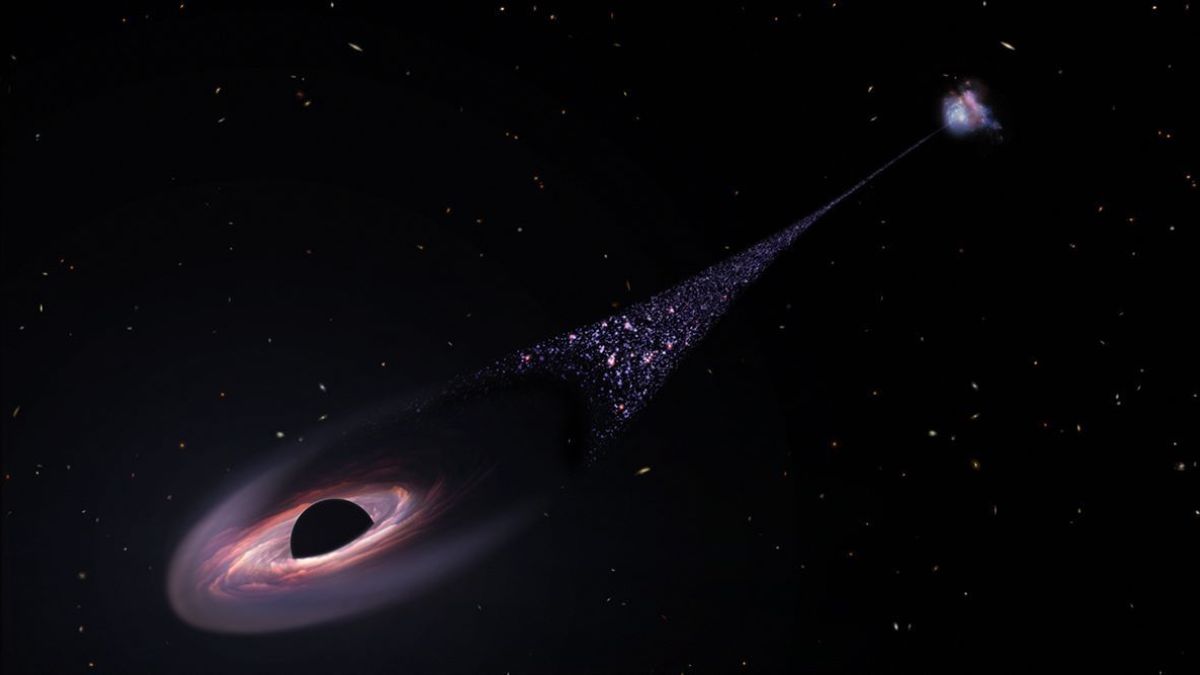
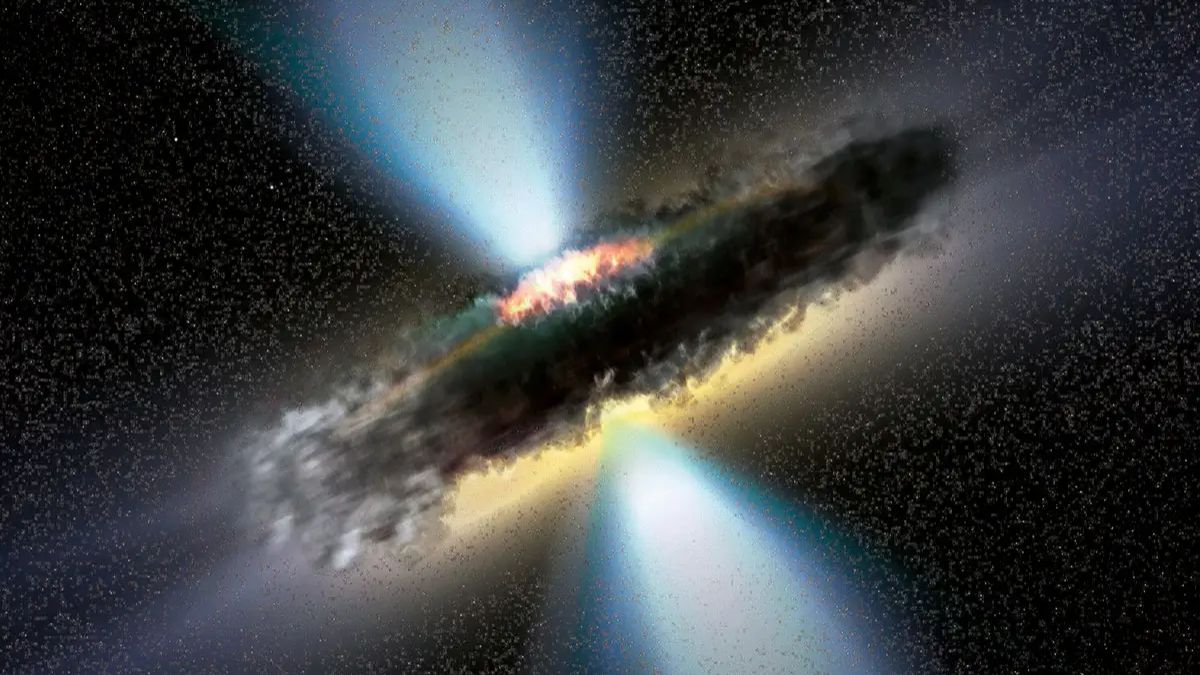
Black holes have always captured our imagination. These cosmic monsters swallow everything—light, matter, even time—and leave us wondering what’s on the other side. But what if there is something on the other side? NASA is now looking into a wild idea that might rewrite everything we thought we knew about space: white holes.
Yes, white holes. Not science fiction, not a movie plot—this is real science, and it goes all the way back to Einstein himself.
Table of Contents
Origins
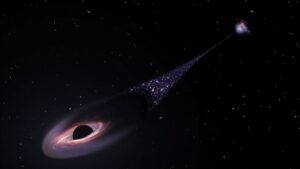
Over a century ago, Albert Einstein proposed the general theory of relativity, which gave us the foundation to understand black holes. But hidden in the math was something even stranger—a mirror image of a black hole. A place in the universe where time and matter don’t get sucked in… they get thrown out.
That’s what a white hole is: a theoretical region in space that violently ejects matter, light, and energy. It’s the ultimate opposite of a black hole.
Even Einstein was uneasy about the idea. It just didn’t seem real. But now, it’s back on the table—and with more support than ever.
Opposites
Let’s keep it simple. If a black hole is a cosmic vacuum cleaner, a white hole is a cosmic blow dryer. Black holes take in everything. White holes shoot it all out. According to current models, white holes wouldn’t let anything enter—only exit. It’s like a door that only opens one way.
For decades, scientists thought this was just a weird glitch in the equations. But now, thanks to advances in technology and quantum theory, that old idea is getting a second look.
Signals
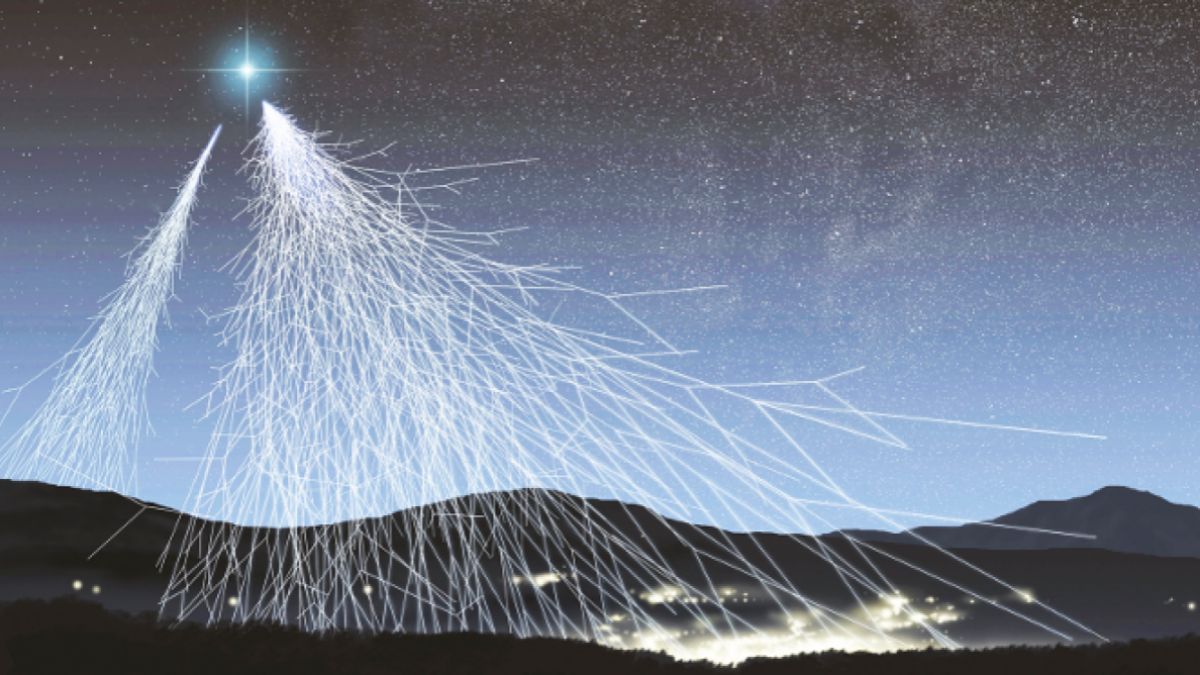
NASA, along with other space agencies, has been picking up strange signals from the depths of space. These include intense gamma-ray bursts, unexplainable gravitational waves, and mysterious radio flashes. What’s really weird? Some of these signals come from completely empty regions of space. No stars, no galaxies, not even black holes.
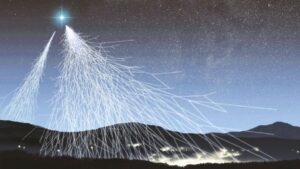
So what’s causing them?
Some scientists think they could be the first signs of white holes. Maybe they’re forming, maybe they’re exploding, or maybe we’re just catching glimpses of something new. But one thing’s for sure—these anomalies aren’t going away.
Wormholes
This is where it gets really exciting. One major theory says that black holes and white holes could be connected by a tunnel—what scientists call a wormhole. It’s a shortcut through space-time.
If that’s true, then we might be looking at natural portals through space… or even time. The math works. The physics is sound—on paper. But no one has seen a wormhole (yet), and we’re still not sure how stable they’d be.
But the idea is there. And it’s not just fantasy—it’s real theoretical physics, based on Einstein’s own work.
Meaning
Why does any of this matter? Because it could change how we understand everything.
If white holes exist, it means that matter and information swallowed by black holes might not be lost forever. It might just come out somewhere else, at some other time. That could help solve one of the biggest problems in physics: the information paradox.
And more than that—it could mean that space-time itself isn’t as one-way as we thought.
Evidence
The frustrating part is that we don’t have visual proof yet. We’re still working with signals, models, and theory. But the more unexplained data comes in, the more the idea gains ground.
NASA isn’t just brushing this off. They’re studying it seriously. Cross-referencing telescope data, sharing findings with global observatories, and watching the skies for anything out of the ordinary. And lately, there’s been plenty of that.
Einstein
Wouldn’t it be something if Einstein turned out to be right about this too?
He gave us black holes before we had any way to detect them. Now, a century later, white holes might be the next breakthrough, sitting right there in the math the whole time.
Maybe it takes this long for the universe to reveal its strangest secrets. And if white holes do exist, it would change everything—from how galaxies form to how the universe might end.
The universe vomiting time and matter? Sounds wild. But in space, wild is normal. And with each strange signal we pick up, we get a little closer to finding out the truth.
FAQs
What is a white hole?
A white hole is the opposite of a black hole—matter is ejected, not absorbed.
Did Einstein predict white holes?
Yes, his equations hinted at their existence, though he doubted them.
Are white holes connected to black holes?
Some theories suggest they’re linked by wormholes.
Has NASA found a white hole?
Not yet, but strange signals hint they might exist.
Can white holes be seen?
Not directly—only their possible effects or signals are detected.