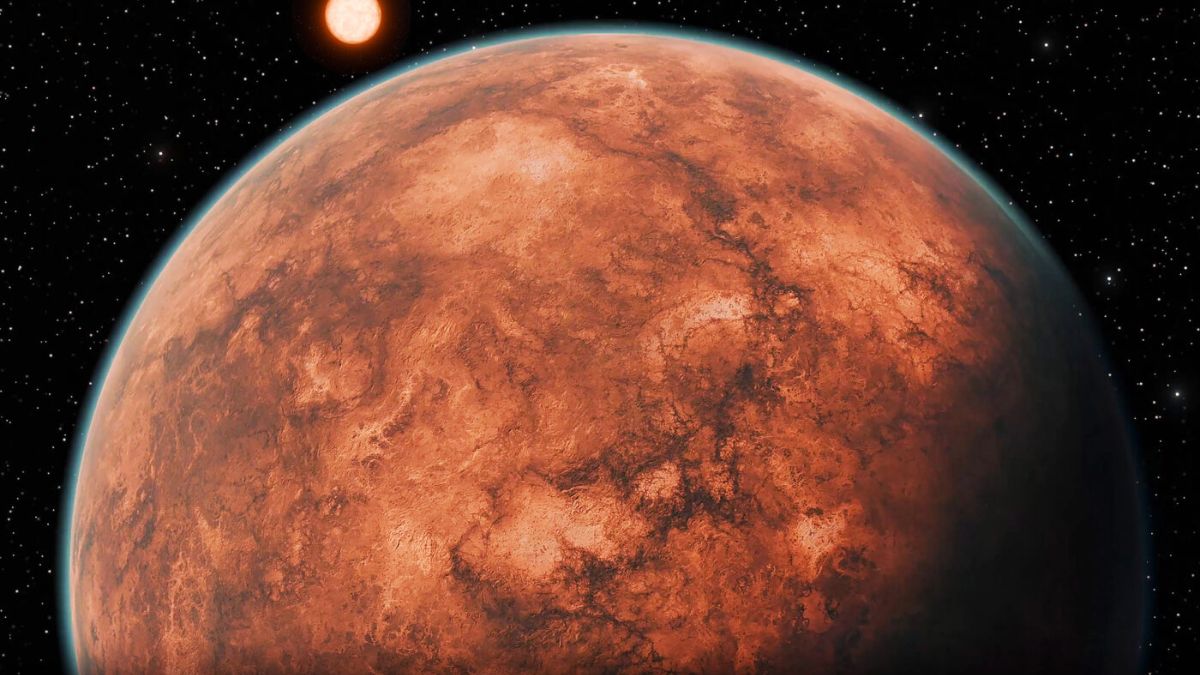

You’d think we’d know all the objects near Earth by now — but space loves to surprise us. Meet 2025 PN7, a small space rock that’s been quietly traveling alongside our planet for decades. Despite hanging around for over 60 years, astronomers only just spotted it. Some are even calling it the “invisible moon.”
Why was it so hard to find? What makes it special? Let’s break down everything we know about this unexpected cosmic tag-along.
Table of Contents
Discovery
2025 PN7 wasn’t seen until recently, even though it’s been orbiting near Earth for over six decades. The reason? It’s tiny — just 98 feet (around 30 meters) across — and reflects very little light. Until it got close enough to Earth, our telescopes simply didn’t catch it. But now that it’s been spotted, scientists are eager to learn everything they can.
Quasimoon
2025 PN7 isn’t a regular moon like the one we see every night. Instead, it’s what scientists call a quasi-moon. That means it follows a similar path to Earth as it moves around the Sun but isn’t gravitationally bound to our planet.
Think of it as a travel buddy: it’s going the same way, but it’s not riding in the same vehicle.
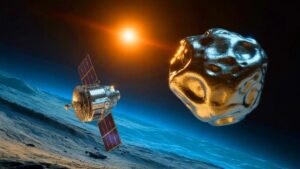
Here’s a quick overview:
| Term | Description |
|---|---|
| Moon | Orbits Earth, held by Earth’s gravity |
| Quasi-moon | Shares Earth’s solar orbit, not gravitationally bound |
| Mini-moon | Temporarily captured by Earth’s gravity |
Arjuna
2025 PN7 is part of a special group of space rocks called the Arjuna asteroids. These asteroids have Earth-like orbits, and the first one was found back in 1991. At the time, it was such a mystery that some believed it could be an alien probe.
Fast forward to today, and we now understand that Arjuna-type asteroids are natural. But their Earth-like movement still makes them extremely interesting to study — especially because they sneak so close to us undetected.
Comparison
The discovery of 2025 PN7 also helps clear up the confusion between quasi-moons and mini-moons. Here’s how they compare:
| Type | Orbit Path | Time Around Earth | Gravitationally Bound? |
|---|---|---|---|
| Quasi-moon | With Earth & Sun | Decades | No |
| Mini-moon | Around Earth | Weeks/Months | Yes (temporary) |
A recent mini-moon, 2024 PT5, orbited Earth briefly from September to November 2024 before heading back into space. These short-lived companions show just how dynamic our planet’s local space environment really is.
Origins
Could quasi-moons be pieces of the Moon? Some astronomers believe so. After major impacts on the lunar surface millions of years ago, fragments could’ve been ejected into space. Over time, some of these fragments may have settled into orbits like that of 2025 PN7.
Objects like Kamoʻoalewa and 2024 PT5 also hint at this possibility, sharing not only similar behavior but also similar surface compositions with the Moon. If confirmed, it would mean we have Moon fragments silently drifting through space alongside us.
Orbit
So how long will 2025 PN7 stick around? Scientists estimate it’ll continue to accompany Earth for about 60 more years before drifting off into what’s known as a horseshoe orbit.
From Earth’s perspective, a horseshoe orbit looks like — you guessed it — a giant horseshoe. The object appears to approach from behind, loops in front of Earth, and then drifts away again in a wide arc. It’s a slow cosmic dance that takes centuries to complete.
Visibility
Why wasn’t 2025 PN7 discovered sooner? Simple: it’s too small and too dim. At just 30 meters wide, it reflects almost no light, making it extremely hard to spot unless it’s very close. That’s why even though it’s been near us for decades, telescopes only picked it up recently.
This tells us there may be many more objects like it hiding in plain sight — too small or dark for our current technology to detect unless the timing is just right.
Reminder
The story of 2025 PN7 reminds us that Earth isn’t traveling alone. Sure, we have the Moon, but there are also these smaller, more mysterious companions — some staying for decades, others just for weeks. Each one has a story, and each one teaches us more about Earth’s orbit, its history, and its cosmic neighbors.
Isn’t it amazing that even after centuries of watching the skies, we’re still discovering new travelers in our own celestial lane? The universe is big, weird, and full of secrets — and we’re only just scratching the surface.
FAQs
What is 2025 PN7?
A quasi-moon orbiting near Earth for decades.
Why was 2025 PN7 hard to detect?
It’s very small and reflects little light.
Is 2025 PN7 a real moon?
No, it shares Earth’s orbit but isn’t gravitationally bound.
Could 2025 PN7 be from the Moon?
Some scientists believe it might be a Moon fragment.
Will 2025 PN7 stay with Earth forever?
No, it will leave in about 60 years into a horseshoe orbit.