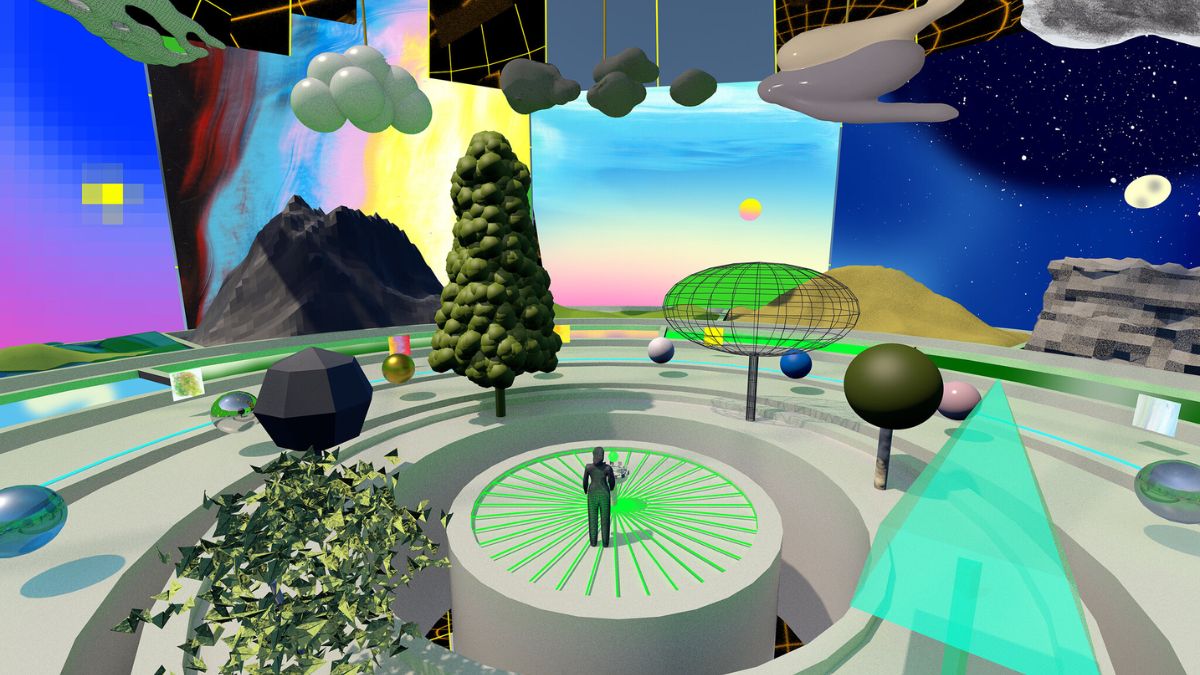
If you’re a fan of sci-fi movies, you’ve probably watched The Matrix at least once—and maybe even questioned your own reality afterward. Since its release in 1999, the film has inspired some deep thoughts about the universe.
Could we really be living in a computer-generated simulation? It sounds wild, but one British scientist says it might actually be true. Not just a theory this time—he believes he has found real evidence.
Let’s look into the science behind this mind-bending idea.
Table of Contents
Matrix
In the movie, humans live inside a hyper-realistic computer simulation, completely unaware that their world isn’t real. Now, a physicist named Melvin Vopson from the University of Portsmouth is reviving that idea with a scientific twist. He’s introduced a concept he calls the Second Law of Infodynamics, and he claims it might be the first real sign that we’re in a simulation.
What’s different about this approach? It’s not based on imagination. It’s grounded in physics, math, and the behavior of information itself.
Theory
Vopson’s theory begins with a basic question: what if the universe isn’t just made of matter and energy—but also information?
He was inspired by the second law of thermodynamics, which states that the disorder (or entropy) in a system always increases over time. You can think of it like a broken glass: once it shatters, it doesn’t fix itself. Nature leans toward chaos.
But Vopson wondered—what if information doesn’t follow this rule? What if, instead of increasing disorder, information does the opposite?
Infodynamics
That’s where the Second Law of Infodynamics comes in. Vopson found that in systems made of information, entropy doesn’t always increase. In some cases, it stays the same—or even decreases. That means things become more organized over time, not less.
To Vopson, this pattern of organization points to something bigger: a hidden structure, possibly even a program, behind our universe. Just like in a simulation, the system seems to be optimizing itself.
In other words, the universe might be functioning like a highly efficient piece of software—one that compresses data, saves energy, and keeps things running smoothly.
Patterns
Still sounds abstract? Let’s look at how Vopson applied his theory in real-world examples.
Fields and Findings
| Field | Vopson’s Observation |
|---|---|
| Atomic Physics | Electrons follow patterns that reduce disorder |
| Cosmology | Universe expands without heat loss, suggesting information entropy |
| Biology | DNA mutations evolve in efficient, organized ways |
Take the COVID-19 virus, for example. Vopson studied how the virus mutated over time and found that it didn’t change randomly. Instead, the changes followed patterns, as if the virus were adapting in the most efficient way possible—like a computer system upgrading itself.
Simulation
So, do we live in the Matrix? That’s the big question. Vopson says yes—or at least, there’s a good chance.
His main argument: if a system is this complex and still manages to stay balanced, organized, and energy-efficient, there’s a strong possibility it’s designed. And how do you design a system that big? With code.
According to him, we see the fingerprints of digital design everywhere: symmetry in math, structured patterns in biology, and constant data compression across the cosmos. Just like a simulation would need to do to keep things running without burning too much power.
Debate
Of course, not everyone in the scientific community is convinced. Many physicists argue that Vopson’s theory is interesting but far from proven. They say that what looks like data optimization could simply be how nature works—without needing to assume it’s all part of a program.
They also point out that while it’s fun to compare the universe to a computer, it doesn’t mean it is one. More evidence is needed before we start calling reality a simulation.
Mystery
Still, Vopson’s idea adds a new layer to one of humanity’s oldest philosophical questions: is what we see around us real?
From Plato’s cave to Descartes’ doubt, people have always wondered whether life is an illusion. The Matrix gave that question a Hollywood twist. Now, science is taking it seriously too.
Whether the universe is real or virtual, the mystery keeps us curious—and maybe that’s the real power of theories like this one. They push us to look into the unknown, ask uncomfortable questions, and rethink everything we thought we knew.
What do you think? Are we in the Matrix, or is this just another fascinating theory?
FAQs
What is the Second Law of Infodynamics?
It’s a theory that says information entropy can decrease over time.
Who proposed the Matrix theory in science?
Melvin Vopson, a physicist from Portsmouth University.
Is there proof we live in a simulation?
Vopson claims early evidence, but more research is needed.
What inspired Vopson’s theory?
The second law of thermodynamics and digital simulations.
How does nature show data compression?
Patterns in atoms, biology, and cosmology suggest optimized systems.