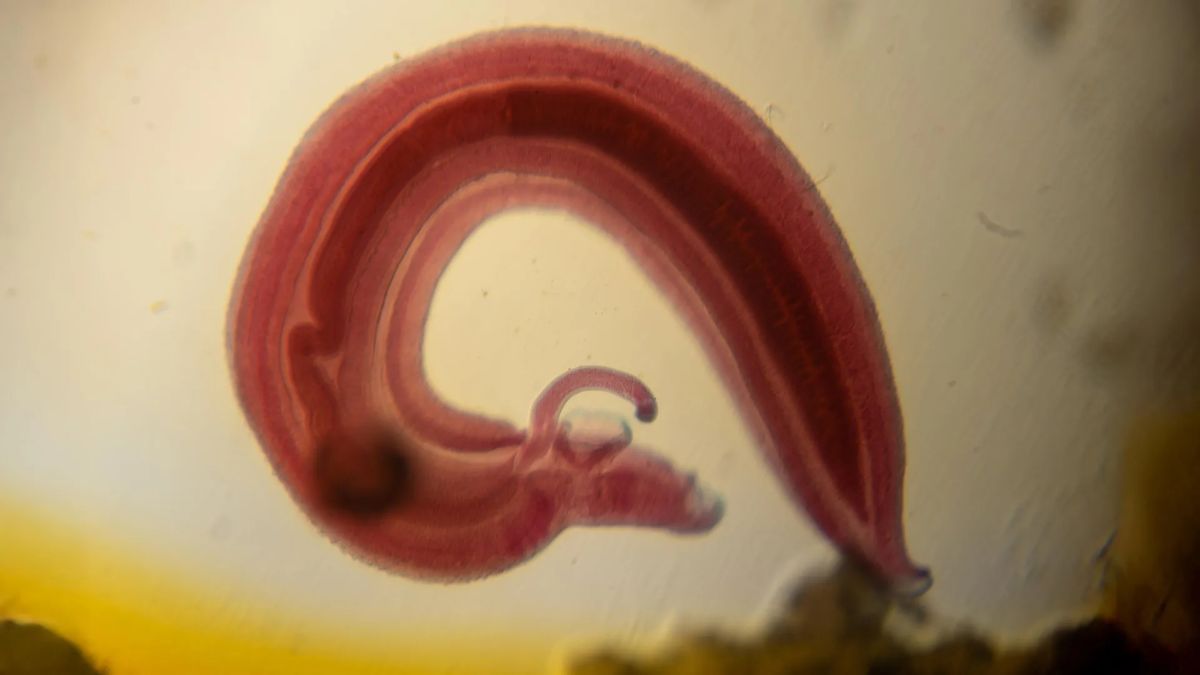
Can you imagine getting hurt and not feeling anything? Not emotional pain — real, physical pain. Like cutting your hand or bumping your knee and barely noticing it. Sounds like science fiction, right? But in reality, there’s a tiny parasite that can do exactly that. Meet Schistosoma mansoni, the worm responsible for the disease schistosomiasis — and possibly the key to pain-free medicine in the future.
Let’s look into how this sneaky little worm gets into your body, shuts off your pain, and why scientists are racing to learn its secrets.
Table of Contents
Entry
Schistosoma mansoni doesn’t need much effort to infect someone. It enters the body through the skin or natural openings, usually when someone bathes in or touches contaminated water. Here’s the strange part — you don’t feel a thing. No itching, no sting, no burning. It just slips in, quietly and unnoticed.
Once inside, the parasite finds its way to certain parts of the body, sometimes even the brain. But you still won’t feel anything. Why? Because it’s already started to switch off the body’s warning systems.
Silence
The parasite produces special molecules that block pain-sensing neurons, specifically the ones known as TRPV1+ neurons. These are the nerve cells responsible for telling us when something is hot, sharp, or painful. They’re the ones that make you pull your hand away from a hot stove or jump when you stub your toe.

Now, imagine those neurons being disconnected. No signal. No warning. No pain. It’s like hitting mute on your body’s internal alarm system.
But here’s the catch: without pain, the immune system also stays silent. That’s good for the parasite — your body doesn’t even know it’s there.
Mice
To understand how powerful this pain-silencing effect really is, scientists did a series of experiments with mice. Some mice were infected with Schistosoma mansoni, others were not. Both groups were then exposed to heat.

Guess what? The infected mice didn’t even flinch. Their pain response was dulled. And it wasn’t just heat. They were also less sensitive to capsaicin — the fiery compound that makes chili peppers burn. Their neurons just didn’t react.
The worm had completely turned off their pain receptors — and in doing so, also suppressed their natural defense responses.
Potential
This is where things get exciting. What if scientists could isolate the exact molecules that the worm uses to block pain? That could lead to a new generation of painkillers — ones that don’t rely on opioids.
Right now, opioids are one of the most common treatments for chronic pain, but they come with a long list of problems: addiction, drowsiness, and dangerous side effects. If a molecule from this parasite could provide pain relief without the risks, it could revolutionize pain management.
Think of conditions like nerve damage, arthritis, or chronic inflammation — this discovery could offer hope where current treatments fail.
Balance
But it’s not as simple as copying the worm’s formula and turning off pain for good. There’s a reason we feel pain — it’s a survival mechanism. Pain warns us when something’s wrong and tells the immune system to jump into action.
If we block that signal completely, we might not realize when we’ve hurt ourselves, or worse, when we’re developing a serious infection. So the real challenge for researchers is finding a way to quiet pain without shutting down our body’s natural defenses.
Scientists are now working hard to isolate the worm’s pain-blocking molecules, studying how they work and how much of them can be used safely in future medicines.
Wonder
It’s amazing, isn’t it? A tiny worm that causes a serious disease might hold the key to one of the most difficult problems in medicine: pain.
Nature has always been full of surprises. What once seemed like just a public health threat could now become a powerful tool to help millions of people who live with daily pain. This is a perfect example of how the natural world continues to surprise and inspire science — showing us that sometimes, solutions come from the most unexpected places.
FAQs
What is Schistosoma mansoni?
It’s a parasite that causes the disease schistosomiasis.
How does the worm block pain?
It shuts off TRPV1+ neurons, which detect pain and heat.
Can this help create painkillers?
Yes, scientists hope to make non-opioid pain relief drugs.
Is it safe to block all pain?
No, pain is needed to alert the body of danger or harm.
How do humans get infected?
By swimming or bathing in water contaminated with the parasite.