When we think about the extinction of the dinosaurs, we often picture it as the dramatic end of an age. But what if that extinction was also the beginning of something entirely new?
According to a fascinating new geological study, the disappearance of dinosaurs 66 million years ago didn’t just clear the land of giant reptiles — it completely reshaped Earth’s landscapes, from the way rivers flow to the way forests grow. Let’s look into how these ancient creatures were true architects of the planet.
Table of Contents
Engineers

Dinosaurs weren’t just inhabitants of their ecosystems — they were powerful engineers of the land. Thanks to their massive size and constant movement, they trampled the ground, ate large quantities of plants, and knocked over trees. These actions kept the land open, prevented dense forests from forming, and maintained landscapes full of open spaces, swamps, and unstable rivers.
Back then, rivers had narrow, unpredictable channels and often flooded. Sediments shifted easily, and the land remained soft and marshy. In short, the dinosaur era was a time of wild, untamed landscapes shaped largely by the creatures themselves.
Aftermath
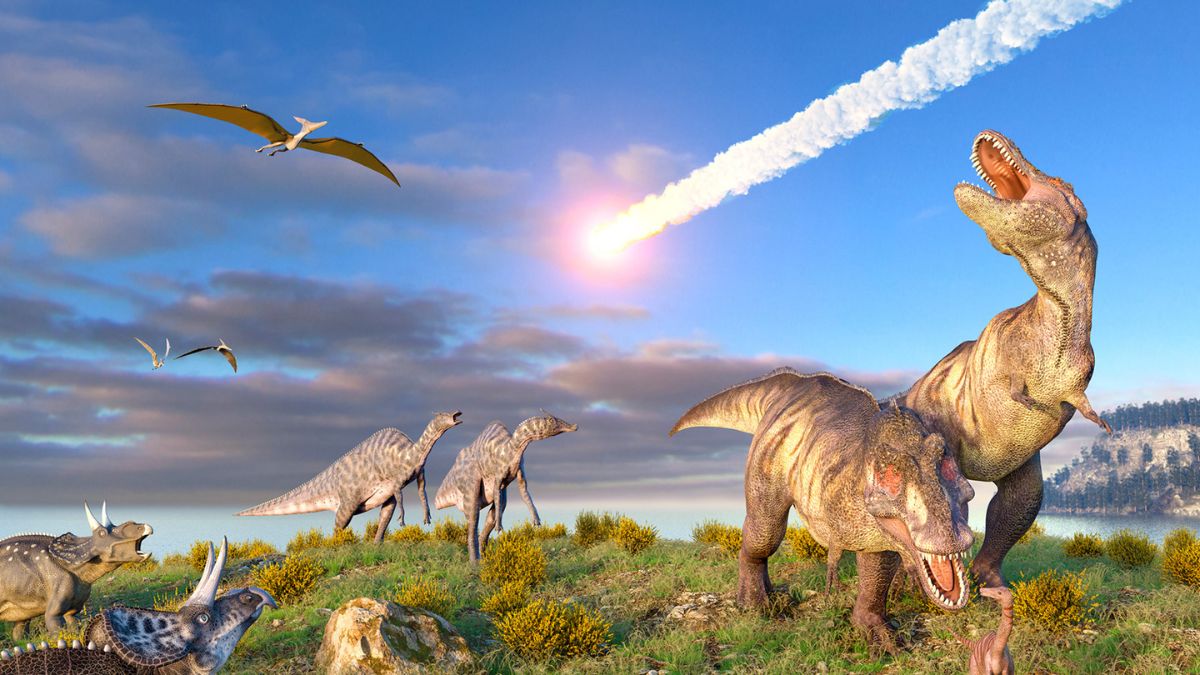
Then came the asteroid. The Chicxulub impact wiped out the dinosaurs in a flash, removing the major force that kept landscapes open. The result? Nature quickly started to change.

Trees and plants, no longer being eaten or trampled, began to grow freely. Forests expanded into areas that had once been open fields or swamps. As tree roots took hold, they stabilized riverbanks and reduced flooding. Rivers, which had once roamed freely across the land, now followed more predictable, winding paths.
The rocks recorded this transformation clearly. In older, Cretaceous layers, scientists found scattered sediments, dark swampy soils, and thin sandstone deposits. But above those, in the younger Paleogene layers, everything changes — the rocks are brighter, the layers are thicker and better organized, and there’s a clear sign of plant life: lignite, a soft coal formed from dense vegetation.
Iridium
One of the most important clues to this moment of change is a thin layer of iridium. Iridium is rare on Earth but common in meteorites, so finding it is like spotting the fingerprint of the asteroid impact. Scientists have found this layer in key places like the Bighorn Basin and the Williston Basin, right at the boundary between the old chaotic world of the dinosaurs and the more stable world that followed.

This layer proves that the changes in landscapes happened right after the extinction — not slowly, but suddenly and dramatically.
Life
This discovery adds a new twist to how we think about Earth’s evolution. Until now, geologists believed that shifts in landscapes came mainly from external forces like volcanic eruptions, shifting continents, or climate change. But this study flips that thinking. It shows that sometimes, life itself — in this case, dinosaurs — can reshape the planet just as powerfully as any natural disaster.
In other words, it wasn’t just the asteroid that changed the world. It was also the absence of the dinosaurs and the ecosystems they maintained.
Lesson
So what can we learn from a 66-million-year-old extinction? A lot, actually. It shows that when major species disappear, landscapes can change dramatically. Today, as we face the extinction of many animal and plant species, we could see similar large-scale transformations on Earth.
Ecosystems are delicate. Every species plays a role, and when key players vanish, the whole system can shift — just like it did when the dinosaurs disappeared. It’s a powerful reminder of how connected life and land really are.
Perspective
We often look at the dinosaurs as ancient curiosities — bones in museums and creatures from movies. But the truth is, their impact is still visible today. The forests we walk through, the rivers we see on maps, and even the soil beneath our feet carry the legacy of a world that had to rebuild itself after the dinosaurs vanished.
And here we are in 2025, still learning from them. Their story reminds us how powerful life is in shaping the planet, and how much we stand to lose when that life disappears. History doesn’t just live in textbooks. It lives in rocks, in rivers, and in the forests that now cover the Earth where dinosaurs once roamed.
FAQs
What changed after dinosaurs went extinct?
Forests expanded, rivers stabilized, and soil improved.
How did dinosaurs shape landscapes?
They kept land open by trampling and eating plants.
What does iridium prove?
It marks the asteroid impact that ended the dinosaurs.
What did rivers look like during the dinosaur era?
They were unstable, narrow, and frequently flooded.
Why is this study important today?
It shows how species extinction can reshape the planet.