Ever wondered what would happen if humans suddenly vanished from the planet? Not a distant post-apocalyptic future or a sci-fi fantasy, but a literal overnight disappearance. Cities still standing, cars parked on streets, phones buzzing on silent… but not a single human in sight.
No humanoid robots replacing us. No apocalyptic wasteland. Just the world, as we know it, left to its own devices. So, what comes next? Would animals take over? Would nature reclaim everything? Let’s cut into a theory that might surprise you.
Table of Contents
Inheritance
The big question is—who would inherit the Earth?
Most of us would guess that monkeys, apes, or maybe even big cats would rise to the top. After all, apes are genetically close to us, and felines have been apex predators for ages. But one expert dares to think differently.
Professor Tim Coulson from the University of Oxford explores this in his thought-provoking work The Universal History of Us. His surprising answer? Not monkeys. Not lions. But octopuses.
Yes, octopuses. The squishy, tentacled creatures from the ocean depths.
Evolution
To understand this better, we need to zoom out. Every species, including humans, has an expiration date. It might be thousands or millions of years away, but history tells us that no dominant species lasts forever.
Earth has already witnessed mass extinctions before. Remember the dinosaurs? Gone. Their disappearance cleared the way for mammals—and eventually, humans—to take over. If we vanished today, something else would likely rise to fill the gap.
Coulson suggests that life doesn’t pause. It reshapes. It adapts. It keeps going. The question is—what life form could evolve fast enough, smart enough, and strong enough to inherit a human-less Earth?
Octopuses
So, why octopuses?
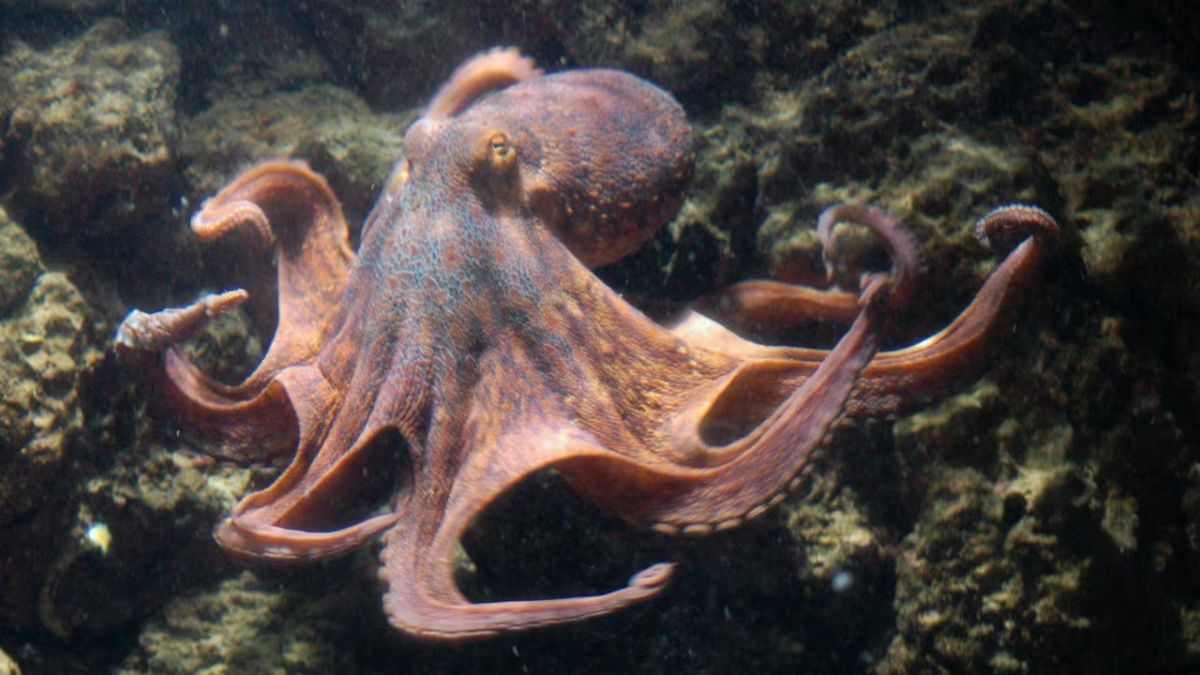
Turns out, these ocean dwellers are some of the most intelligent animals on the planet. They can solve complex problems, open jars, mimic other species, and even communicate by changing their skin color.
And they’re highly adaptable. Octopuses can squeeze through tight spaces, use tools, and manipulate their environment. They’ve been observed building small shelters out of coconut shells and rocks. Give them a few million years of evolution, and who knows what they could become?
According to Coulson, it’s possible that octopuses could eventually survive outside the water, adapt to land environments, and start interacting with the world we left behind. That’s not as far-fetched as it sounds—life has moved from sea to land before.
Challenges
Of course, there are challenges. Octopuses have no skeletons, which limits their movement on land. Their lifespan is also short, usually just a few years. But if evolution taught us anything, it’s that life finds a way.
Over time, octopuses might evolve longer lives, tougher bodies, and entirely new ways of surviving. They could build underwater cities or develop structures in moist coastal areas. After all, history repeats itself, and we’ve seen aquatic life migrate to land before.
Primates
But what about primates? Why wouldn’t they inherit the Earth?
Coulson argues that while primates are intelligent and similar to us, their survival depends heavily on social structures. Without humans to support or study them, their chances of adapting to a completely new environment are slim.
They’re simply not as versatile as octopuses might become. Evolution rewards adaptability, not familiarity. And in a world without us, the ability to morph, survive, and thrive becomes far more valuable than simply being similar to humans.
Cities
Picture this—decaying cities slowly being overtaken by nature, oceans creeping into old ports, and octopuses exploring our forgotten world. Maybe even setting up colonies in flooded subway systems, adapting our buildings to suit their needs.
Sounds strange, right? But not impossible. Evolution is all about surprise and survival.
What we consider science fiction today could become reality millions of years down the road. The next rulers of Earth might not walk on two legs, speak, or build in concrete. They might glide, shift color, and think in ways we can’t even imagine.
FAQs
What animal could replace humans?
Octopuses may evolve to become Earth’s next dominant species.
Why not primates?
Primates rely on social networks and aren’t as adaptable.
How are octopuses intelligent?
They solve problems, use tools, and communicate visually.
Can octopuses live on land?
Not yet, but evolution could make it possible in time.
Who proposed this theory?
Professor Tim Coulson from the University of Oxford.