The night sky is more than just a canvas of stars—it’s a living map of our greatest adventures. Sometimes, staring up at it can make you feel dizzy, even insignificant. But here’s the thing: the more we look, the more questions we ask. That’s why humanity keeps reaching outward. And thanks to decades of exploration, space is now filled with missions still working quietly, far beyond what our eyes can see.
This October, the sky above us holds the positions of some of the most iconic spacecraft ever launched. From telescopes peering back to the dawn of time to probes that brushed the Sun, let’s cut into where they are right now—and what they’re doing out there.
Table of Contents
James Webb
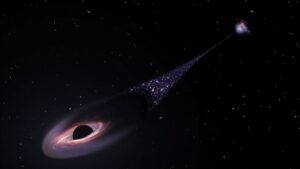
If space telescopes had royalty, the James Webb Space Telescope (JWST) would wear the crown. Launched to look further back in time than ever before, JWST captures light from galaxies that formed just after the Big Bang. It’s like having a time machine with a lens.
To find its spot in the sky this month, locate Aldebaran—the reddish star in the constellation Taurus. It sits just above Orion, the well-known hunter figure. A bit higher, you’ll spot the Pleiades cluster, looking like a scatter of diamonds. James Webb is about five degrees below that spot, slowly drifting closer to Aldebaran over the month.
You won’t see it without a serious telescope, but knowing it’s up there, capturing the earliest flickers of our universe, is enough to send shivers down your spine.
Parker
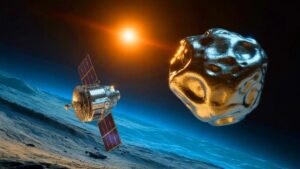
This one touched the Sun—literally. The Parker Solar Probe made history by flying through the Sun’s corona in 2021, gathering data on solar wind and magnetic storms. These storms can mess with satellites and even Earth’s power grids, so its work is crucial.
Right now, Parker is around 147 million kilometers from Earth. To imagine its place, look low in the southwestern sky for Antares, the bright reddish star in Scorpius. The probe is nearby, hidden from view but still dancing dangerously close to the solar inferno.
Juno
Juno is like Jupiter’s personal photographer, orbiting the gas giant since 2016. It’s been uncovering secrets about the planet’s atmosphere, magnetic field, and even its strange moons.
Currently, Juno is about 748 million kilometers away. To find Jupiter in the sky this month, wake up before dawn and look for the brightest object—no, it’s not a star, it’s the King of Planets. Look around the constellation Gemini for Castor and Pollux. Juno’s right there, circling Jupiter like a curious bee.
New Horizons
Remember Pluto’s first close-up? That was New Horizons in 2015. After flying past the dwarf planet, it headed even farther, reaching the mysterious Kuiper Belt where it visited Arrokoth in 2019.
Today, it’s more than 9.4 billion kilometers away, still transmitting data as it travels through uncharted space. Want to trace its place? Look for the constellation Sagittarius, often called the “cosmic teapot.” New Horizons is just above the handle, hanging out near the star Pi Sagittarii.
Voyager 1
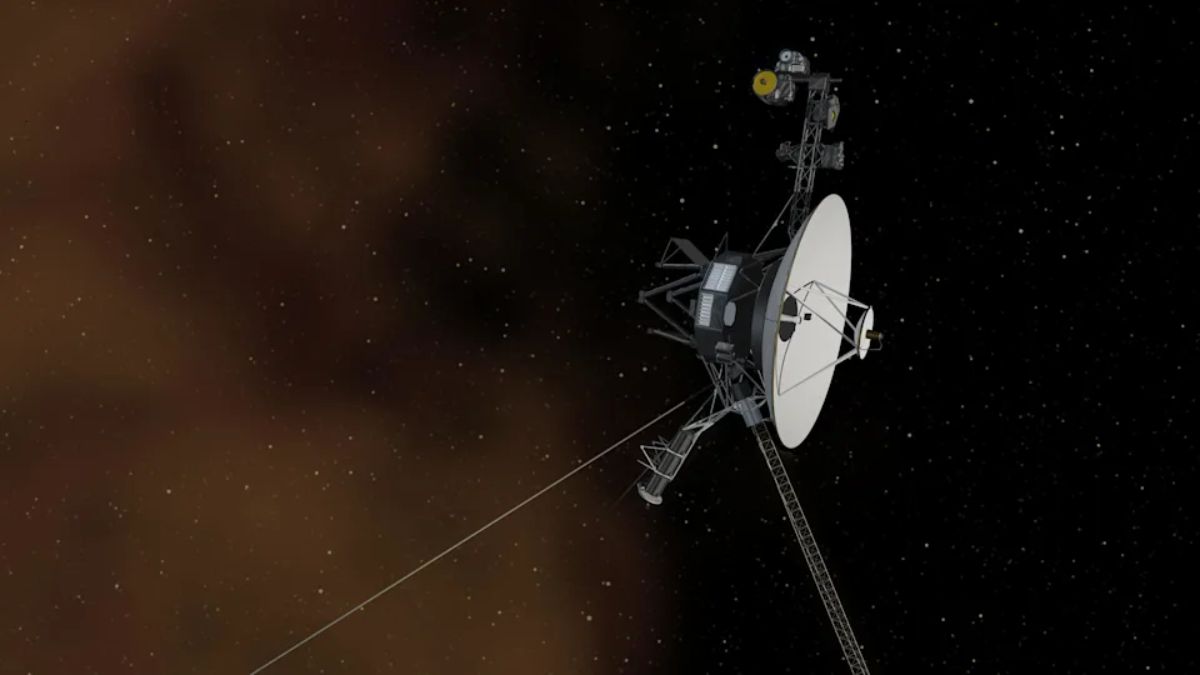
This one deserves legend status. Voyager 1 was launched in 1977 and is now over 25 billion kilometers away from Earth. It’s the farthest human-made object ever—and it’s still sending data.
What’s even cooler? It carries the NASA Golden Record, a time capsule of Earth’s sounds and greetings, just in case someone out there finds it someday.
You can locate its general direction in the constellation Ophiuchus, above the western horizon just after sunset. You won’t see the spacecraft itself, of course, but knowing it’s out there, silently cruising into interstellar space, is pretty humbling.
Table
Here’s a quick snapshot of where these amazing missions are and how far they’ve gone:
| Mission | Location in Sky | Distance from Earth | Launched |
|---|---|---|---|
| James Webb | Near Aldebaran, Taurus | ~1.5 million km | 2021 |
| Parker Solar Probe | Near Antares, Scorpius | ~147 million km | 2018 |
| Juno | Orbiting Jupiter, near Gemini | ~748 million km | 2011 |
| New Horizons | Near Pi Sagittarii, Sagittarius | ~9.4 billion km | 2006 |
| Voyager 1 | In Ophiuchus | ~25 billion km | 1977 |
Looking up at the stars this October, you’re not just seeing ancient light—you’re also looking in the direction of humanity’s brave little machines. Each one represents a leap of faith, a step into the unknown, and a spark of our endless curiosity.
We may not be able to see them twinkling like stars, but they’re out there, still working, still dreaming on our behalf.
FAQs
Can I see James Webb with a telescope?
No, it’s too far and small to see with amateur telescopes.
Is Voyager 1 still sending data?
Yes, Voyager 1 still transmits signals back to Earth.
Where is the Parker Solar Probe now?
It’s near the star Antares in the constellation Scorpius.
How far is Juno from Earth now?
Juno is about 748 million kilometers away.
What did New Horizons discover?
It flew by Pluto and visited Arrokoth in the Kuiper Belt.