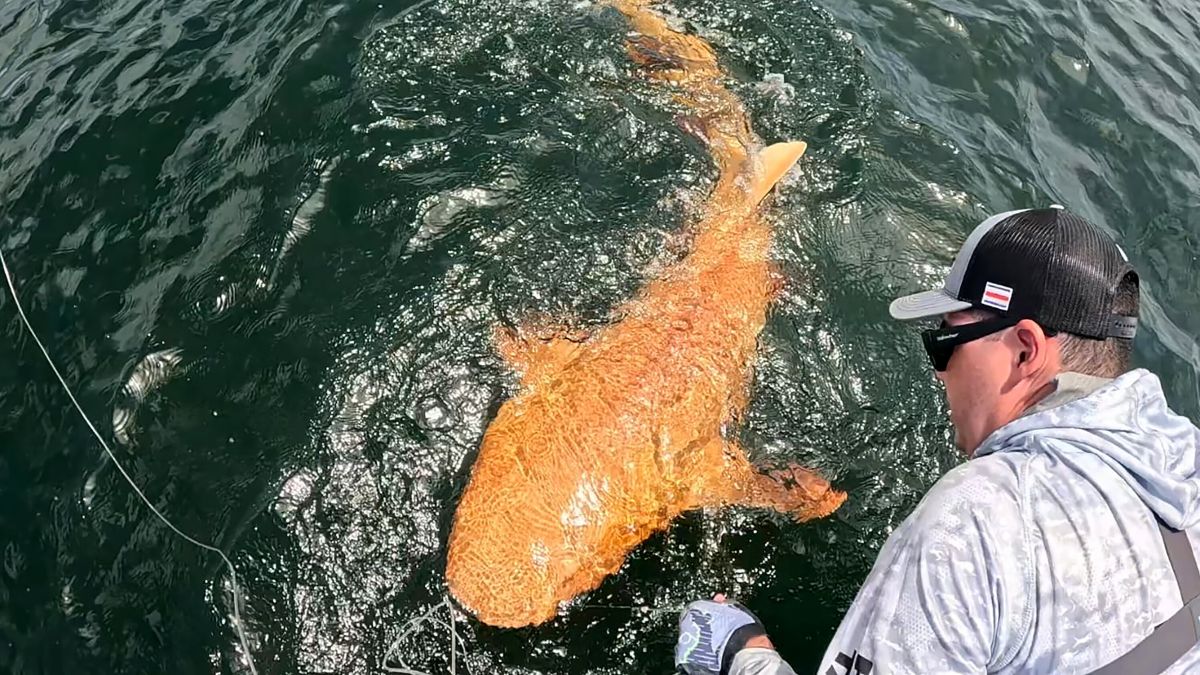
The ocean is full of mysteries, and every once in a while, it delivers something that stops us in our tracks. That’s exactly what happened off the east coast of Costa Rica, where a group of amateur coastal watchers spotted something completely unexpected—a two-meter-long bright orange nurse shark with pure white eyes. Yes, you read that right. And no, it’s not a sci-fi movie scene.
This rare discovery quickly turned into an international headline, not only because of the shark’s shocking appearance, but also because it represents a never-before-seen genetic combination in this species.
Table of Contents
Discovery

The credit for this incredible find goes to Garvin Watson, owner of the Parismina Domus Dei hotel, and a group of local fishing enthusiasts—not scientists. While out watching the coast, they came across this unusual creature. They took a few photos and safely released it back into the ocean. Those images eventually made their way to researchers and ended up in the pages of Marine Biodiversity journal.
It’s the kind of find that reminds us the sea still holds secrets, and sometimes, you don’t need a lab coat to uncover them.
Genetics
So what makes this shark such a big deal? According to researchers, it shows signs of xanthism—a rare mutation that causes an animal’s skin to turn an intense yellow or orange. This condition has been observed in frogs, birds, and a few fish, but never before in a nurse shark.

But that’s not all. The shark’s ghostly white eyes revealed a second, even rarer condition: albinism. This is the same genetic mutation that causes humans and animals to lack melanin, giving them white or pale features.
When combined, these two conditions form what scientists call albino-xanthochromism—an ultra-rare blend that, until now, had only ever been documented in one ray from the Irish Sea. Never in a shark.
Colors
To put it into perspective, here’s how the colors compare:
| Shark Type | Usual Color | Mutation Observed |
|---|---|---|
| Regular Nurse Shark | Yellowish brown, gray | None |
| Albino Shark | Pale or white | Albinism |
| This Shark | Bright orange, white eyes | Xanthism + Albinism |

Researcher Marioxis Macías-Cuyare, lead author of the study, noted how extraordinary it was to see such a color mix in one specimen. Without the quick thinking of the local group who documented it, this bizarre shark might have slipped back into legend.
Survival
Here’s where it gets even more impressive. Brightly colored animals often have a hard time surviving in the wild. Their flashy appearance makes them easier targets for predators and less effective as hunters.
That’s why it’s so incredible that this orange-and-white nurse shark had reached full adult size—over two meters long. Somehow, it managed to thrive in an environment that usually rewards stealth and camouflage.
Ocean
This moment is yet another reminder of how little we truly know about the ocean. From glowing jellyfish to deep-sea fish with transparent heads, the marine world keeps challenging what we think is possible.
The orange shark with white eyes shows just how many wonders could still be hiding beneath the waves, especially in biodiverse regions like the Caribbean.
Symbol
Beyond science, the shark holds deep meaning for the local communities in Costa Rica. In the coastal villages of the Caribbean side, sharks are more than sea creatures—they’re symbols of strength, balance, and connection to the ocean.
So when a shark this unique appears, it’s not just a scientific win—it’s a spiritual one, too. Many locals saw it as a message from the sea, a reminder of its power, beauty, and the importance of respecting it.
For them, this wasn’t just a rare animal—it was a sign that nature still has tricks up its sleeve.
Wonder
Who would’ve thought that what started as a casual day of fishing would turn into a scientific discovery? That’s the magic of nature. It shows up when you least expect it.
This shark, with its once-in-a-lifetime genetic mix, now swims freely in the Caribbean. It has opened new doors for research into how rare mutations affect marine life, survival, and biodiversity.
And while we may not have found the kraken just yet, this strange and beautiful creature proves that we don’t need myths to be amazed by the sea.
FAQs
What made the shark orange?
It had xanthism, a rare pigment mutation.
Why were its eyes white?
The shark also showed signs of albinism.
Where was it found?
Off the Caribbean coast of Costa Rica.
Was the shark harmed?
No, it was photographed and released safely.
Is this a new species?
No, it’s a nurse shark with rare mutations.