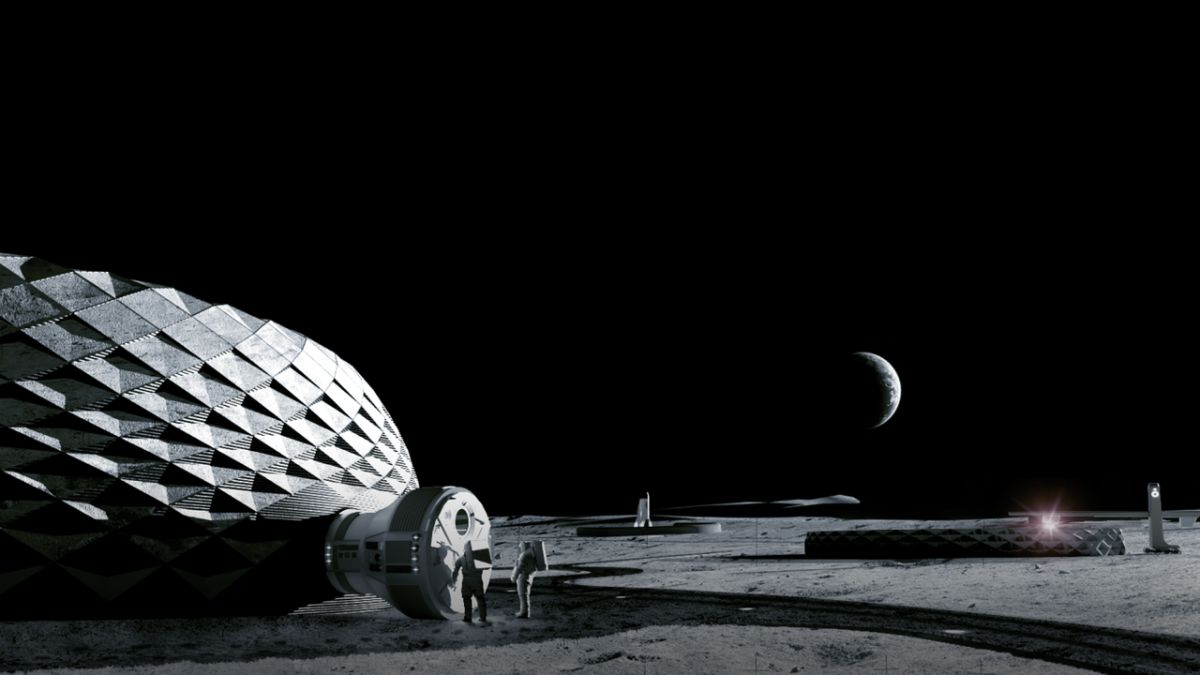
Glass cities on the Moon might sound like something straight out of science fiction, but NASA is seriously looking into the idea. Imagine living inside a giant glass dome made from the Moon’s own dust — no need to send tons of heavy materials from Earth. That’s the dream behind one of NASA’s most futuristic projects, and it might just change how we live in space forever.
Table of Contents
Concept
This mind-blowing concept comes from NASA’s Innovative Advanced Concepts (NIAC) program. It’s basically NASA’s idea lab, where researchers develop bold new technologies that could support life off-Earth. One of the most exciting ideas? Creating huge glass bubbles made out of lunar dust that could serve as homes, labs, or even full-blown Moon cities.
Behind the concept is an American space engineering firm called Skycorp, founded by Dr. Martin Bermudez. Their vision: self-sustaining, transparent domes built directly on the Moon using local resources.
Dust
The Moon is covered in a layer of gray, dusty material called lunar regolith. It’s a mix of crushed rocks, minerals, and tiny glassy fragments formed over billions of years. Transporting building materials from Earth is expensive and impractical, so why not use what’s already there?
Scientists discovered that this lunar dust can be melted into a thick, glass-like substance. When shaped and cooled, it becomes strong enough to form protective domes — no need for bricks, metal, or cement. This turns Moon dust into the perfect building block for space living.
Build
So how do you go from dust to a livable glass bubble?
First, engineers would gather natural glass particles already found in the Moon’s regolith. Then, using a specialized microwave furnace — designed to function in harsh lunar conditions — the dust is melted into a hot, sticky liquid. This liquid is then shaped into large, hollow bubbles. Once cooled, the bubbles turn into strong, transparent domes.
And these aren’t fragile like soap bubbles. They’re tough enough to block harmful space radiation, protect against micrometeorite impacts, and even survive small moonquakes.

To make them even tougher, Skycorp plans to reinforce the structures by mixing in metals like titanium, magnesium, and calcium. These additions would give the glass higher strength and flexibility — both essential for long-term survival on the Moon.
Living
What’s life like inside a Moon glass bubble?
Pretty futuristic. Most of the interior — walls, floors, furniture — could be created with 3D printers using Moon materials. That means astronauts won’t have to ship everything from Earth.
Outside the domes, solar panels would soak up sunlight and convert it into electricity to power air systems, lights, tools, and more.
Some advanced designs even include greenhouses inside the bubbles. With special layers of glass to regulate temperature and moisture, astronauts could grow plants. That means fresh air, fresh food, and a bit of Earth’s green beauty on the gray, dusty Moon.
Future
These glass bubbles won’t just be cool places to live. They’re also stepping stones to even bigger goals.
NASA wants to use these lunar habitats as practice zones for missions to Mars and beyond. If we can live in glass bubbles on the Moon, we can take that tech to other planets. It’s a giant leap toward permanent human settlement in space.
Vision
If all goes according to plan, we could be living, working, and sleeping on the Moon within see-through domes made from its own surface. That would mark the beginning of a new era in space — one where sci-fi becomes everyday life.
Can you picture it? Waking up on the Moon, having coffee under a glass ceiling while Earth shines far above in the sky. It’s a dream that might be closer than we think.
Here’s a quick summary of how this futuristic idea works:
| Feature | Description |
|---|---|
| Material Used | Lunar regolith (dust, rock, minerals) |
| Construction Method | Microwave melting, shaped into glass domes |
| Strength Enhancers | Metals like titanium, magnesium, calcium |
| Interior Design | 3D-printed furniture and tools |
| Power Source | Solar panels |
| Extra Features | Greenhouses for plants and fresh air |
| Protection Offered | Radiation shielding, impact resistance |
From dusty soil to glowing domes under moonlight, this project shows that the future of human life in space might not need to be launched — it can be built right where we land.
FAQs
What are Moon glass bubbles?
They are transparent domes made from melted lunar dust.
Why use lunar dust for building?
It saves cost and makes use of local Moon materials.
How are the bubbles built?
Lunar dust is melted with microwaves into glass-like domes.
Are these domes safe?
Yes, they block radiation and resist moonquakes and impacts.
Can astronauts live inside?
Yes, with 3D-printed gear, plants, and solar energy systems.