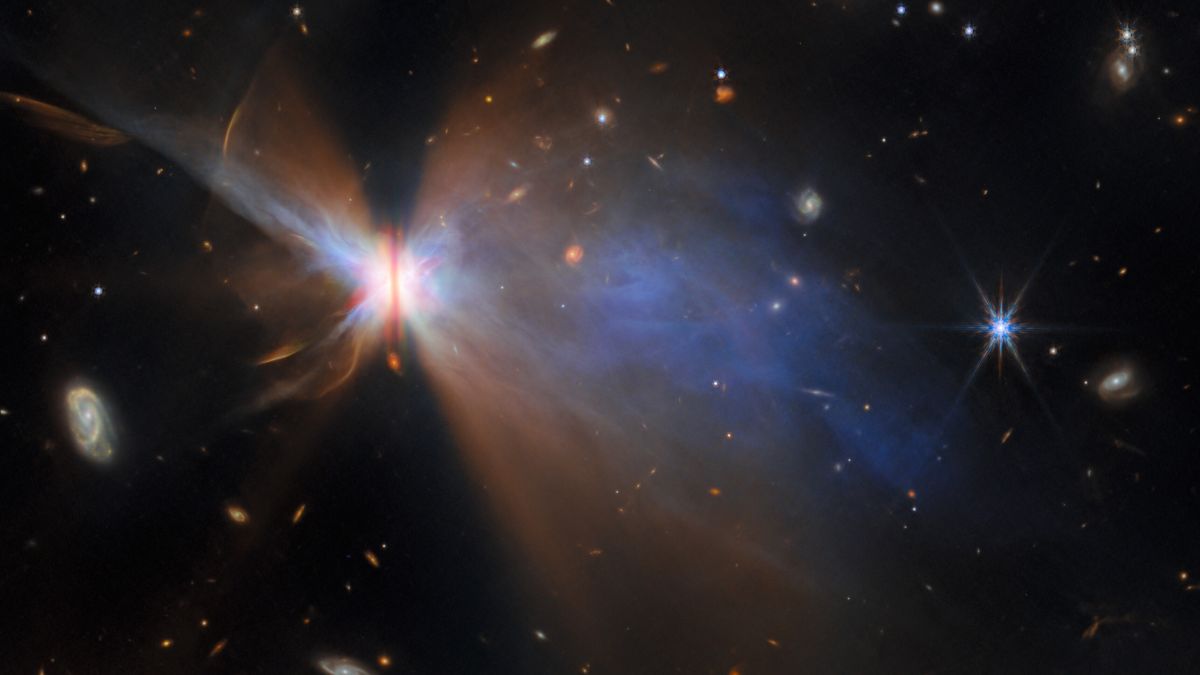
Just when scientists thought they had a handle on how planets form, the James Webb Space Telescope (JWST) throws a curveball. A newly discovered protoplanetary disk around a 30-million-year-old star is turning everything we thought we knew on its head.
Until now, astronomers believed that these dusty, gassy disks—where planets are born—disappeared after about 10 million years. But this latest find? It’s three times that age and still going strong. Welcome to the universe’s latest plot twist.
Table of Contents
Surprise
Imagine the universe had a scrapbook. You’d see snapshots of young stars with dusty halos—protoplanetary disks—wrapped around them. These are the nurseries where planets begin to form. Scientists have long believed these disks vanish after about 10 million years, blown away by stellar winds or used up in planet creation. But that belief just got challenged in a big way.
Astronomers from the University of Arizona, led by Feng Long, have discovered a disk still intact around a tiny star called J0446B. And here’s the kicker—this star is about 30 million years old. That’s like finding a baby stroller in a teenager’s room—it shouldn’t be there if the standard timeline were true.
Discovery
The star, J0446B, is located roughly 267 light-years away. It’s a low-mass star, only about a tenth the size of our Sun. Despite its small size, it’s making big waves in the astronomy world. The James Webb Space Telescope detected the presence of a thick, gassy disk still swirling around this star, and not just any gas—primordial gas, meaning it’s still in its original form and capable of forming new planets.

Here’s a quick breakdown of what makes this discovery so wild:
| Feature | Detail |
|---|---|
| Star Name | J0446B |
| Distance from Earth | 267 light-years |
| Star Mass | 0.1 times the Sun’s mass |
| Disk Age | 30 million years |
| Telescope Used | James Webb Space Telescope |
| Key Finding | Presence of active primordial gas |
This isn’t just leftover space junk. It’s a full-on, planet-making environment still in action. The study was published in The Astrophysical Journal Letters, and it’s making the astronomy community rethink their timelines.
Impact
What does this mean for planet formation? A lot, actually. If disks can last 30 million years instead of 10, that gives them much more time to build rocky planets, gas giants, or even Earth-like worlds. It also adds a new layer of complexity to how we understand planetary system development.
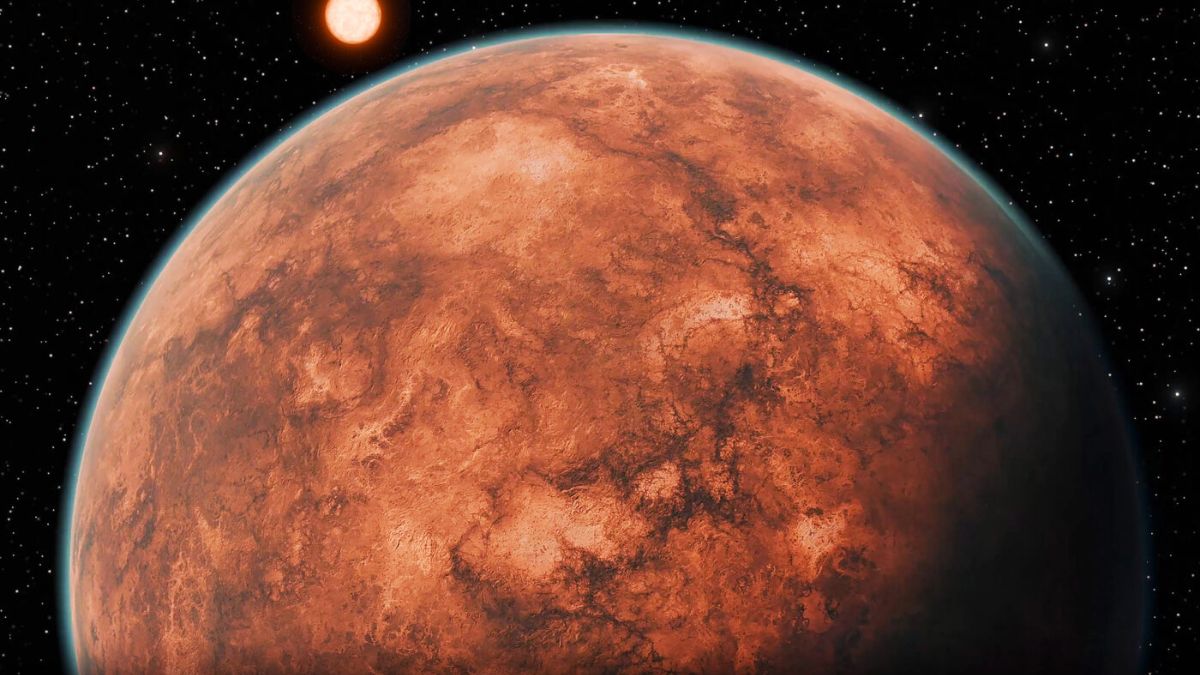
Take the TRAPPIST-1 system, for example. It’s a low-mass star with seven rocky planets, several of which sit in the habitable zone—the area where liquid water could exist. This new discovery might explain how systems like that managed to form so many planets. With more time and stable conditions, it’s much more likely that complex systems (and maybe life) can develop.
Chemistry
The James Webb Space Telescope didn’t just see the disk—it analyzed it. Scientists found that the disk’s chemical composition is still pretty much unchanged from its early years. That means this isn’t a “dead” or decaying disk—it’s still active. They detected hydrogen, neon, and other gases that help confirm it’s still planet-forming material.
Stable chemistry is good news for forming planets. It means that the ingredients for building worlds hang around long enough to actually get the job done. It also opens up dozens of new questions. For instance, what conditions allow some disks to last longer? Are smaller stars better at holding onto their disks? Could this mean more planets—and possibly habitable ones—than we previously believed?
Future
Every time JWST points its lenses at the stars, it seems to change our view of the universe. And discoveries like this one are just the beginning. The fact that this disk was found around a small, common type of star means there could be many more like it out there, quietly forming planets long after they were supposed to stop.
This isn’t just about dusty disks and timelines—it’s about the possibility of life beyond Earth. With longer-lasting disks, there’s more time for the magic of chemistry, gravity, and chance to form the worlds we’ve only dreamed of. So yes, scientists are still very much on the hunt for life on other planets, and JWST is giving them new paths to follow.
Whether it’s revising old models or opening up new ones, this discovery proves one thing: the universe doesn’t play by our rules. And with each new look through JWST’s mirror, we’re reminded how little we actually know—and how exciting that is.
FAQs
How old is the J0446B disk?
Around 30 million years, defying old theories.
What telescope discovered the disk?
The James Webb Space Telescope (JWST).
Why is this disk unusual?
Disks usually vanish after 10 million years.
Can planets still form in it?
Yes, it’s still rich in primordial gas.
What type of star is J0446B?
A low-mass star, about 10% the Sun’s mass.