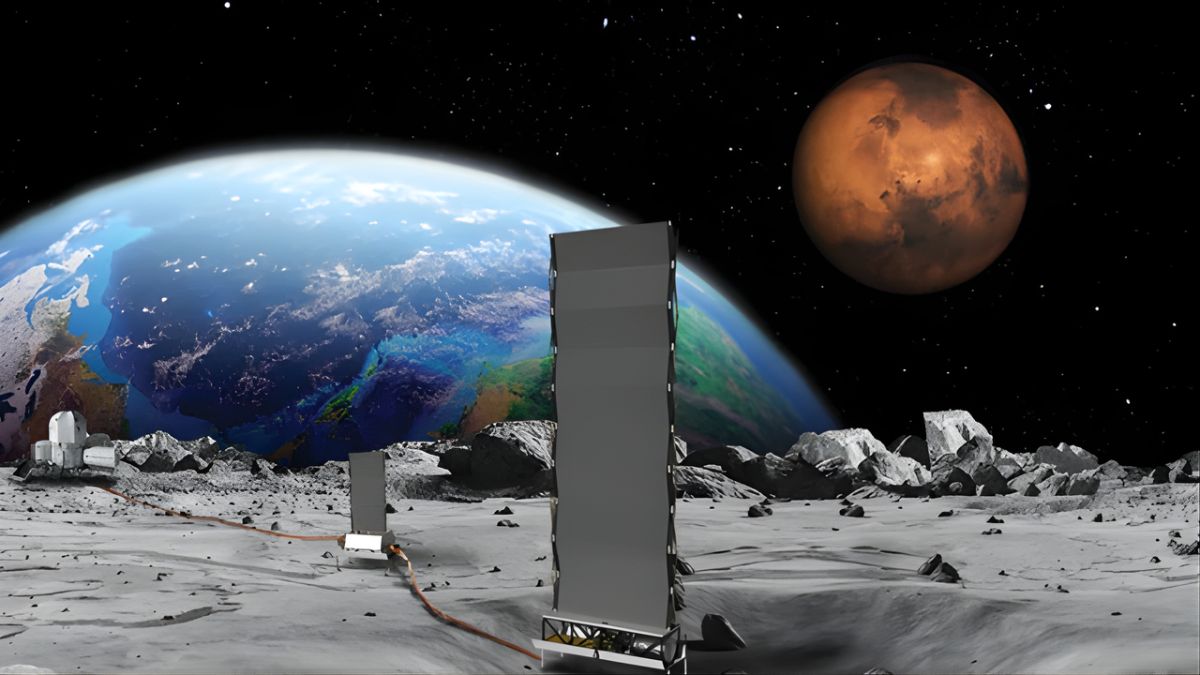
Sean Duffy hasn’t wasted a second since stepping in as acting head of NASA. He’s taken the controls and floored it, pushing for something that sounds like science fiction but is now very real: placing a working nuclear reactor on the Moon before 2030. And he’s not being subtle about it — this is about energy, looking, and yes, geopolitics.
Because while the U.S. plans its next big lunar leap, China and Russia are already looking at the same rock, possibly with the same goals.
Table of Contents
Purpose
This isn’t just about flipping a switch and lighting up a few Moon bases. The proposed reactor must produce at least 100 kilowatts — enough to power a small outpost, maintain operations during the long lunar nights, and lay the groundwork for missions to Mars.
The Moon isn’t exactly solar-friendly. Its poles, especially the south pole, receive very little sunlight. Nights can last two Earth weeks, and temperatures drop to bone-freezing extremes. Solar panels just can’t cut it. Nuclear power is the only realistic solution if humans want to live and work there full time.
Urgency
Duffy’s tone is clear: time is the enemy. He has called for proposals from private companies within 60 days and wants a project leader named in under a month. No bureaucracy, no delays. The next space race, in his eyes, won’t be won with flags and footprints. It will be won with power — literally. Whoever builds the infrastructure first will control access and future operations.
That sense of urgency is more than just a desire to move fast. It’s also about not getting left behind. China is making big moves in space, and if they manage to install a reactor first, they could claim the surrounding territory as strategically or scientifically critical. That could limit what the U.S. — and others — can do later on.
Shift
Before Duffy, NASA was already working on a plan for small, modular nuclear reactors through partnerships with private companies. The program, called Fission Surface Power, had several proposals underway.
But Duffy decided those were too small, too slow, and too safe. He’s asking for bigger power output, faster deployment, and bolder designs. It’s a hard pivot — one that tosses out older ideas in favor of a more aggressive timeline.
Testbed
The Moon is more than a destination. It’s a proving ground. The extreme conditions there offer the perfect environment to test long-term power solutions. If a reactor can survive and operate successfully on the Moon, it could do the same on Mars, where power will be even more critical for future human missions.
This would mark the first time a working nuclear power source is placed on another celestial body. That’s a big deal. A real milestone in space infrastructure.
Industry
Another shift? NASA’s relationship with the private sector. Duffy isn’t just open to working with outside companies — he’s pushing for it. The future of space exploration, in his view, depends on partnerships. With the International Space Station nearing its end, the U.S. needs new stations and systems — and fast. That means turning to companies that can move quickly and invest alongside government funds.
Names already involved include Lockheed Martin, Westinghouse, and General Atomics. These are heavy hitters in the world of defense and energy — and they’re now in the space game too.
Stakes
There’s no room for mistakes. The technology has to work, and it has to work safely. The plan is to use compact, low-risk fission reactors, designed with layers of containment and automatic safety features. While some might worry about putting nuclear material on a rocket, the systems being developed are specifically designed to withstand launch and operate in harsh environments.
And if it all works? This could unlock a new era of deep space exploration.
Why Nuclear Power on the Moon?
| Challenge | Solar Energy | Nuclear Reactor |
|---|---|---|
| Long lunar nights (14 days) | Fails without sunlight | Works non-stop |
| Extreme cold temperatures | Inefficient | Provides heat and power |
| Moon’s south pole lacks sunlight | Useless | Ideal placement |
| Energy needed for bases | Not enough | 100 kW+ capability |
| Mars mission simulation | Limited use | Perfect test platform |
This is no longer about planning. It’s happening. The U.S. wants to be the first country to deploy nuclear power off Earth, and the Moon is the launchpad — literally and figuratively.
Duffy’s push may seem dramatic, but in space, timing is everything. Whoever builds the foundation first controls what comes next. And this time, the finish line isn’t about who gets there — it’s about who stays there.
FAQs
Why use nuclear and not solar on the Moon?
Solar power isn’t reliable at the lunar poles due to darkness.
What will the reactor power?
It will power a Moon base and test systems for future Mars missions.
Who is building the reactor?
NASA is working with companies like Lockheed and Westinghouse.
Is the reactor safe?
Yes, it’s designed to be compact, stable, and safe for launch.
Why is NASA rushing this project?
To beat China and Russia in lunar energy and space dominance.