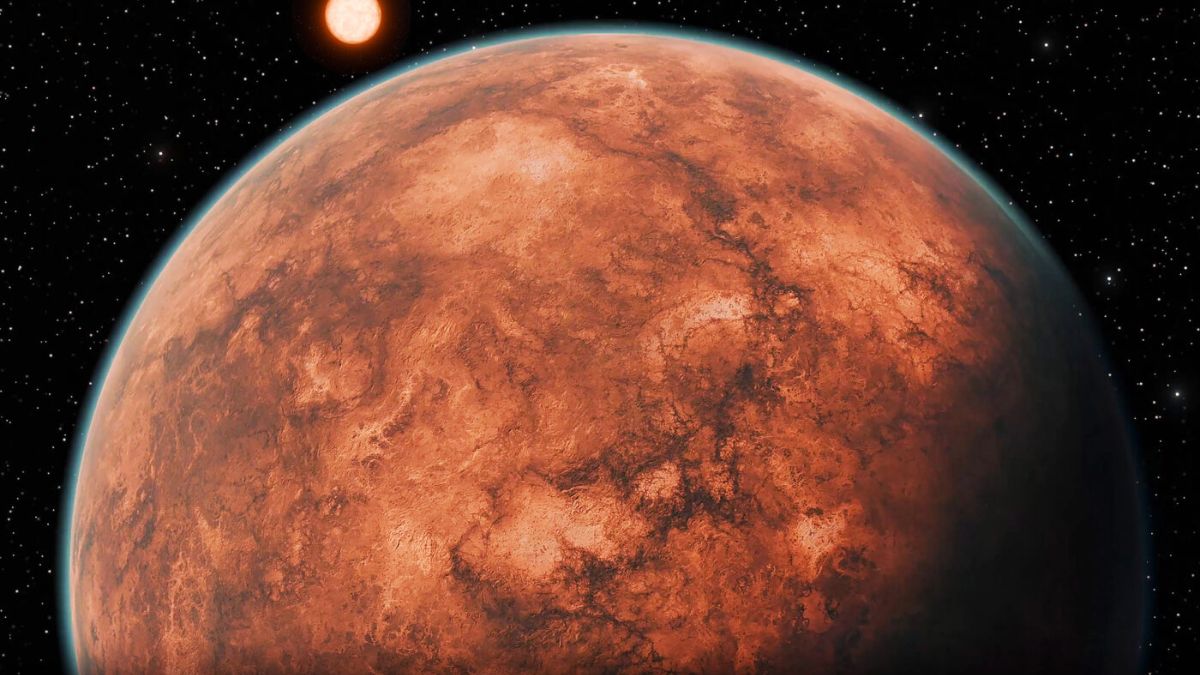
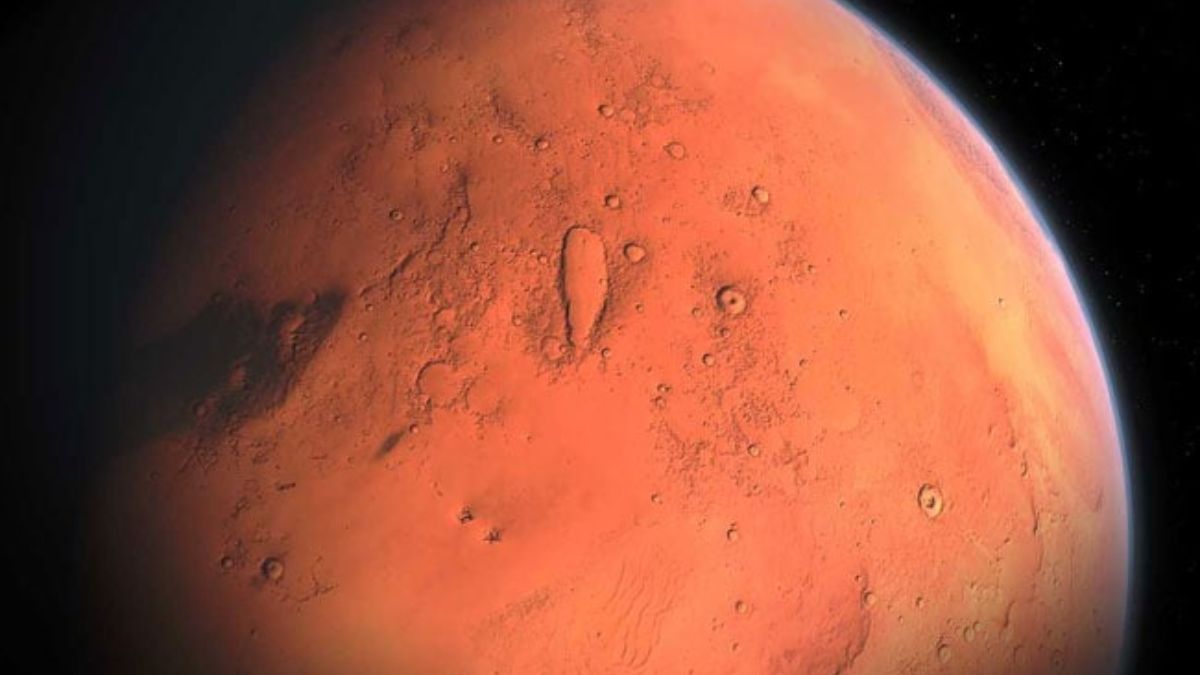
Just when you thought Mars couldn’t surprise us any more, NASA drops another bombshell. This time, it’s not about water or ancient life — it’s about the Red Planet itself slowly shedding its outer layers into space.
Sounds like something from a sci-fi movie, right? But in the past few months, advanced instruments orbiting Mars have detected something truly strange: real mineral fragments from the Martian surface drifting into orbit. Let’s take a closer look at what this could mean.
Table of Contents
Breakdown
So, is Mars falling apart? Not exactly — but something weird is definitely happening. NASA satellites recently picked up changes in the way light reflects off the planet. After digging into the data, scientists made a wild discovery: tiny fragments from the Martian crust were floating above the surface, creating a faint, comet-like trail around the planet.
These aren’t just dust particles being kicked up by wind. These are chunks of minerals — including silicates and iron compounds — being released from the planet itself. That’s not something you see every day.
Causes
Okay, so what’s actually causing this space debris to form? NASA researchers believe there are three main reasons:
- Weak gravity: Mars has much less gravitational pull than Earth, making it easier for surface particles to escape.
- No magnetic field: Unlike Earth, Mars doesn’t have a global magnetic field to protect it from solar radiation, which can strip away materials.
- Extreme temperature swings: The constant shift between hot days and freezing nights causes expansion and contraction, forming microcracks in the crust.
Over time, these cracks grow, releasing tiny mineral grains into space. And while it’s not a full-on breakdown of the planet, it’s enough to make scientists raise an eyebrow.
Comparison
Don’t panic — Mars isn’t vanishing like some doomed exoplanet. In fact, NASA specifically compared this situation to the planet BD+05 4868 b, a world so close to its star that it’s literally evaporating. Mars, by contrast, is a safe distance from the Sun. So while the Red Planet is shedding pieces of itself, it’s not about to collapse or vanish any time soon.
Still, the rate at which it’s losing material is quicker than expected. And that’s what makes this discovery so important — because it means there’s something happening on Mars that we don’t fully understand yet.
Samples
Here’s the fun part: while this might seem like a problem for Mars, it’s actually a gift for science. These fragments floating in space are like free samples being handed out by the planet. They carry chemical and geological information that could help scientists understand:
- What parts of Mars they came from
- How those rocks were formed
- Whether they ever had contact with water
Basically, every particle is like a tiny messenger from the Martian crust. And with the help of space telescopes like James Webb and the spectrometers onboard rovers like Perseverance, scientists can analyze these fragments without even needing to bring them back to Earth.
Meaning
So, what does this tell us? It shows that Mars still has active geological processes going on — even if they’re subtle. These floating fragments aren’t just dust in the wind; they’re evidence that the planet is changing, bit by bit.
This discovery challenges our assumptions. We tend to think of Mars as this cold, dead world. But even in its stillness, the planet is doing something we didn’t expect. It’s a reminder that space is full of surprises — even in places we thought we already understood.
Future
So, what’s next? It’s hard to say, but if Mars can casually start tossing pieces of itself into orbit, who knows what other secrets it’s hiding? Maybe deeper layers of its crust hold evidence of ancient life. Maybe we’ll find water trapped in unexpected places. Maybe more crust fragments will reveal minerals we’ve never seen before.
One thing’s clear: Mars isn’t done telling its story. And thanks to new tools and missions, we’re better equipped than ever to listen.
FAQs
Is Mars really falling apart?
No, but it is slowly shedding surface particles into space.
What is escaping from Mars?
Silicate grains and iron compounds from the crust.
Why is Mars losing material?
Due to weak gravity, no magnetic field, and temperature swings.
Is this dangerous for Mars?
No collapse expected, but the loss is faster than normal.
Can we study the fragments?
Yes, they offer clues about Mars’ geology and water history.