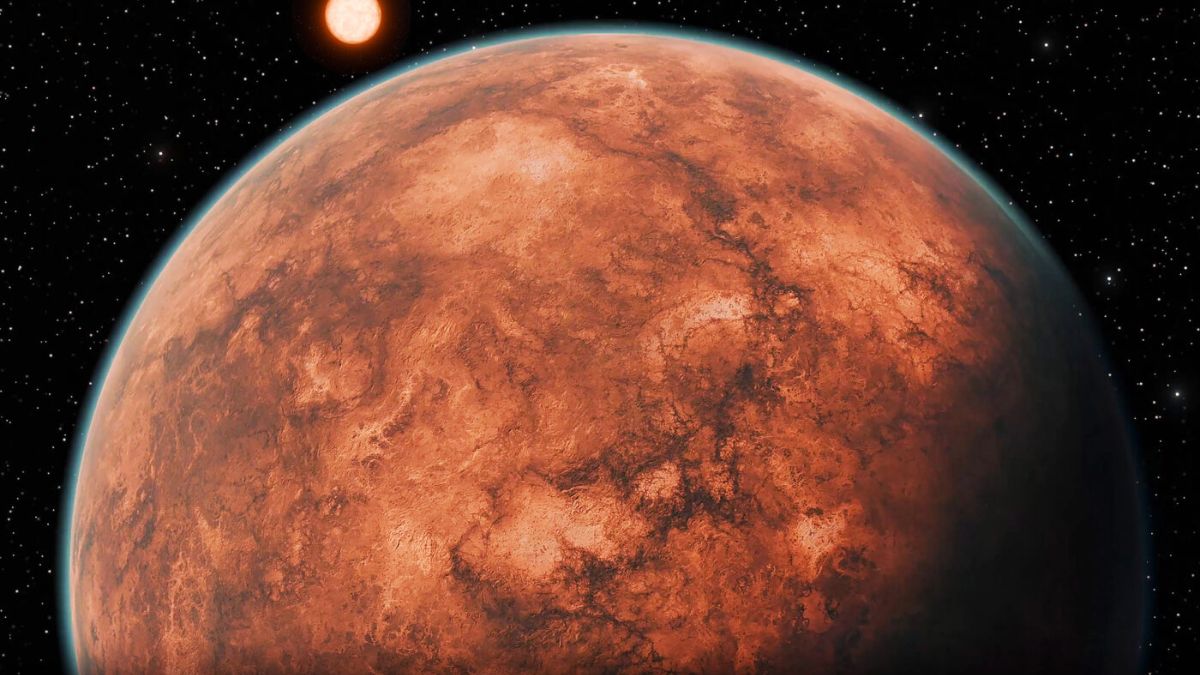
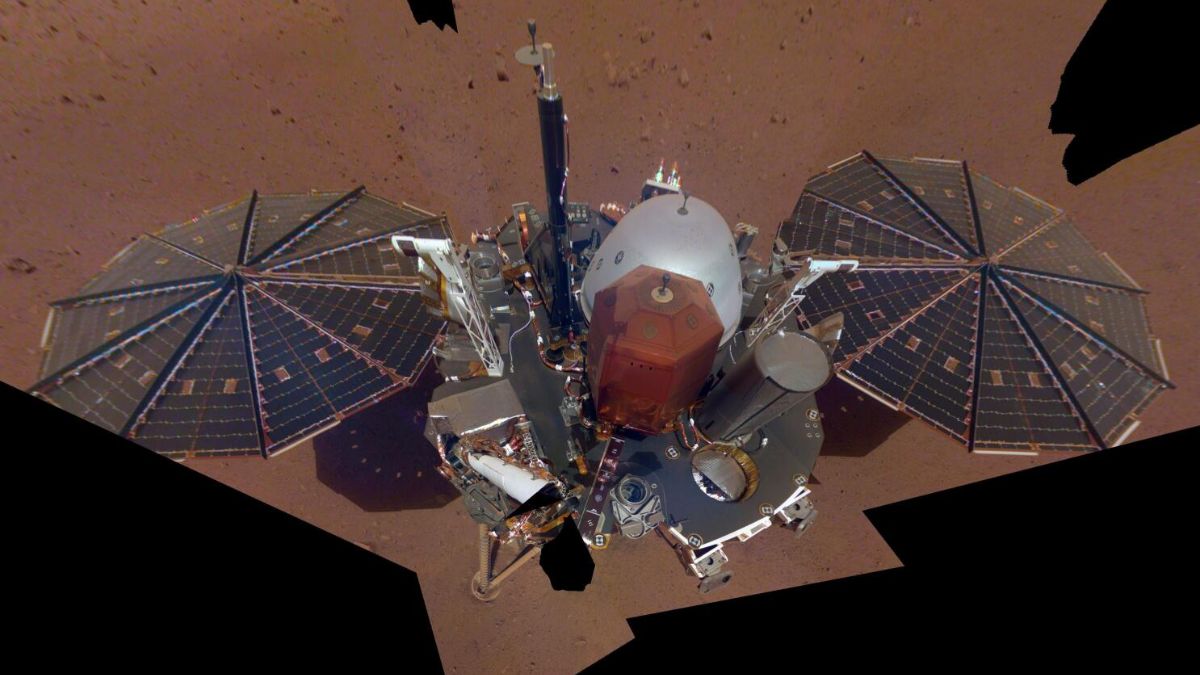
Just when we thought we had Mars all figured out, NASA’s InSight mission delivers a shocker: the Red Planet doesn’t just have a liquid core—it also has a solid one. That’s right, deep inside Mars sits a solid core with a radius of about 613 kilometers.
This groundbreaking discovery, published in Nature, is shaking up everything we thought we knew about Mars’ inner structure and its geological past. Let’s look into what this means for Mars and why it’s such a big deal.
Table of Contents
Discovery
For years, scientists believed that Mars had a fully liquid core. That idea has been in textbooks and planetary models for decades. But thanks to new data from the InSight lander, that theory has been cracked open.
The mission, led by NASA and featuring global research collaboration, used a seismometer placed on the Martian surface to detect seismic waves—Marsquakes, if you will. These waves helped scientists peek deep into the planet’s interior. What they found was surprising: signals bouncing off something solid in the middle of the core.
Seismic
So how did they figure this out?
It all comes down to how seismic waves move. The team studied two specific types:
- PKKP waves – These go straight through the liquid core.
- PKiKP waves – These bounce off a solid layer inside the core.
The seismometer picked up PKiKP waves between 50 and 200 seconds earlier than expected. That kind of early arrival only makes sense if something solid is reflecting the waves deep inside Mars. If the core were entirely liquid, those signals wouldn’t show up like that. This seismic clue led scientists to rethink the Red Planet’s inner structure.
Structure
Inside Mars, things aren’t as neat and tidy as once believed. The data suggests the planet’s core isn’t organized in clean layers like a cake. Instead, it’s messy and irregular.

Scientists describe the rocks inside Mars as “fossils” of its formation—preserving the planet’s early history like ancient pages of a planetary diary. This changes our view of Mars from a relatively simple rocky world to one with a rich, complex geological history.
Debate
Not everyone is sold on the new findings just yet. Some scientists, like Simon Stähler from the Swiss Federal Institute of Technology, are still cautious. While he acknowledges the effort and precision of the study, he estimates the chance of Mars having a solid core at only 30%.
One of the challenges? The extreme conditions inside Mars are difficult to recreate in Earth labs. That means scientists can’t be totally sure how materials behave under Martian pressure and temperature. It’s a bit like trying to guess what’s in a locked box using only the sounds you hear when you shake it.
Still, even skeptics admit the data is compelling—and it’s forcing a serious scientific conversation.
Impact
This discovery isn’t just a Mars thing—it could shift how we look at rocky planets across the galaxy. If Mars has a solid core, then maybe Earth-like planets elsewhere do too. That opens the door to understanding planetary evolution in a brand-new way.
This information can help scientists:
- Build better models of how planets cool and evolve
- Rethink the magnetic history of Mars (which ties into its core)
- Consider similar core structures in exoplanets
In other words, Mars is giving us a cosmic lesson that could apply way beyond our own Solar System.
Future
Thanks to InSight, we’re entering a new phase of Mars exploration. While the lander officially stopped operations in 2022, the data it collected continues to spark discovery. And this solid core finding is just the latest chapter.
The Red Planet is full of surprises. We’ve sent dozens of missions, rovers, and landers to study it—but it still has secrets buried deep beneath its dusty surface. And now, thanks to a few seismic waves and some sharp science, we’ve unlocked another one.
Mars reminds us that even familiar places can still hold mysteries. And who knows? Maybe this discovery will be the push we need to dig deeper, not just on Mars, but on other worlds too.
FAQs
Does Mars have a solid core?
Yes, recent data suggests Mars has a small solid core.
How was Mars’ solid core found?
Using seismic waves detected by the InSight lander.
What are PKiKP waves?
Seismic waves that bounce off solid layers in a core.
Why is this discovery important?
It changes how we understand Mars’ structure and history.
Is there still debate about this?
Yes, some scientists are cautious about the interpretation.