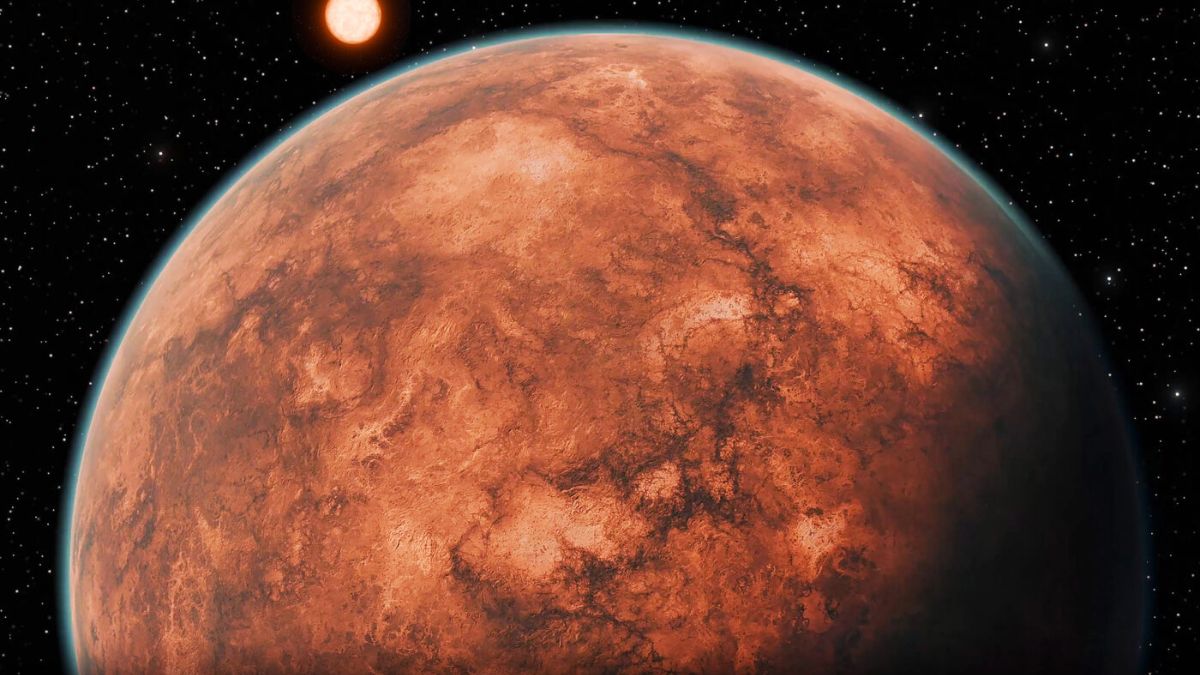
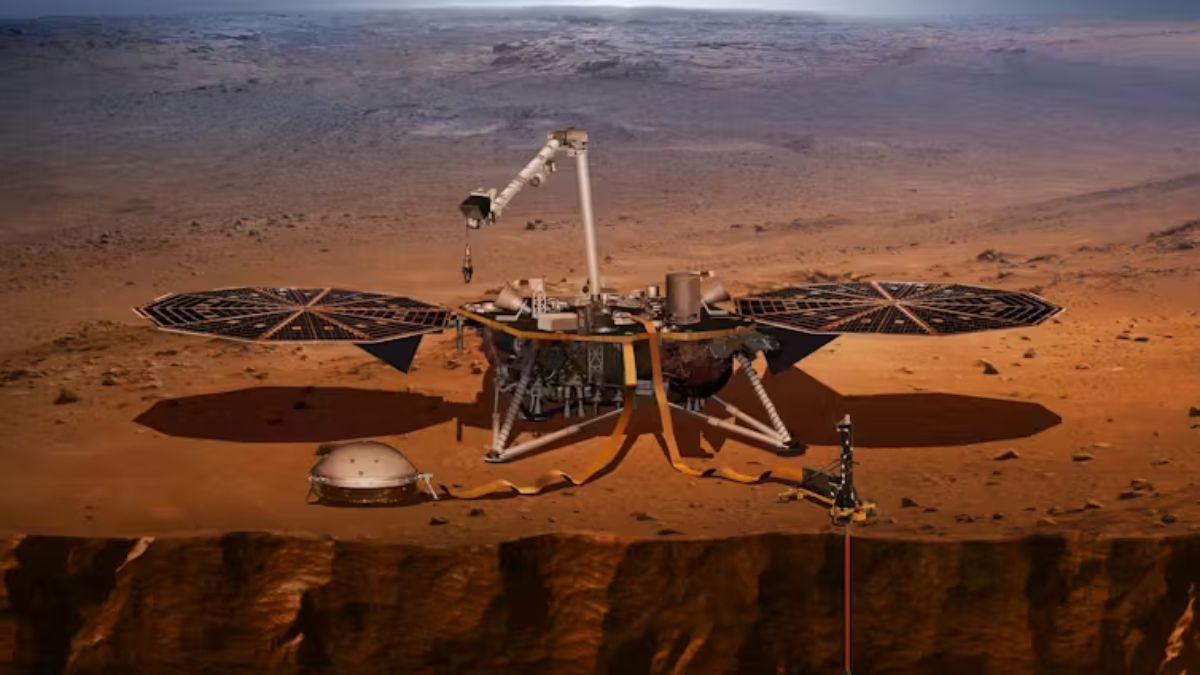
Mars, the Red Planet that has long captured the imagination of scientists and space lovers alike, has just surprised us again. Thanks to NASA’s InSight mission, researchers have discovered something no one expected — Mars doesn’t just have a liquid core, it also has a solid inner core about 613 kilometers in radius.
This revelation, published in the journal Nature, is reshaping everything we thought we knew about the planet’s internal structure and geological past. Let’s look into what this discovery means and why it’s such a big deal.
Table of Contents
Structure

For years, scientists believed that Mars had a fully liquid core. That theory made sense — it matched up with earlier seismic and magnetic data. But now, InSight’s latest findings show that there’s more to Mars’ insides than we ever imagined. Turns out, under all that red dust, there’s a solid inner core. And it’s changing the way we think about planetary formation, not just on Mars, but possibly across the Solar System.
This opens new doors in planetary science. If Mars can have both a solid and liquid core, maybe other rocky planets do too — even if we haven’t seen the evidence just yet.
Seismology
So how did scientists discover something that lies so deep beneath the Martian surface? It all comes down to seismic waves — basically, Marsquakes. These waves travel through the planet, and depending on what they pass through (solid or liquid), they behave differently.
Two specific types of seismic waves gave away the secret:
- PKKP waves: These move straight through the liquid part of the core.
- PKiKP waves: These reflect off solid structures inside the core.
The InSight lander’s seismometer picked up PKiKP waves between 50 and 200 seconds earlier than expected. That tiny difference? It meant something solid was hiding deep inside — and it wasn’t supposed to be there if the core were entirely liquid.
Interior
When researchers looked deeper into the data, they found something even more interesting — Mars isn’t organized in neat, tidy layers like we thought. Instead, its interior seems to be irregular, full of rocky structures that act like fossils of the planet’s early days.

These “fossil rocks” could be remnants from when Mars first formed, giving us a timeline into a past that’s billions of years old. It’s like the planet itself is holding on to ancient secrets, buried deep in its core.
Debate
Of course, not every scientist is fully convinced. Some are urging caution before rewriting textbooks. Simon Stähler, a geophysicist involved in the InSight mission, admits he isn’t 100% sold. While he respects the research and acknowledges the team’s careful work, he puts the chances of a solid core at around 30%.
He also pointed out a valid issue — the lab conditions we use to study core materials here on Earth aren’t the same as the extreme pressures and temperatures on Mars. So some of the strange seismic data might come from physical behaviors we don’t yet fully understand.
Still, even cautious voices agree: the evidence is solid enough to seriously consider a whole new model for Mars’ interior.
Impact
This discovery changes more than just Mars’ Wikipedia page. It forces scientists to think differently about how rocky planets form and evolve over billions of years. If Mars has a solid core, then it could mean:
- More complex geological activity than we thought
- Similar core structures in other rocky bodies, like Mercury or exoplanets
- Clues to why Mars lost its magnetic field and became dry and barren
InSight’s data is becoming one of the most valuable assets we’ve ever collected from another planet. It’s offering insights into the Red Planet’s hidden history — and perhaps into the evolution of Earth and other planets too.
Perspective
It’s wild to think that even after centuries of studying Mars, we’re still learning completely new things about it. This solid core discovery isn’t just another fun fact — it’s a reminder of how much mystery space still holds.
As science improves and missions like InSight continue to deliver data, our view of Mars will keep changing. Who knows what else we’ll find under the surface?
One thing’s for sure: this planet still has a lot to teach us.
FAQs
Does Mars have a solid core?
Yes, recent data shows Mars has a solid inner core.
How was the solid core found?
Through seismic wave analysis from the InSight mission.
What are PKiKP waves?
Seismic waves that bounce off solid parts inside the core.
Is the Mars core fully solid?
No, it’s both liquid and solid based on current data.
Why is this discovery important?
It changes our understanding of planetary formation.