NASA has been keeping an eye on Earth’s magnetic field for years. That’s not surprising — after all, it shields us from solar radiation and cosmic rays. But now, something strange is catching their attention: a growing magnetic anomaly located between South America and the southwest coast of Africa.
It’s called the South Atlantic Anomaly, and while it’s not a danger to people on the ground, it’s definitely shaking things up for satellites and spacecraft in orbit.
Table of Contents
Anomaly
So what exactly is an anomaly in this context? It’s a region where Earth’s magnetic field is significantly weaker than normal. Think of it like a pothole in the planet’s magnetic shield. In that weak spot, energetic solar particles can sneak closer to Earth than they usually would, especially affecting any tech passing through the area.
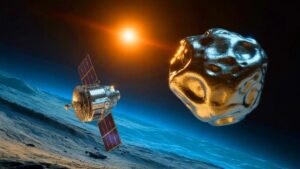
Satellites, spacecraft, and even the International Space Station cross through this zone regularly — and when they do, they’re at greater risk of short circuits, system glitches, and permanent damage. That’s why NASA powers down sensitive instruments during those flybys.
Cause
The root of the problem is deep underground. Earth’s magnetic field is generated by the motion of molten iron in the outer core. But this process isn’t perfectly smooth everywhere.
Underneath Africa lies a mysterious region known as the African Large Low Shear Velocity Province. It’s a dense rock mass that disrupts the magnetic field’s formation. That interference weakens the field in the South Atlantic region, creating the anomaly we’re now watching closely.
Growth
Here’s where things get more interesting. The South Atlantic Anomaly isn’t just staying put — it’s growing. Even more intriguing, recent satellite data suggests it’s splitting into two separate low-intensity zones.
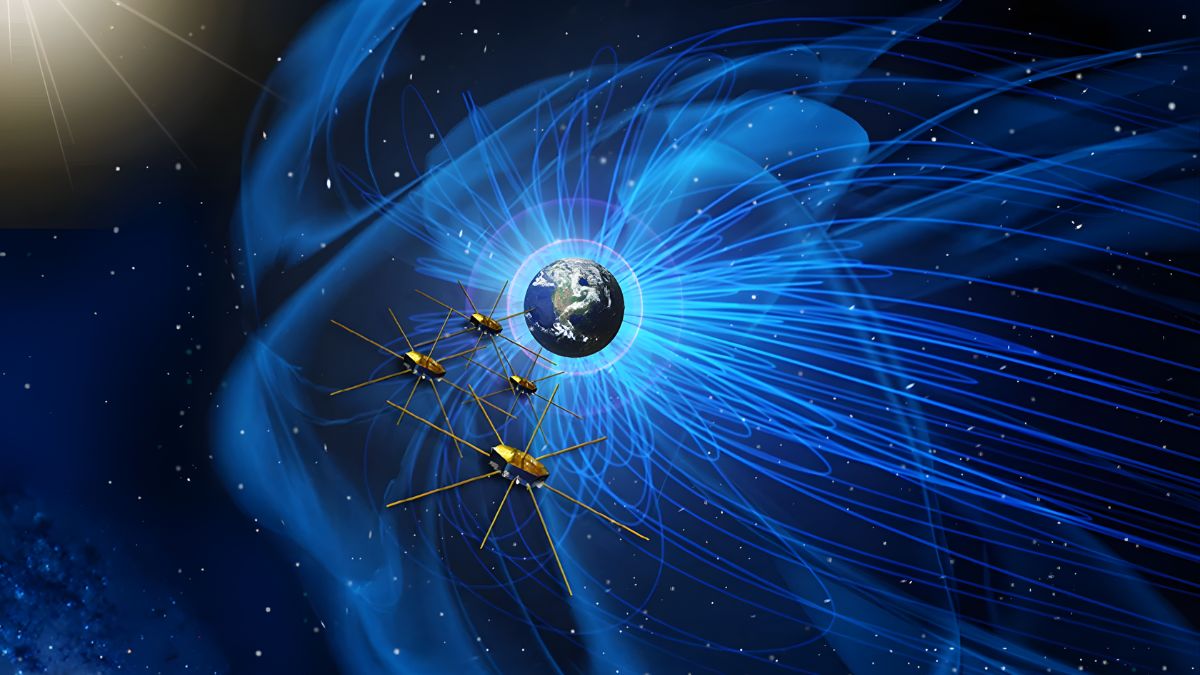
This shift is being tracked by a variety of orbiting instruments, including CubeSats and other magnetic field monitoring satellites. What they’re seeing points to a dynamic, changing phenomenon, not a stable glitch.
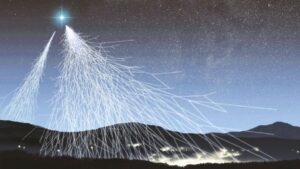
But don’t panic — this isn’t a sign that Earth’s magnetic poles are about to flip anytime soon. Studies suggest that similar anomalies have popped up before, over millions of years. So while it’s evolving, it’s not unprecedented.
Risk
The biggest issue lies in space, not on Earth’s surface. Satellites that pass through the South Atlantic Anomaly experience more intense radiation. That can cause electronic malfunctions or even damage onboard systems permanently.
To avoid disaster, NASA and other space agencies now factor this zone into their mission planning. Systems are often turned off or shielded more heavily during passes through the anomaly. It’s not just about avoiding glitches — it’s about protecting billions of dollars in orbiting tech.
Opportunity
For NASA, this isn’t just a problem — it’s a scientific opportunity. The anomaly helps researchers understand how Earth’s magnetic field is generated and how it behaves over time. This knowledge is crucial for building better predictive models and preparing future missions.
The data collected from the anomaly is already helping scientists fine-tune forecasts of magnetic changes. And in the long term, this could improve how we design satellites and plan spaceflights, making them safer and more efficient.
Auroras
In 2024, researchers discovered that the South Atlantic Anomaly may also play a role in how auroras behave. The reduced magnetic shielding in the area seems to alter how solar particles travel through Earth’s upper atmosphere.
This could mean that the anomaly has indirect effects on weather patterns and electromagnetic phenomena on Earth, expanding its impact beyond what we initially thought.
Safety
The good news? Life on Earth is safe. Our atmosphere and the rest of the magnetic field still offer more than enough protection for us to carry on as usual.
But the anomaly’s growth is a reminder of how complex and dynamic our planet really is. What happens nearly 3,000 kilometers beneath our feet can shape what happens far above our heads.
South Atlantic Anomaly at a Glance
| Feature | Details |
|---|---|
| Location | Between South America and southwestern Africa |
| Main Cause | Dense rock mass beneath Africa |
| Main Risk | Radiation damage to satellites and spacecraft |
| Status | Growing and splitting into two zones |
| First Tracked By | NASA and magnetic field monitoring satellites |
| Surface Impact | Minimal — no threat to human life |
While the South Atlantic Anomaly might not be something we feel every day, it’s a critical piece of the space puzzle. And as our world becomes more tech-reliant, understanding the forces that affect our satellites is more important than ever.
Because sometimes, the biggest surprises come from below our feet — not above our heads.
FAQs
What is the South Atlantic Anomaly?
A weak spot in Earth’s magnetic field over South America and Africa.
Why is NASA concerned about it?
It increases radiation risk for satellites and the ISS.
Is this anomaly dangerous for humans?
Not directly — it mainly affects space-based technology.
Is the anomaly growing?
Yes, it’s expanding and may be splitting into two zones.
Can it cause a pole reversal?
Unlikely. It’s part of normal magnetic field variation.