
Not all groundbreaking discoveries happen in high-tech labs. Sometimes, they come from the mind of a high school student. That’s exactly what happened with Matteo Paz, a young student from Pasadena, California, who, during a classroom project, managed to uncover 1.5 million previously undetected space objects.
Yes, you read that right—1.5 million. Using NASA data, a custom machine learning algorithm, and a bit of curiosity, Matteo left NASA speechless and made headlines in the astronomy world.
Table of Contents
Matteo
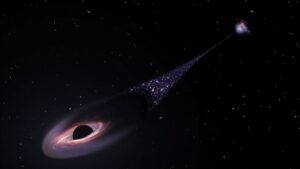
Who is Matteo Paz? Just your average high school student—or so it seemed. Matteo was attending the Planet Finder Academy at Caltech, a program designed to get young minds involved in real space research. Under the guidance of astrophysicist Davy Kirkpatrick, Matteo dove into the archives of NASA’s NEOWISE telescope.
In what started as a classroom exercise, he built something extraordinary: an AI model capable of scanning through billions of space records to detect invisible signals hidden in the data. And just like that, a student made a discovery that would impress even veteran scientists.
NEOWISE
The NEOWISE telescope, launched in 2009, was originally designed to track near-Earth asteroids using infrared light. Over its lifetime, it collected a massive archive of data—over 200 billion infrared observations. After its mission ended, the data sat waiting for someone to make sense of it.

That someone turned out to be Matteo. Using NEOWISE’s untouched data, he created a system that could detect faint light fluctuations—the kind linked to distant binary stars, quasars, and even supernovas that had been hiding in plain sight.
Algorithm
Matteo’s tool was not just another program. He built a machine learning model from scratch. It combined mathematical methods like Fourier transforms and wavelet analysis, which allowed him to detect tiny time-based fluctuations in light levels—signals too subtle for the human eye or traditional analysis to catch.
In just six weeks, his model was already delivering results. And not just a few interesting points, but a full catalog of over 1.5 million space objects that had gone unnoticed for years.
Impact
This wasn’t some niche achievement. Matteo’s findings were so significant that they were published in The Astronomical Journal, one of the most respected publications in the field. Scientists around the world now have access to his catalog, which could help guide future observations using next-generation tools like the James Webb Space Telescope.
Imagine that—data once considered too overwhelming to process is now being transformed into a usable, detailed infrared map of the sky, thanks to one student’s initiative.
Caltech
Unsurprisingly, Caltech didn’t wait long to offer Matteo a more permanent spot. He’s now a research assistant at IPAC (Infrared Processing and Analysis Center), where he’s not only improving his model but also helping train other students to work with big data and space analytics.
What’s impressive is how far ahead of his age Matteo is. He sharpened his skills at Pasadena’s Math Academy, a school district program that gave him a solid foundation in computational modeling and astrophysics—tools he later turned into groundbreaking research.
AI
Matteo’s case proves something important: AI is changing the way we do science. Machine learning helps find patterns that might take humans years—or decades—to notice, especially when there’s massive amounts of data involved.
Sure, there are still critics who argue that AI lacks precision or can’t fully replace traditional methods. But Matteo’s success—validated by a peer-reviewed scientific journal—shows just how powerful these tools have become.
It’s also a clear sign that the future of space exploration won’t just come from billion-dollar satellites or elite researchers. It could come from kids with laptops, algorithms, and curiosity.
Future
What Matteo Paz has achieved is nothing short of historic. At an age when most students are still figuring out their schedules, he has reshaped how we look at astronomical data. His work doesn’t just highlight the power of AI; it shows how accessible science can be when young minds are given the tools and encouragement to explore.
Whether he’s the next Hawking or just a brilliant teen making waves in space science, one thing’s for sure—Matteo Paz has already left his mark on the stars.
FAQs
Who is Matteo Paz?
A high school student who discovered 1.5 million space objects.
What data did he use?
He analyzed NASA’s NEOWISE telescope infrared archives.
How many objects did he find?
Over 1.5 million previously undetected space objects.
What technique did he use?
He built an AI model using Fourier and wavelet analysis.
Where is Matteo working now?
At Caltech’s IPAC as a research assistant.