
The Moon has always felt like the calmest companion in the night sky. Quiet, unshakable, and ever-present. It’s inspired poets, guided tides, and lit up the darkness for billions of years. But now, NASA has a warning that changes how we might look at it. The Moon could soon be struck by an asteroid speeding in from deep space.
No, this isn’t a sci-fi plot or a conspiracy theory—it’s based on real, recent observations from NASA’s James Webb Space Telescope (JWST). Let’s break down what’s going on and why scientists are paying close attention.
Table of Contents
Telescopes
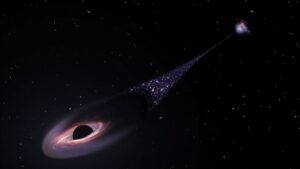
Over the past few decades, space telescopes like Hubble and now James Webb have completely transformed our view of the cosmos. These advanced tools let scientists see faraway galaxies being born and detect space objects that once went unnoticed.
In May 2024, the James Webb telescope focused on a moving object—tiny in size, but large in significance. That object was asteroid 2024 YR4, a fast-traveling space rock about 53 to 67 meters in diameter. To give you an idea, that’s about the size of a 10-story building.
When astronomers first spotted it, they realized something big: 2024 YR4 had the highest ever recorded chance of colliding with Earth for a large asteroid—3.1%. That may sound small, but for planetary defense experts, it was more than enough to take seriously.
Impact
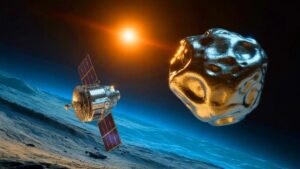
So, what if this asteroid had hit Earth? Luckily, that’s no longer a concern. Later recalculations showed that Earth is not in danger. But there’s a twist—the Moon could be.
If asteroid 2024 YR4 ends up hitting the Moon, what would actually happen? According to astronomer Pawan Kumar, a former researcher at the Indian Institute of Astrophysics, it’s not something we need to fear.
He explained that even if debris from the Moon were to be flung into space after the impact, it would mostly burn up in Earth’s atmosphere if it reached us. That means no harm would come to our planet.
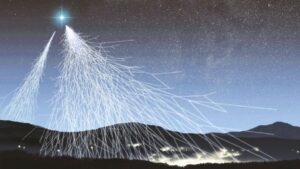
The main result? A brand new crater on the Moon’s surface. It could become a new feature visible to telescopes—or even stargazers with the right gear. And those fragments we mentioned? They might create meteor showers here on Earth, giving us a show instead of a scare.
Opportunity
For NASA and other space agencies, an event like this isn’t just news—it’s a goldmine of data. A real-time lunar impact offers the perfect chance to study how space collisions work. From crater formation to dust ejection and orbital changes, scientists can learn a lot from simply watching what happens.
This kind of opportunity doesn’t come often. Most asteroid collisions either happen too far away or leave little trace. But a Moon impact? That’s close enough to study in detail.
Training
Although asteroid 2024 YR4 won’t hit Earth, it still served a major purpose. NASA used it as a full drill for planetary defense—running through every step from detection, risk assessment, and public updates to ongoing tracking.
This isn’t NASA’s first round of asteroid training either. In 2022, they completed the DART mission, where they crashed a spacecraft into an asteroid to shift its path—on purpose. That mission was a success and proved we can redirect space rocks if needed.
So this new asteroid case, while not dangerous, is another example of how well-prepared NASA has become in responding to potential threats from space.
Future
2024 YR4 will become visible again in 2028, and scientists will be ready. They plan to study everything about it—its surface, shape, density, and structure. These details matter. They’ll help scientists figure out how different asteroids react to force, pressure, and even possible deflection attempts.
Even after being ruled out as a threat, 2024 YR4 will still be watched closely when it comes near the Moon and Earth in the 2030s. These continued observations will help improve simulations and defense models.
It’s all part of a bigger goal: making sure that if a real threat ever does appear, we’ll be ready to act—quickly and smartly.
FAQs
Is the Moon really at risk?
Yes, the 2024 YR4 asteroid may hit the Moon, not Earth.
Will debris from the Moon harm Earth?
No, most debris would burn up in Earth’s atmosphere.
How big is the 2024 YR4 asteroid?
It’s between 53 and 67 meters wide—about 10 stories tall.
Was Earth ever at risk?
Initially, yes, with a 3.1% chance, but that’s ruled out.
Why is this event important to NASA?
It offers a rare chance to study real-time lunar impact.