
Scientists in Spain have just confirmed something that sounds straight out of science fiction: comet 3I/ATLAS is not from around here. It’s an interstellar traveler, a piece of ancient cosmic material that has journeyed across the galaxy for over 10 million years before passing near our solar system. And it’s not just any comet—it’s a time capsule, holding clues to the early days of other star systems.
Let’s cut into why astronomers are calling this icy visitor a rare window into the past of the Universe.
Table of Contents
Origin
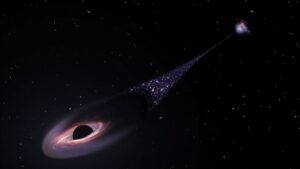
Comet 3I/ATLAS was first detected on July 1 from an observatory in Chile through the ATLAS (Asteroid Terrestrial-impact Last Alert System). At first glance, it looked like just another harmless comet passing through. But then, something about its path caught the attention of astronomers.
It didn’t follow the normal curved orbit of comets bound by our Sun’s gravity. Instead, it had a hyperbolic trajectory—proof that it was coming from beyond our solar system. That makes it only the third confirmed interstellar object we’ve ever seen, after the mysterious ‘Oumuamua and comet 2I/Borisov.
Distance
Now, before you get nervous—there’s no threat to Earth. The closest it will come is about 270 million kilometers away. That’s well beyond any dangerous range, but still close enough to be observed using modern telescopes.
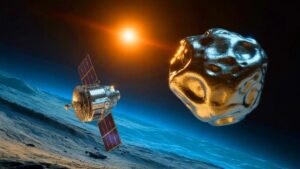
And while it quietly passes by, scientists are using every tool they have to learn as much as possible before it disappears into deep space once again.
Research
This is where Spain takes the spotlight. Astronomers from CITIC (Center for Research in Information and Communication Technologies) at the University of A Coruña have done something remarkable: they traced 3I/ATLAS’s journey back 10 million years using advanced simulations.
Using stellar data from the European Space Agency’s Gaia mission—essentially the most detailed star map ever made—they were able to rewind the clock. Gaia tracks the movement, brightness, and positions of billions of stars. With that info, CITIC researchers simulated where the comet came from and how it reached our solar system.
Significance
Why is this such a big deal? Because interstellar comets aren’t just rocks—they’re time travelers.
Comets like 3I/ATLAS formed around distant stars under conditions completely different from those in our own solar system. That means they carry unique chemical fingerprints from other corners of the galaxy.
Studying this material gives scientists rare insight into how other planetary systems form. It’s like digging into the DNA of the Universe. Some of the questions being asked include:
- What were the building blocks of other worlds?
- Did organic compounds form the same way elsewhere?
- Could the ingredients for life be spread across the galaxy?
3I/ATLAS could help answer these. That’s why Pérez Couto from CITIC calls it a true cosmic time capsule—frozen evidence of the early universe preserved in ice and dust.
Spain
This discovery also marks a major moment for Spanish science. Teams at CITIC used advanced numerical simulations to recreate the comet’s path through time. It’s not just about stargazing—it’s about working with data, models, and computing power to explore events we can’t directly witness.
The project proves that Spain is not just participating in international astronomy—it’s helping to lead the charge. Their work shows how global collaboration and cutting-edge technology are rewriting what we know about the cosmos.
Future
What’s next for 3I/ATLAS? It will keep going. After its brief visit to our solar system, it will continue drifting into deep space, possibly never to return.
But its journey has already left a mark. ESA and other space agencies are making interstellar object research a top priority. These strange visitors are like messengers from the early universe. Every time we discover one, we get closer to understanding how stars, planets, and maybe even life, came to be.
Who knew a frozen chunk of ice from another system could teach us so much?
FAQs
What is comet 3I/ATLAS?
It’s an interstellar comet, not from our solar system.
How far will it pass from Earth?
Around 270 million kilometers away.
Why is it called a time capsule?
It holds material from other star systems, billions of years old.
Who studied its origin?
Astronomers from CITIC at the University of A Coruña.
How was its path traced?
Using data from the ESA’s Gaia space mission.