Have you ever wondered what secrets lie at the bottom of a quiet river? Well, one such secret just made waves in North Carolina. Archaeologists recently uncovered what they believe to be the remains of the feared Spanish privateer La Fortuna, a warship that vanished in 1748. And while this isn’t the first time a sunken ship has been found, this particular discovery might rewrite a forgotten chapter of colonial history.
Let’s look into what makes this Spanish ship so important and how it connects to a dramatic moment in America’s past.
Table of Contents
Discovery

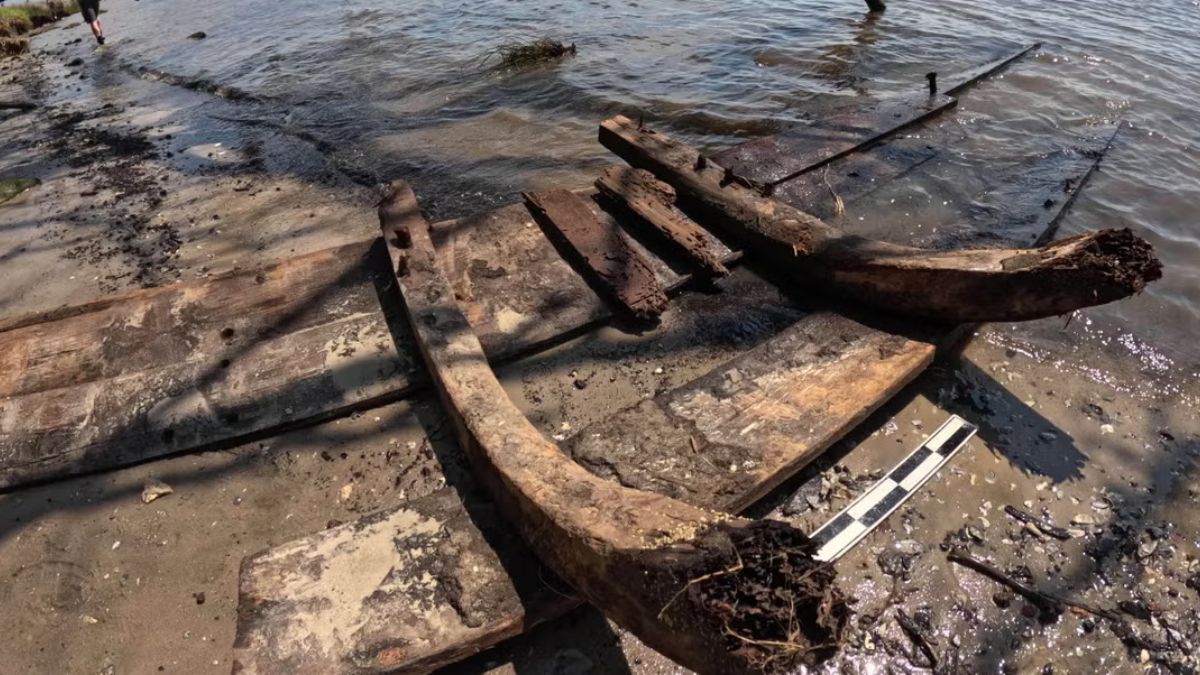
The wreckage was found deep in the Cape Fear River, a swampy area where the river meets the Atlantic Ocean. What the team found was remarkable: over 40 pieces of wood, still in good condition. After analyzing them, researchers confirmed they were cypress wood from Mexico—a material commonly used in 18th-century Spanish ships built in the Americas.
This, along with the location of the wreck and the presence of an old cannon first found nearby in 1985, strongly suggests that the ship is none other than La Fortuna—a vessel feared in its time and lost in a dramatic explosion during a battle.
Context
To understand why this discovery matters, we need to go back to September 1748, during the War of King George—a conflict that involved Britain, France, and Spain. During this time, La Fortuna, a Spanish corsair (or privateer), left Cuba with a mission: attack the British colony of Brunswick in North Carolina.

The ship’s crew landed, temporarily captured the town, and engaged in a fierce gunfight with colonial militias. They returned to their ship, and as they were fighting back with cannon fire—boom. A massive explosion destroyed La Fortuna, killing the captain and most of the crew.
The treasure that was recovered from the wreck was later used to fund the construction of two churches—one in Brunswick and the other in nearby Wilmington.
Multiple
But La Fortuna wasn’t the only surprise. In the same area, archaeologists found four shipwrecks in total, along with remnants of docks and a colonial-era road. Here’s what they uncovered:
- One ship was apparently used as landfill to help build docks.
- Another was a flat-bottomed colonial boat used for transporting goods and people.
- The fourth wreck is still mostly buried and remains a mystery.

These discoveries help paint a fuller picture of life in colonial Brunswick, a town that was eventually destroyed by British troops in 1776 during the American Revolution.
Urgency
Sadly, time isn’t on the side of these historical treasures. Erosion, flooding, and dredging threaten to wipe them out before they can be studied. That’s why archaeologists launched an emergency recovery mission, carefully removing the wood from the water and transporting it to the Queen Anne’s Revenge conservation lab in Greenville.
There, the wood will be treated using special conservation techniques to prevent it from decaying. This will allow researchers to study the ship in more detail—and perhaps even reconstruct parts of it for future museum displays.
Importance
This isn’t just a cool shipwreck story—it’s a crucial piece of forgotten history. Many people think of North America’s colonial past as a battle between the British and French. But Spain played a massive role, too. They had colonies, docks, trade routes, and warships like La Fortuna actively shaping the continent’s future.
The discovery of this shipwreck gives us a glimpse into the role of Spanish privateers in protecting trade routes and disrupting enemy settlements. It also shows how small colonial towns defended themselves in times of conflict. This is a part of American history that often gets overshadowed, but now, it’s literally rising back to the surface.
FAQs
Where was La Fortuna found?
In the Cape Fear River, North Carolina.
When did La Fortuna sink?
In September 1748, during the War of King George.
What caused the ship to sink?
A massive explosion during a battle with colonial militias.
How many ships were found?
Four shipwrecks were discovered in total.
What happens to the wreck now?
Recovered wood is being preserved at a conservation lab.