Imagine stumbling upon a forgotten piece of colonial history buried under muddy waters for nearly 300 years. That’s exactly what happened in North Carolina, where archaeologists uncovered what they believe is a Spanish warship from the 1700s. The discovery isn’t just rare—it’s rewriting part of America’s colonial past.
Found in the depths of the Cape Fear River, this sunken treasure might be the remains of the Spanish corsair La Fortuna, a warship lost in 1748 during a daring raid. But there’s more to this story than just an old ship. Let’s cut into what makes this discovery so important.
Table of Contents
Discovery

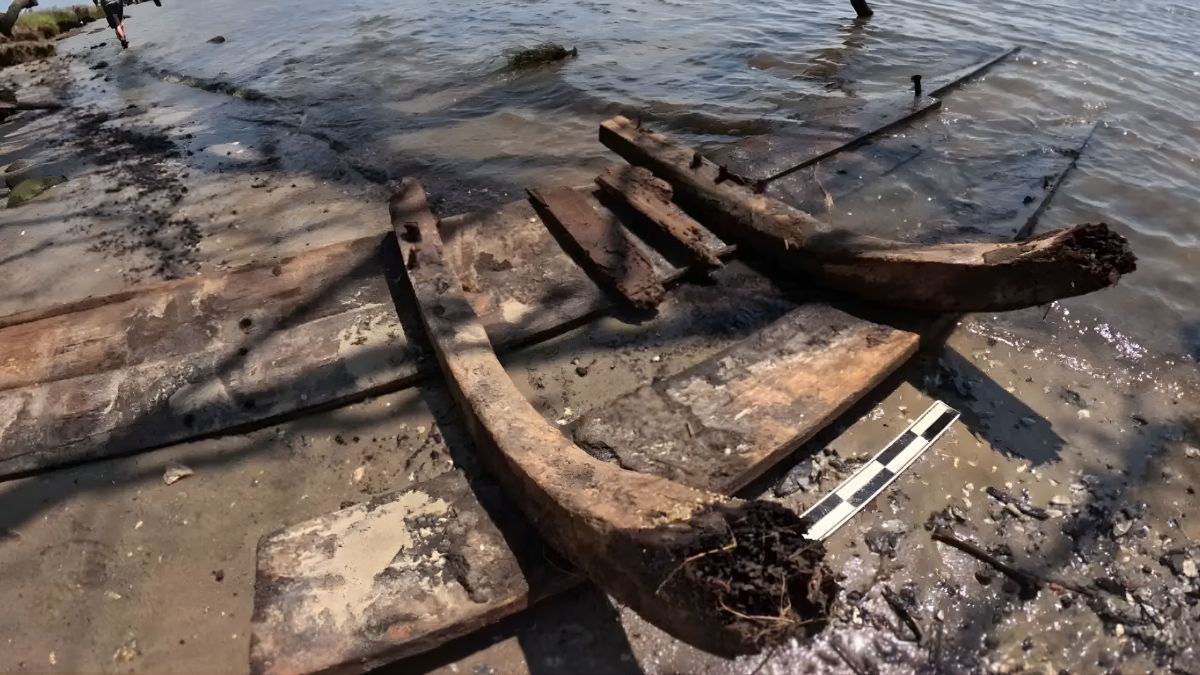
The Cape Fear River is a swampy mix of fresh and saltwater near the Atlantic Ocean, and it’s here that a team of archaeologists found over 40 pieces of wooden debris. These weren’t just any scraps of timber. Analysis showed they were made from Mexican cypress—wood commonly used in the 18th century to build Spanish ships in the Americas.
This material clue, paired with the location and evidence from a 1985 canyon discovery nearby, strongly points to La Fortuna. This feared corsair ship had a fiery end, and now, its remains are offering a rare window into a forgotten part of colonial warfare.
Context
To understand the importance of La Fortuna, we need to jump back to September 1748, right in the middle of the War of King George. This conflict saw Great Britain clashing with France and Spain across colonies around the world.

During this time, La Fortuna sailed from Cuba with a mission—to strike the British colony of Brunswick in North Carolina. The Spanish forces briefly took control of the town, looted supplies, and fought off colonial militias. But when things got heated, the corsairs retreated to their ship and opened fire with cannons.
Then, something went horribly wrong. A massive explosion ripped through La Fortuna, killing the captain and most of the crew. The ship sank, taking its secrets with it. Some of the recovered treasure was later used to fund churches in Brunswick and Wilmington, giving the wreck both historical and religious significance.
Multiple
Now here’s the twist—La Fortuna wasn’t alone.

While surveying the riverbed, researchers uncovered four shipwrecks in total. Each tells a different story from the colonial era:
| Shipwreck | Description |
|---|---|
| La Fortuna | Spanish corsair ship sunk in 1748 during a battle |
| Ship 2 | Used as landfill during dock construction |
| Ship 3 | Likely a flat-bottomed colonial cargo/passenger vessel |
| Ship 4 | Largely buried; details remain a mystery |
In addition to the wrecks, archaeologists found remnants of wooden docks and even an old colonial road—evidence of a once-thriving port city. These finds help piece together how Brunswick functioned before being destroyed by British troops in 1776.
Threats
Despite the excitement, this discovery is on borrowed time. The site faces constant threats from river erosion, storms, and dredging operations that keep the river navigable for modern ships. That’s why archaeologists launched an emergency recovery mission to save what they could.
They transported the recovered wood to the Queen Anne’s Revenge conservation lab in Greenville, where experts will preserve it using special treatments. This process helps prevent deterioration so future generations can study and possibly even display parts of the ship.
Significance
So why does La Fortuna matter so much? Because it shifts the narrative of early American history. When people think of colonial America, they usually picture British redcoats or French fur traders. But Spain was a major player, too.
This Spanish ship reminds us of Spain’s influence on the East Coast—through trade, naval battles, and settlements. Corsairs like those aboard La Fortuna were aggressive players in the fight for dominance over trade routes and colonies.
And then there’s the human story—how everyday settlers defended their homes, how lives were lost in sudden battles, and how those moments are still with us centuries later, hidden beneath river silt.
History has a strange way of revealing itself, and this shipwreck is a perfect example. What started as a colonial raid ended with a massive explosion, and now, nearly 300 years later, it’s giving us a deeper knowing of who shaped this continent.
FAQs
Where was La Fortuna found?
In the Cape Fear River, North Carolina.
When did La Fortuna sink?
In 1748 during a colonial battle.
What wood was used in the ship?
Mexican cypress, common in Spanish shipbuilding.
How many shipwrecks were found?
Four shipwrecks were discovered in total.
Why is this discovery important?
It reveals Spain’s hidden role in colonial history.