What comes to mind when you think of gold? Probably rings, necklaces, maybe some shiny coins or bars stacked in a vault. But gold isn’t just about beauty or wealth. It just became the star of a scientific breakthrough that could flip what we know about physics, energy, and the universe on its head.
Recently, researchers found that gold can resist melting—even at temperatures higher than the surface of the Sun. No joke. This discovery could change how we build nuclear reactors, design spacecraft, and even know cosmic events. Let’s break down how this happened—and why it matters.
Table of Contents
Discovery

It all started with a team of international scientists who decided to push gold to its absolute limits. They used insanely powerful lasers—firing in ultrashort bursts—to heat tiny pieces of gold to outrageous temperatures.
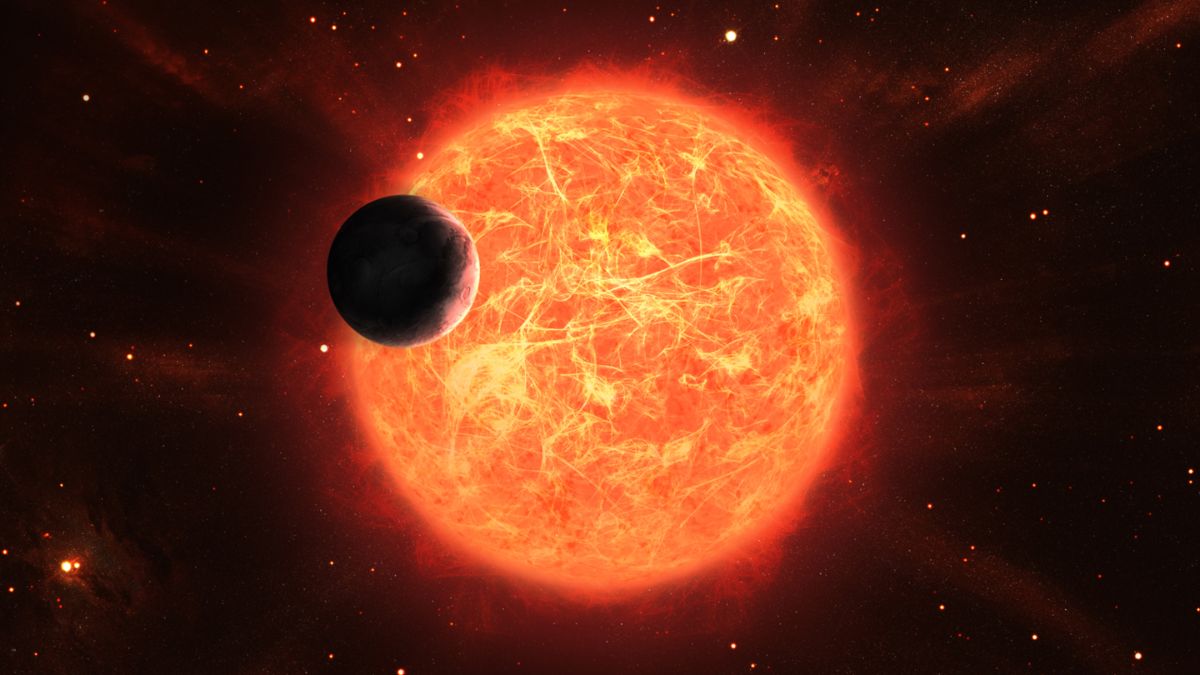
How hot, exactly? Over 19,000 Kelvin, which is more than 18,700°C. That’s hotter than the Sun’s surface. And guess what? Gold didn’t melt instantly. It stayed solid for over two picoseconds (that’s a trillionth of a second).
Now, that may sound short, but in the world of high-speed physics, two picoseconds is plenty to turn heads. It was long enough to prove that our current understanding of how materials behave at extreme heat needs a serious update.
Superheating

How is this even possible? The answer lies in something called superheating. Under normal heating, atoms in a solid vibrate more and more until they break their structure and become liquid. That’s the melting process we all learned about in school.
But here’s the twist—if you heat something super quickly (like with lasers), the atoms don’t have time to react. So, the structure stays intact for a moment, even beyond its normal melting point.
This is what happened with gold. Scientists thought no solid could resist more than three times its melting temperature—what they called the entropy catastrophe. But gold shattered that limit, surviving at over 14 times its melting point. That’s a whole new level.
Materials

Now, gold is just the beginning. Scientists are already lining up new experiments to test other materials under the same conditions. Could silicon, iron, or carbon resist melting if heated fast enough too? What if some materials have no fixed melting point at all—only depending on how they’re heated?
These questions could spark a revolution in material science. It means we might develop heat-resistant materials for:
- Spacecraft shielding
- Medical instruments exposed to intense energy
- Nuclear fusion reactors
- Jet engine components
Suddenly, the future of technology looks very, very hot—and gold might be the roadmap.
Significance
This wasn’t just a fun laser experiment. This gold test gives us real-world insights for challenges scientists and engineers face every day.
Let’s look at how this discovery could make a real impact:
| Field | How It Helps |
|---|---|
| Astrophysics | Models how matter behaves during asteroid impacts or star explosions |
| Nuclear Energy | Builds materials that can withstand extreme reactor conditions |
| Industry | Designs heat-resistant tools and structures |
| Space Travel | Develops spacecraft parts that survive atmospheric reentry |
By better understanding how materials behave when pushed to the limit, we can create tools and systems that don’t just survive in extreme environments—they thrive.
Impact
Let’s be honest—melting gold doesn’t sound like a world-changing idea at first. But this experiment proved something crucial: what we thought we knew about physical limits isn’t the whole story.
Gold held up under conditions we thought were impossible. If other materials do the same, we may be looking at a new age of extreme materials science. This could shape the future of technology in energy, space, industry, and beyond.
So next time you see gold jewelry, remember—it’s not just bling. It might just be the toughest metal in the galaxy.
FAQs
What is gold’s new heat resistance?
Gold stayed solid above 18,700°C during experiments.
How was gold heated so fast?
Scientists used ultra-short, high-powered laser pulses.
What is superheating in materials?
It’s when solids resist melting if heated too quickly.
Can other materials survive like gold?
Scientists are testing others now to find out.
Why is this discovery important?
It helps advance nuclear tech, astrophysics, and materials science.