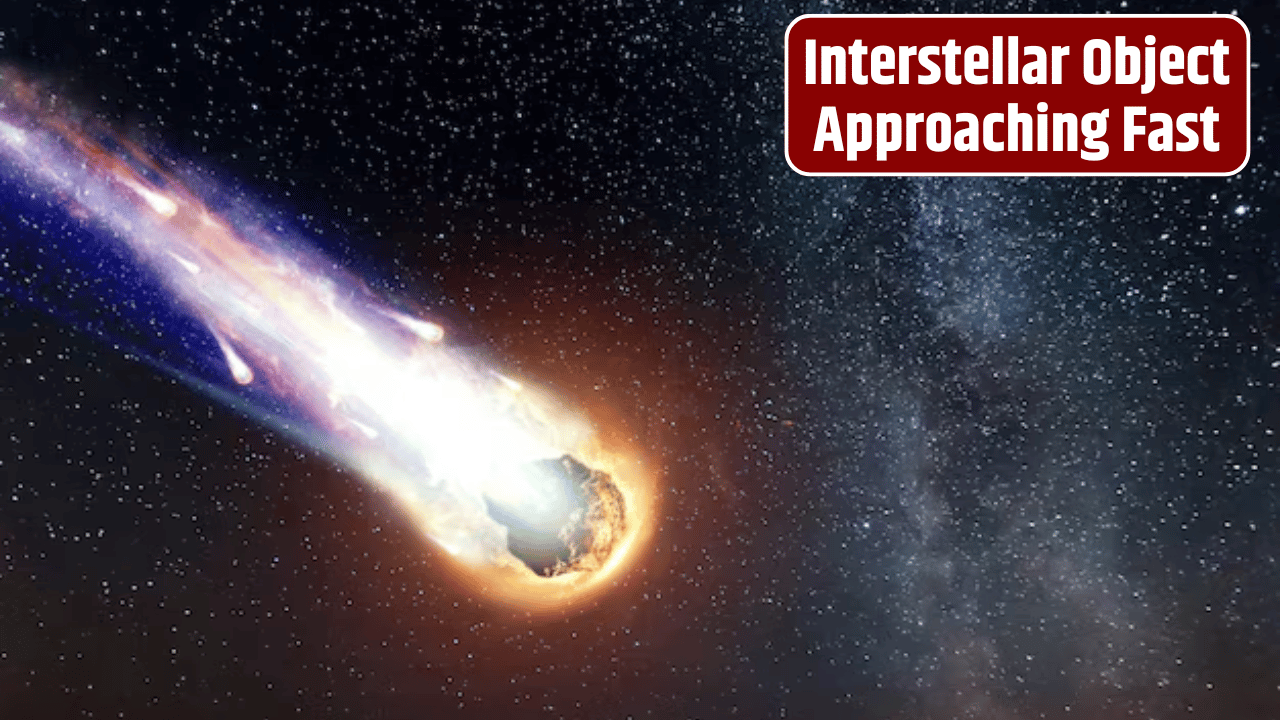
A quick look at NASA’s official news page and the Center for Near-Earth Object Studies (CNEOS) shows no mention of any object named A11pl3Z. No alerts, no tracking data, no peer-reviewed observations in the Minor Planet Center database either — where all confirmed celestial discoveries are logged.
If NASA had found an object this fast and this big, it would be headline news across every credible science outlet: Space.com, BBC Science, Reuters, Scientific American. Yet, silence.
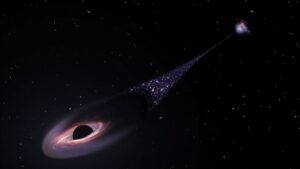
That’s a pretty good hint we’re dealing with speculation, not science.
Table of Contents
How Real Interstellar Visitors Are Discovered
We’ve actually seen two confirmed interstellar visitors:
| Object | Year Discovered | Speed (km/h) | Distinguishing Feature |
|---|---|---|---|
| ʻOumuamua | 2017 | ~315,000 | Elongated, no tail, tumbling motion |
| 2I/Borisov | 2019 | ~177,000 | Clear cometary tail |
Both were verified through multiple observatories worldwide and documented by NASA and the European Space Agency (ESA). Their paths followed hyperbolic trajectories — meaning they came from outside our solar system, swung past the Sun, and kept going.

If A11pl3Z were real, astronomers everywhere would already be coordinating follow-ups with the James Webb Space Telescope, the Vera C. Rubin Observatory, or even Pan-STARRS, which specializes in spotting new near-Earth and interstellar objects. Nothing of the sort has been logged.
Why These Rumors Go Viral
Stories like this often begin on social media or anonymous blogs that mimic NASA-style press releases. The name “A11pl3Z” even fits the pattern — it looks official, like a catalog designation, but doesn’t match NASA or IAU naming conventions.
The ingredients of virality are simple:
- a mysterious cosmic object,
- a whiff of scientific jargon,
- and the thrill of “what if?”

People want to believe the universe is sending us new surprises — and sometimes, it is. Just not always like this.
Could Something Like A11pl3Z Exist Someday?
Absolutely. Statistically, astronomers estimate that thousands of interstellar objects pass through our solar system every year — most too small or faint to detect. Future surveys, especially from the Rubin Observatory’s Legacy Survey of Space and Time (LSST), are expected to reveal many more.
But when one appears, the evidence comes fast and hard: raw telescope data, orbital parameters, official releases, and follow-up observations across multiple countries. Not a single anonymous post.
| Claim | Status | Verification Source |
|---|---|---|
| NASA detected object A11pl3Z | False | NASA News, CNEOS |
| Object moving 245,000 km/h toward Mars | No data | No record in JPL or MPC |
| Largest interstellar object discovered | False | Only ʻOumuamua and 2I/Borisov are confirmed |
| Telescopes tracking A11pl3Z | False | No observation logs in IAU Minor Planet Center |
What to Do When You See Stories Like This
When you stumble upon a “NASA just discovered…” post:
- Check NASA.gov — if it’s real, it’ll be there first.
- Look for independent confirmation — from ESA, JPL, or major astronomy news outlets.
- Be wary of unnamed scientists or vague quotes — real discoveries include verifiable authors and institutions.
The Bigger Picture
We live in an era where science fiction often bleeds into science reporting. And while that’s not always bad — curiosity drives exploration — it’s worth keeping our feet on the ground while our eyes stay on the stars.
NASA is watching the skies for interstellar visitors, and with the technology ramping up, the next object might indeed be real — bigger, faster, and stranger than ʻOumuamua. But when it comes, you’ll see it splashed across every credible astronomy outlet, not just viral TikToks or sketchy websites.
Until then, A11pl3Z remains a ghost story in space.
FAQs
Has NASA confirmed discovering an object named A11pl3Z?
No. There are no official records, press releases, or observational data confirming any object by that name.
What are the only confirmed interstellar objects so far?
ʻOumuamua (2017) and 2I/Borisov (2019).
How fast do interstellar objects typically travel?
Between 100,000–300,000 km/h, depending on their trajectory and origin.
Could something like A11pl3Z appear in the future?
Yes, future surveys could reveal more interstellar visitors — but they’ll be verified through official observatories and scientific publications.