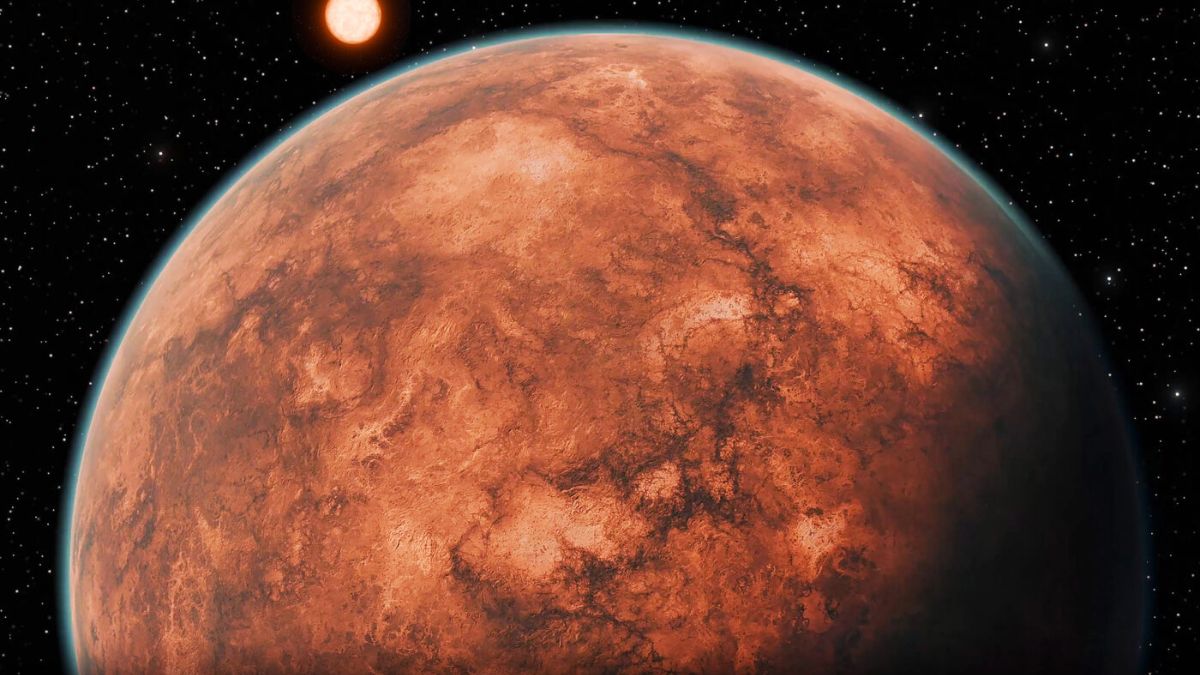
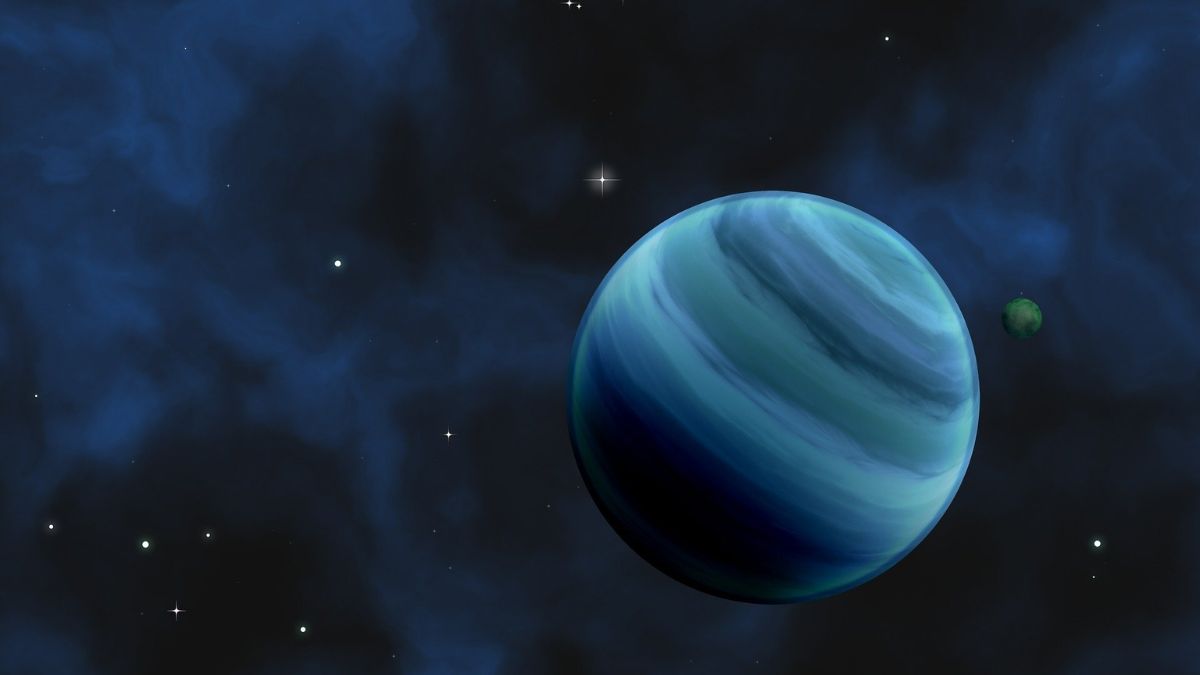
Something strange has been spotted far beyond our Solar System—a young exoplanet called YSES-1c is shrouded in clouds of mineral dust that, according to current science, shouldn’t even exist.
This surprise has astronomers scratching their heads and rewriting what they thought they knew about planetary evolution. Let’s break down what makes this discovery so important, and why the universe just got a whole lot more mysterious.
Table of Contents
Exoplanets
An exoplanet is simply a planet that orbits a star outside our Solar System. Some are rocky like Earth, others are gas giants like Jupiter. But why should we care about them? Because every time we study one, we get a clearer picture of how planets form, how they grow old, and whether life could exist elsewhere.
Think of exoplanets as cosmic time capsules. They each tell a different story of how solar systems are born and evolve.
YSES-1c
YSES-1c orbits a star that’s just 16 million years old—a baby compared to our 4.5 billion-year-old Sun. But what’s really wild is that it’s wrapped in a thick layer of mineral dust. This dust is made up of magnesium silicates and iron, floating in its atmosphere like a fog.
Here’s the catch: this kind of dust shouldn’t be there. Theoretically, it should have disappeared in the first 5 million years after the planet formed. But YSES-1c is breaking the rules.
Shock
The biggest surprise? Scientists have found the strongest silicate absorption signal ever recorded on an exoplanet. This means there’s a heavy concentration of minerals in the planet’s atmosphere—way more than they’ve seen before.
That single piece of data challenges a long-standing theory in planetary science. Up until now, it was believed that silicate clouds couldn’t last in a young planetary system. YSES-1c has forced scientists to go back to the drawing board.
Dust
So, what’s the deal with this dust? It’s not just some random debris. These mineral particles are crucial for understanding how atmospheres form and evolve. They affect everything—from the planet’s temperature to how light passes through its skies.
If dust can survive for over 16 million years, like it has on YSES-1c, that changes the timeline scientists use to model young exoplanets. This means a big update to how we simulate early planetary atmospheres and even climate systems.
Here’s a simple comparison:
| Feature | Old Belief | YSES-1c Discovery |
|---|---|---|
| Silicate cloud lifespan | Less than 5 million years | Over 16 million years |
| Dust concentration | Mild to moderate | Extremely high |
| Planet age | 10M–50M (typical study) | 16 million years |
| Atmosphere model | Predictable patterns | Needs revision |
Sibling
YSES-1b is another exoplanet orbiting the same star. Discovered in 2020, it’s like YSES-1c’s sibling. But here’s the fun part—they’re not identical twins. While both have mineral dust, the compositions are quite different.
This tells us something interesting: even planets born around the same star can end up with wildly different environments. It’s a bit like siblings raised in the same house who grow into completely different adults.
Insights
Why does this matter so much to astronomers? Because it shows how complex planet formation really is. Every time a new exoplanet like YSES-1c is discovered, it adds another piece to the puzzle of the universe.
This discovery helps scientists:
- Build more realistic simulations of planet formation
- Rethink how atmospheres evolve over millions of years
- Compare exoplanets with those in our own Solar System
NASA and the European Space Agency (ESA) are both keeping a close eye on YSES-1c. Its mysterious clouds may hold clues about how planets develop and whether life might be possible somewhere out there.
Wonder
The universe has a funny way of surprising us. Just when we think we’ve got it all figured out, a planet like YSES-1c appears and flips the script. It’s a powerful reminder that space isn’t just cold rocks and gas—it’s full of secrets waiting to be discovered.
And who knows? YSES-1c and YSES-1b may just be the beginning. If planets like these exist, how many more are hiding out there with even weirder features? This is just the start of a much bigger cosmic story.
The next time you look up at the night sky, remember that every star could have a YSES-1c of its own. And each one might hold clues that change everything we thought we knew about our place in the universe.
FAQs
What is YSES-1c?
A young exoplanet with surprising mineral dust clouds.
Why is YSES-1c shocking?
It has mineral dust that should’ve disappeared by now.
What is silicate absorption?
A chemical signal showing mineral particles in the air.
How old is YSES-1c?
It’s 16 million years old—very young for a planet.
Is YSES-1c like any planet in our system?
No, its dusty clouds make it very different.