For as long as we’ve stared into the night sky, black holes have been the universe’s biggest mystery. These invisible giants swallow everything — matter, light, even time itself. But just when we thought we had wrapped our heads around them, something equally strange and even more mind-blowing enters the chat: white holes. No, this isn’t sci-fi. It’s science — and things are getting weird in the best possible way.
Table of Contents
Origins
Let’s rewind to the early 1900s. Einstein came up with his general theory of relativity, and it shook the scientific world. His equations predicted things no one had ever imagined — including black holes. But tucked inside that math was something even stranger: a kind of mirror image of a black hole. A place where, instead of sucking everything in, everything is pushed out. This was the seed of the white hole idea. Even Einstein wasn’t too keen on it. It just felt… off.
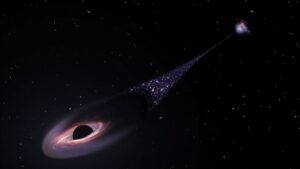
Still, science doesn’t care how we feel. Over the years, physicists kept poking at the idea, trying to make sense of it. And now, over a century later, technology might be catching up to the theory.
Opposite
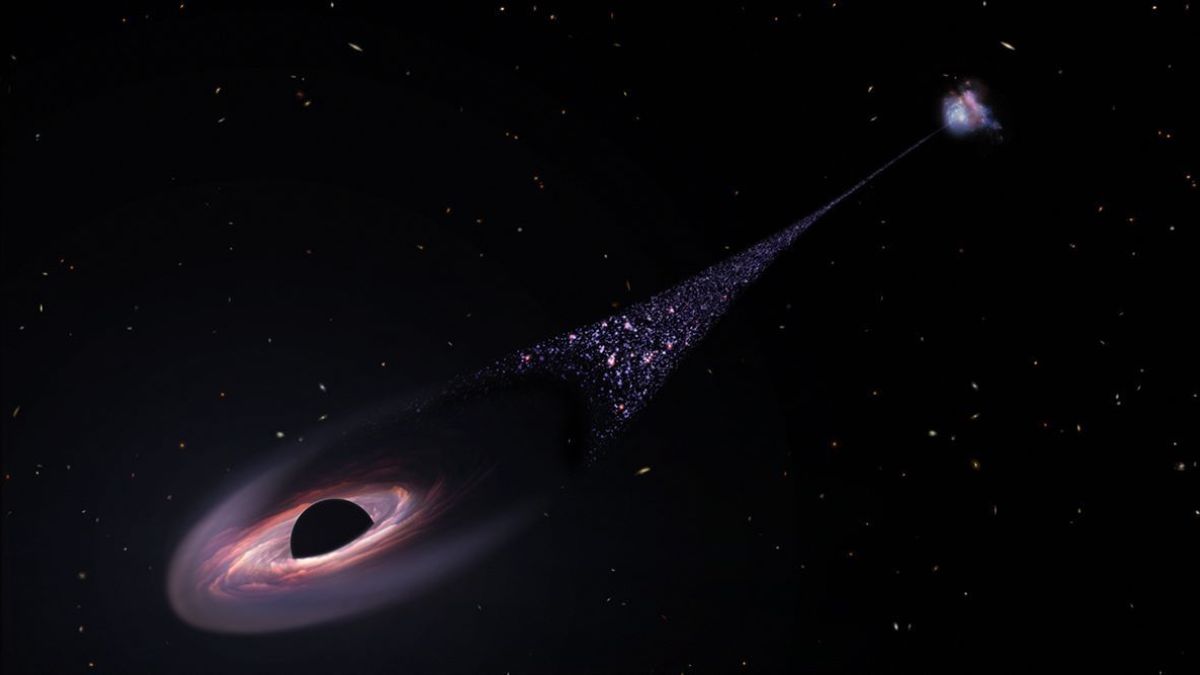
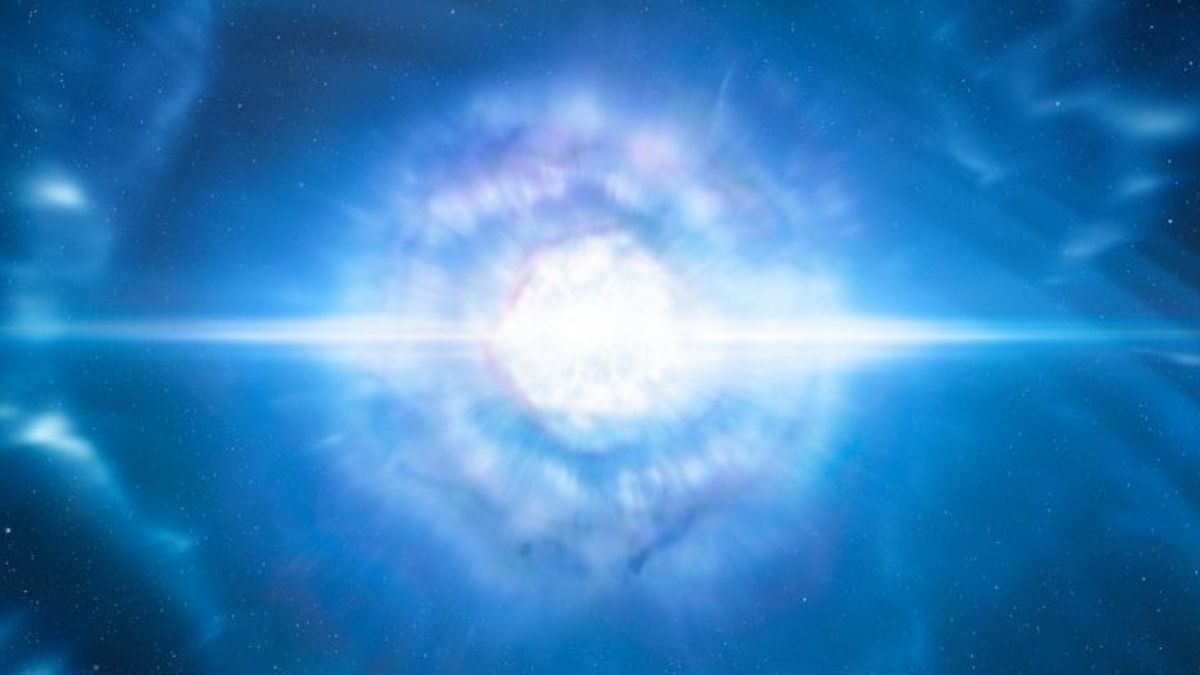
So, what exactly is a white hole? Think of it as the reverse of a black hole. While black holes are like cosmic vacuum cleaners, white holes are more like fire hoses. Instead of pulling in light and matter, they spit them out — suddenly, violently, and with no warning.
Here’s the kicker: nothing can go into a white hole. Not light, not matter, not even time. It’s like the ultimate one-way street. That makes them incredibly hard to study. But it also makes them incredibly exciting.
Signals
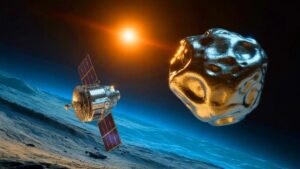
NASA and other space agencies are picking up weird signals. Think gamma-ray bursts with no known source. Or gravitational waves that don’t match any black hole mergers we’ve seen. Even fast radio bursts — quick flashes of energy — are coming from places where nothing should be happening. Just empty space.
What could cause this? One theory gaining steam is that these are the fingerprints of white holes. Maybe we’re not seeing the white hole itself, but we’re catching its burps, echoes, or the shockwaves of something even stranger.
Transformation
Here’s where things really twist. Some models now suggest that black holes could evolve into white holes. Not overnight, but over billions of years. A black hole might eventually spit back out everything it swallowed.
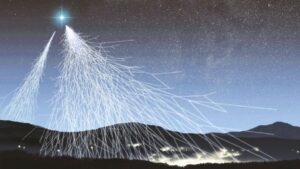
That idea is wild because it challenges the old assumption that whatever falls into a black hole is lost forever. What if that information comes back — eventually — in the form of a white hole eruption?
This would completely flip our understanding of the universe’s balance. It means destruction isn’t the end — it’s just the setup for a comeback.
Wormholes
This is where the Marvel comparisons start to feel valid. There’s a growing theory that black holes and white holes could be connected through wormholes — literal tunnels through space and time. One end sucks in, the other spits out.
If true, this opens up mind-bending possibilities. Could we travel through these tunnels? Could they link different parts of the universe, or even different universes? According to the math, it’s possible. At least on paper. Reality, though, tends to be messier.
Still, if black holes are the entrance and white holes are the exit… where’s the rest of the tunnel?
Evidence
Right now, the evidence for white holes is mostly indirect. We see anomalies — unexplained signals, strange bursts, mysterious emptiness lighting up. But nothing is confirmed yet.
That doesn’t stop scientists. NASA and other teams are digging deep, comparing satellite data, tracking the signals, and watching spots where nothing should be happening — just in case something extraordinary does.
Impact
You might wonder why all this matters. After all, it sounds like science fiction. But if white holes are real, it means the universe is far more complex — and more hopeful — than we thought.
It would also help answer some of the biggest questions out there: What happens to information swallowed by black holes? Can energy be destroyed, or is it just transformed? Is the universe connected in ways we can’t yet see?
Answering those questions could reshape everything — from our understanding of time to how we see life itself.
So, if white holes do exist, we’re not just looking at a new type of object in space. We’re looking at a door. Maybe to the past. Maybe to other dimensions. Or maybe to truths we haven’t even thought to ask yet.
Black Holes and White Holes
| Feature | Black Hole | White Hole |
|---|---|---|
| Direction of Matter | Sucks in everything | Expels everything |
| Light Behavior | Traps light | Cannot be entered by light |
| Time Flow | Slows down near it | Speeds up away from it |
| Visibility | Invisible (seen by effects) | Hypothetical (not yet seen) |
| Theoretical Role | Destruction point | Possible exit point |
White holes may sound like sci-fi, but they’re forcing real scientists to think in new ways. And if Einstein’s math holds true one more time, we may be on the edge of discovering something that will change our cosmic story forever.
FAQs
What is a white hole?
It’s the opposite of a black hole, spitting matter out.
Can white holes really exist?
The math supports it, but there’s no proof yet.
Do white holes come from black holes?
Some theories suggest black holes can become white holes.
Is NASA studying white holes?
Yes, based on strange signals and cosmic anomalies.
Are wormholes connected to white holes?
Possibly. Some think black holes link to white holes.