If you’re a dinosaur fan (and who isn’t after watching Jurassic World?), imagine this: you’re walking near a creek in your town, and suddenly, right in front of you—giant footprints from a creature that lived over 100 million years ago. Sounds unreal, right? Well, that’s exactly what happened in Texas recently, when a massive flood uncovered ancient dinosaur tracks that had been buried for millions of years.
It’s not every day that mother nature opens a window to the past, but this story proves that even in tragedy, there’s room for awe and discovery.
Table of Contents
Storm

In July, Texas Hill Country was hit by a huge storm that brought extreme flooding. Water levels reached up to six meters in some areas. The destruction was massive—trees were ripped out, homes were destroyed, and sadly, more than 100 lives were lost. The aftermath left entire communities devastated.
But amid all the chaos and heartbreak, something unexpected happened. As the powerful waters carved through the landscape, they peeled back layers of soil and rock, revealing something nobody expected—dinosaur tracks that had been hidden for millions of years.
Discovery
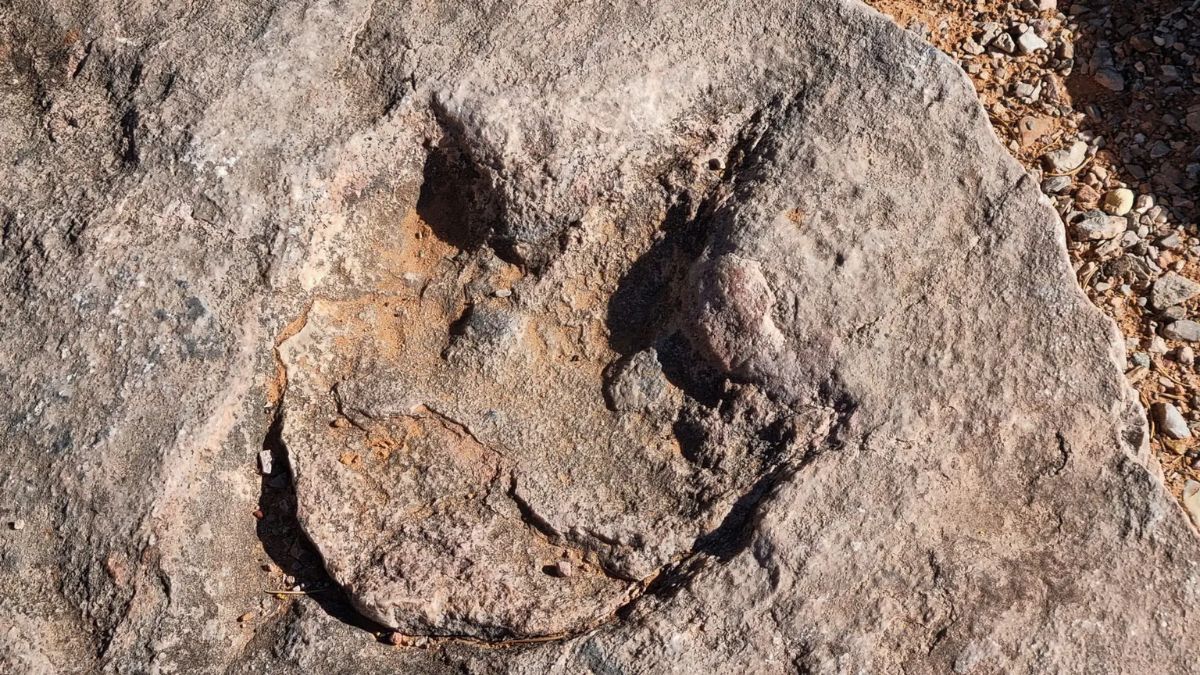
The tracks were discovered in Sandy Creek, located in Travis County. While helping with rescue efforts, a volunteer stumbled upon something shocking: 15 huge, three-toed footprints impressed into the stone. Experts were brought in and confirmed the prints belonged to a dinosaur known as Acrocanthosaurus.

Let’s break down what makes this discovery so fascinating:
- The dinosaur lived around 110 million years ago
- It was about 11 meters (36 feet) long
- It walked upright on two legs
- Each footprint measured 45 to 50 centimeters long—that’s about the size of an adult’s thigh!
Just imagine standing next to one of those prints—it’s like looking back in time.
Contrast
As thrilling as the discovery was, it came at a heartbreaking moment. For the people of Travis County, that flood will always be remembered as a time of destruction and loss. So while scientists were thrilled to find prehistoric tracks, locals were dealing with the emotional aftermath of the storm.

It’s a bittersweet reminder of how nature can both destroy and reveal its ancient secrets at the same time.
Preservation
Now that the tracks have been found, the challenge is keeping them safe. Authorities have asked rescue crews and cleanup workers not to use heavy machinery near the site. Barriers have also been put up to make sure no one accidentally damages this piece of natural history.
After all, these prints have survived over 100 million years. It would be a shame for them to disappear now, just after being rediscovered.
Age
How can scientists be so sure the tracks are that old? It’s all about the Glen Rose Formation, a famous rock layer in Texas known to date back to the Early Cretaceous period—roughly 110 to 115 million years ago.
Back then, the area wasn’t dry like today. It was a muddy, swampy environment. When the dinosaur walked across the wet ground, its feet left deep impressions. Those impressions slowly filled with sediment and over millions of years turned to stone, preserving every detail.
Significance
Texas is already a hot spot for dinosaur finds. From fossilized bones to ancient footprints, there’s a long history of discoveries here. But every new track offers something valuable:
- It helps identify the dinosaurs that lived in the region
- Scientists learn more about how these creatures walked and moved
- It gives clues about the climate and ecosystem of prehistoric Texas
For regular people, though, the thrill is more emotional. Seeing a dinosaur’s footsteps frozen in stone is like stepping into a time machine. It connects us to a world that’s long gone but still very real beneath our feet.
It’s wild to think that where a modern volunteer stood during a disaster, a 36-foot-long dinosaur once walked.
FAQs
Where were the dinosaur tracks found?
In Sandy Creek, Travis County, Texas after a major flood.
Which dinosaur made the tracks?
The tracks were left by Acrocanthosaurus.
How old are the footprints?
The tracks are around 110 to 115 million years old.
How big were the footprints?
Each one was about 45 to 50 centimeters long.
How were the prints preserved?
They hardened in sediment from the Glen Rose Formation.