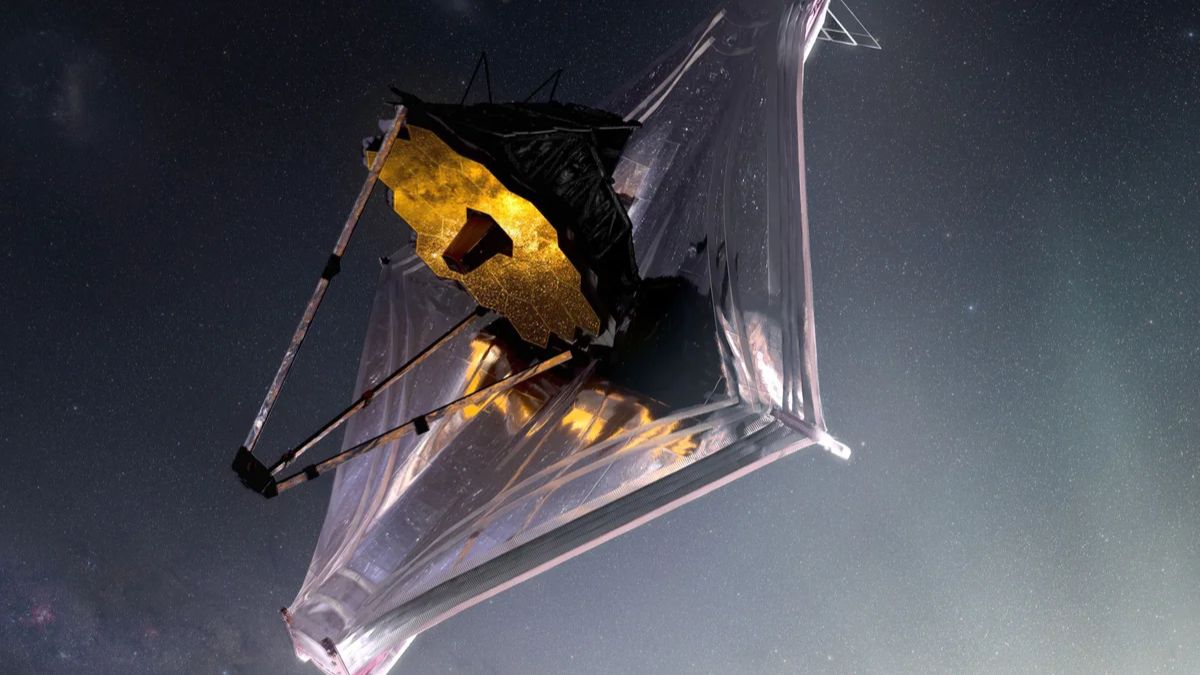
Have you ever heard of the James Webb Space Telescope? You probably have—it’s one of the most powerful space telescopes ever built, and it’s changing the way we know the cosmos.
Recently, scientists using both the James Webb and the Hubble telescopes confirmed something truly mind-blowing: the universe is expanding, but in a way that doesn’t fully make sense. It’s growing in two different ways depending on how you measure it. Sounds confusing? Don’t worry, let’s break it down.
Table of Contents
Expansion
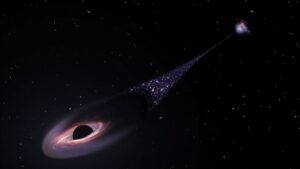
Imagine you take a balloon and draw little dots on it. As you blow air into the balloon, the surface stretches and the dots move away from each other. That’s pretty much what’s happening to galaxies in space—they’re moving apart because the universe itself is stretching. This process is called cosmic expansion.
The speed at which galaxies drift apart is known as the Hubble constant. And this number isn’t just random—it helps scientists figure out how old the universe is and what its future might look like. The problem? Astronomers can’t agree on what the actual number is.
Measuring
To figure out how fast the universe is expanding, scientists use two main techniques:
- Cosmic Microwave Background (CMB)
This is like the universe’s baby photo—a faint glow from just 380,000 years after the Big Bang. The Planck satellite, run by the European Space Agency, studied this light and found that the universe is expanding at about 67 kilometers per second per megaparsec. - Cosmic Distance Ladder with Cepheid Stars
Cepheid stars pulse in brightness, like a cosmic heartbeat. By studying how bright and how quickly they pulse, astronomers can tell how far away they are. When they add up these distances and see how the light is stretched (called redshift), they get a different number: 74 kilometers per second per megaparsec.
That’s a pretty big difference—and both methods claim to be accurate. So which one is right?
Mystery
At first, some scientists thought there might be a mistake in the Cepheid star data, especially from the Hubble telescope. Maybe other stars were mixed in and confused the results. That’s when the James Webb telescope stepped in to help. Its infrared vision is much sharper and more precise, especially for looking through space dust.
In 2023, James Webb looked at the same stars and confirmed that Hubble was correct. Then in 2025, a new study using both telescopes analyzed over 1,000 Cepheid stars across multiple galaxies. The conclusion? There was no mistake. The difference between the two expansion rates is real.
Implications
Now scientists are scratching their heads. If the measurements are accurate, then our current models of the universe might be missing something. And that’s where it gets really interesting.
This could mean that:
- Dark energy, the mysterious force making the universe expand faster, might not work the way we thought.
- Einstein’s theory of relativity might need adjustments when applied to the universe as a whole.
- New physics could be waiting to be discovered—maybe new forces, particles, or cosmic ingredients we haven’t identified yet.
Importance
James Webb isn’t just about taking pretty pictures of stars and galaxies. It’s become one of the most important tools in modern science. Its role in confirming the “Hubble tension”—this weird mismatch in expansion rates—proves how valuable it is to solving the biggest cosmic puzzles.
And here’s the thing about science: mysteries are a good thing. Every time something doesn’t add up, it’s a sign that a breakthrough might be just around the corner. Thanks to James Webb, we’re closer than ever to rewriting what we know about the universe.
This discovery is only the beginning. Scientists are already working on follow-up studies, and you can bet James Webb will be a key player in them. It’s only a matter of time before we hear about another mind-blowing discovery from deep space.
FAQs
What is the Hubble constant?
It’s the rate at which the universe is expanding.
Why do the two measurements differ?
They use different methods to calculate expansion.
What did James Webb confirm?
It confirmed the Hubble’s measurements were correct.
What could explain the difference?
It might be dark energy or new physics.
Why is this important?
It challenges our understanding of the universe.