
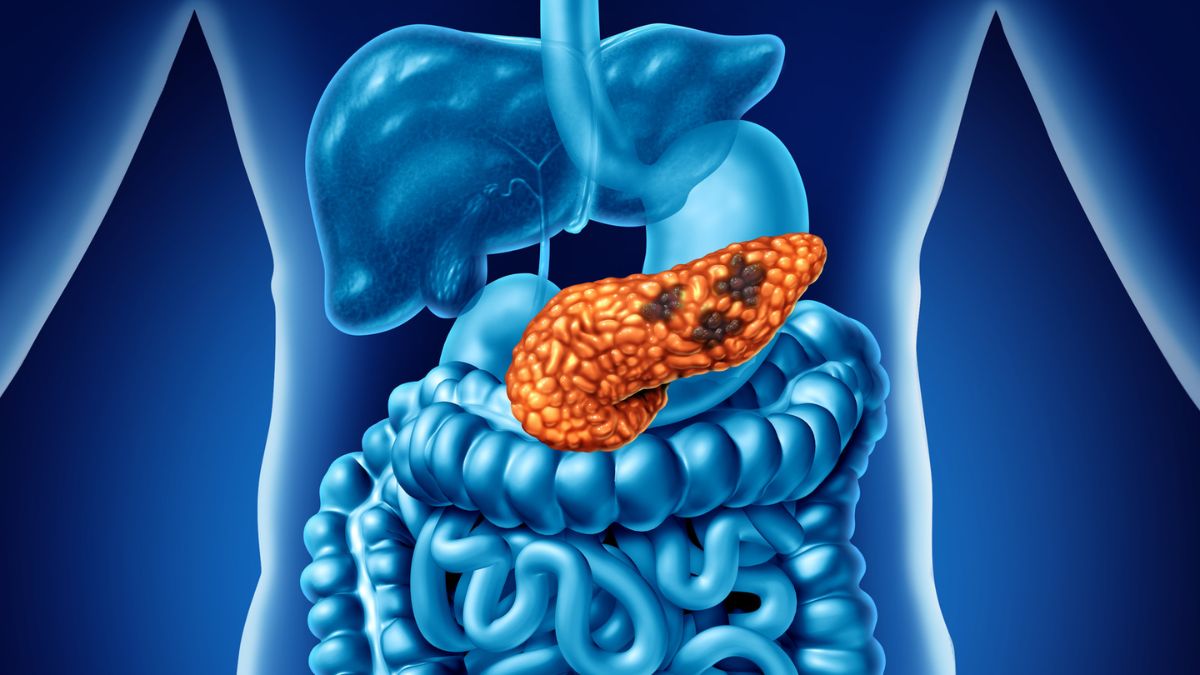
Pancreatic cancer is one of the deadliest forms of cancer out there. Less than 10% of people survive more than five years after being diagnosed. Why? Because this type of cancer spreads faster than most, often reaching critical organs like the liver or lungs before it’s even detected.
But a new study from Cornell University might finally explain why — and it all comes down to a tiny biological receptor called ALK7.

Let’s cut into what this means, how it was discovered, and why it could change the way we fight this aggressive disease.
Table of Contents
Mystery
The most common form of pancreatic cancer is pancreatic ductal adenocarcinoma. It’s known for its bizarre behavior. Although the tumor is surrounded by thick fibrous tissue — which should act like a barrier — it still manages to spread quickly throughout the body.
That contradiction has puzzled scientists for years. Now, researchers at Cornell may have finally solved part of the mystery.
ALK7

In a study published in Molecular Cancer, scientists identified ALK7 as the key factor helping the cancer to escape. But what exactly does ALK7 do?
Here’s what the study revealed:
- It activates epithelial-mesenchymal transition, a process that makes cancer cells more mobile, allowing them to move through tissues.
- It also stimulates enzymes that weaken blood vessel walls, giving the tumor cells an open door into the bloodstream.
In simple terms, ALK7 acts like a getaway driver and locksmith all in one — giving cancer the mobility to escape and the tools to break through.
Tech

This discovery wouldn’t have been possible without a cutting-edge tool: the organ-on-chip platform, developed in the lab of the study’s lead researcher, Esak Lee. This system mimics real human blood vessels, allowing scientists to observe how tumors interact with them in a controlled setting.
Previously, studies about ALK7 were contradictory — some said it slowed down cancer, while others said it sped it up. Thanks to the organ-on-chip, scientists could finally watch it in action. The result? ALK7 clearly drives the tumor’s expansion.
Timing
One of the most important takeaways from this study is that timing is everything.
Blocking ALK7 can stop cancer in its tracks — but only if it’s done early. Once tumor cells make it into the bloodstream, ALK7 blockers lose their effectiveness.
As Lee put it, “once the cells circulate freely, the blockade ceases to be useful.” That means early diagnosis and immediate treatment targeting ALK7 could be critical to improving survival rates.
Beyond
Even though this study focused on pancreatic cancer, the findings could go much further.
The organ-on-chip tool can help scientists study how different cancer types or immune system cells behave in similar environments. Plus, ALK7 might play a role in other fast-spreading cancers, making it a potential target for future therapies.
So this isn’t just a breakthrough for one disease — it could reshape our approach to treating multiple types of aggressive cancers.
Hope
Pancreatic cancer has long been known as one of the toughest battles in oncology. But the discovery of ALK7 as a key player in its spread brings new hope. By identifying the exact moment when the cancer becomes vulnerable — and how to block it — scientists may finally have a path toward more effective treatments.
With technologies like organ-on-chip and a clearer understanding of cancer’s behavior, the future might just hold a way to stop cancer before it spreads — and save more lives in the process.
FAQs
Why is pancreatic cancer so deadly?
Because it spreads quickly and is hard to detect early.
What is ALK7’s role in cancer?
It helps cancer cells move and invade blood vessels.
Can ALK7 be blocked?
Yes, but it must be blocked before cancer enters the blood.
What tech helped this discovery?
An organ-on-chip system that mimics blood vessels.
Does this only help pancreatic cancer?
No, it could help study and treat other aggressive cancers.