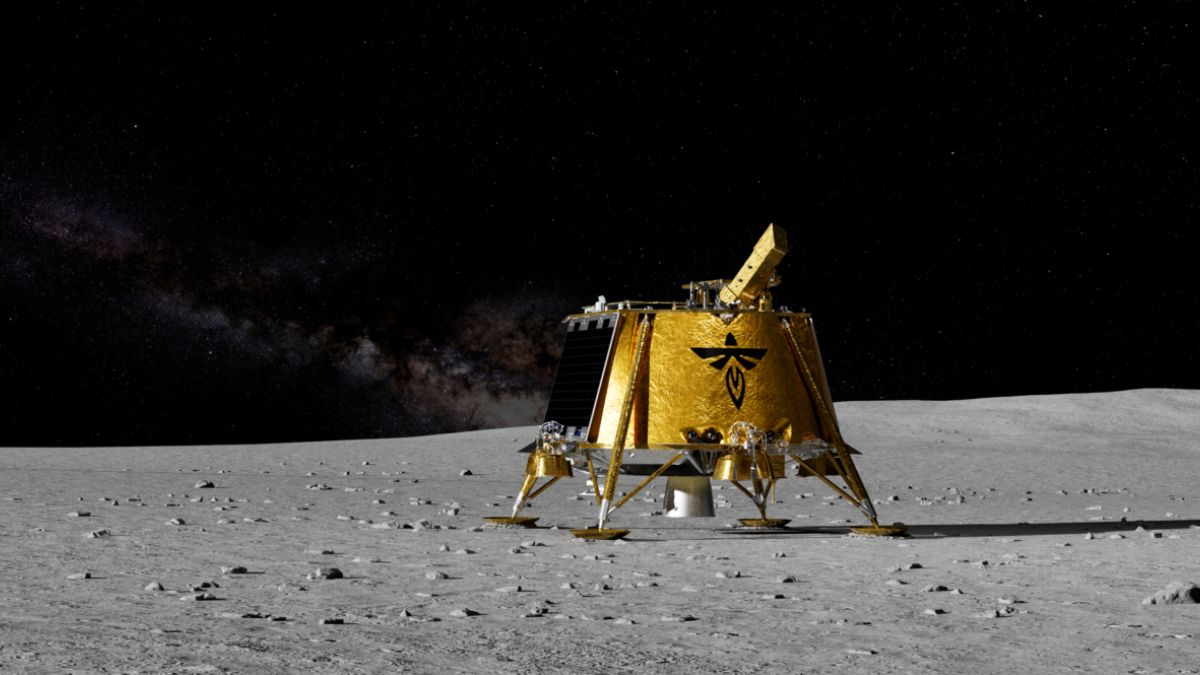
NASA just confirmed a major space milestone—Blue Ghost 1, a lunar lander built by private company Firefly Aerospace, has officially landed on the Moon. This is a big deal, not just for the mission itself, but for the future of how we explore space. Unlike the famous Apollo landings, this time it wasn’t astronauts making history—it was a robot from a private company with a very specific scientific job to do.
So, what exactly happened, and why does it matter so much? Let’s break it down.
Table of Contents
History
Back in 1969, NASA changed the world by landing humans on the Moon. That moment became a symbol of what science, technology, and ambition can achieve.
Now, more than 50 years later, something different—but equally important—just took place. A private spacecraft called Blue Ghost 1, built by Firefly Aerospace, has landed on the Moon. No astronauts, no big flags—just a small, smart robot sent to do serious science.
This marks a new era. It’s no longer just countries exploring space—now private companies are joining in and making real progress.
Mission

Blue Ghost 1 launched in January 2025 with a clear target: the Moon’s Mare Crisium region, specifically a location called Mons Latreille.
Why there? Because it’s a scientifically rich area that holds clues about ancient volcanic activity. That makes it the perfect place to study the Moon’s geological history.
The lander carried NASA instruments to study lunar dust, collect surface data, and measure environmental conditions. These tools are essential for planning future human missions, especially under NASA’s Artemis program.
Significance
The success of Blue Ghost 1 isn’t just about landing—it’s about what the mission unlocks.
This mission proves that private companies can help carry out scientific research on other worlds. That’s a huge step for NASA, as it opens doors to faster, cheaper, and more frequent missions.
Blue Ghost 1 is also part of a bigger plan. It’s one small move in the much larger Artemis mission, which aims to return humans to the Moon and eventually create a permanent presence there.
Instruments
Onboard Blue Ghost 1 were a number of NASA payloads built to study lunar conditions up close. These included:
- Sensors to analyze lunar dust, which can be both dangerous and useful.
- Tools to test the Moon’s surface composition.
- Instruments to gather environmental data like temperature and radiation.
Why does this matter? Because future astronauts will need to know what they’re dealing with before setting up camp on the Moon.
Here’s a quick table showing what the lander brought:
| Instrument Type | Purpose |
|---|---|
| Dust Analyzer | Measure particle size and danger |
| Surface Scanner | Study rocks and mineral makeup |
| Radiation Detector | Evaluate exposure risk |
| Thermal Sensor | Monitor temperature changes |
Reaction
NASA was thrilled. Acting Administrator Janet Petro called the landing an incredible achievement. She praised the partnership between NASA and Firefly Aerospace, and how it shows American leadership in space.
Her message was clear: when public and private teams work together, amazing things happen.
Companies
For decades, space was the domain of government agencies like NASA, ESA, and Roscosmos. Now, we’re entering a phase where private companies—like Firefly, SpaceX, and Blue Origin—play a huge role.
These businesses bring innovation, speed, and competition. That means missions can be more cost-effective and happen more often. And that’s exactly what space exploration needs right now.
Firefly Aerospace has now joined the small list of companies that have made a lunar landing happen. And more are on the way.
Future
This isn’t just about landing on the Moon—it’s about building the future.
Thanks to Blue Ghost 1, scientists will have fresh data to work with. NASA will be better prepared for Artemis missions. And future astronauts will have a better understanding of the environment they’re heading into.
Even more exciting? We’re now one step closer to something that once felt impossible—humans living on the Moon.
This mission shows that with the right tools, the right partnerships, and a bit of imagination, we’re not that far off from calling the Moon our second home.
FAQs
What is Blue Ghost 1?
A private lunar lander by Firefly Aerospace that landed on the Moon.
Where did Blue Ghost 1 land?
At Mons Latreille in the Mare Crisium region of the Moon.
What did Blue Ghost 1 carry?
NASA instruments to study dust, surface materials, and radiation.
Why is this mission important?
It supports NASA’s Artemis plans for future Moon missions.
What’s next after Blue Ghost 1?
More private-public missions and steps toward Moon settlements.