Far beneath the ocean’s surface, where no sunlight has ever reached, a strange and alien world exists. This isn’t science fiction—it’s reality. In a place darker than a moonless night, scientists have discovered creatures that defy everything we thought we knew about life.
Meet the giant tube worms—up to 50 cm long, living in total darkness, and surviving on nothing but chemicals. Their discovery has opened a window into one of the planet’s most mysterious ecosystems, hidden deep in the hadal zone.
Table of Contents
Discovery

It all started with a deep-sea expedition to a volcanic area at the bottom of the Pacific Ocean. Scientists expected extreme terrain, but what they found blew their minds. As they sent down a remote-operated submersible, they uncovered a network of underwater caves hidden beneath solid rock. These caves had been sealed off for who knows how long, undisturbed by currents, predators, or even sunlight.
Darkness
No light, no plants, no photosynthesis. Down here, the rules of life are completely different. Most creatures we know rely on the sun either directly or indirectly for food. But these caves? They’re a whole different ballgame. The animals living inside don’t just survive in the dark—they thrive in it.
That’s where the tube worms come in.
Worms

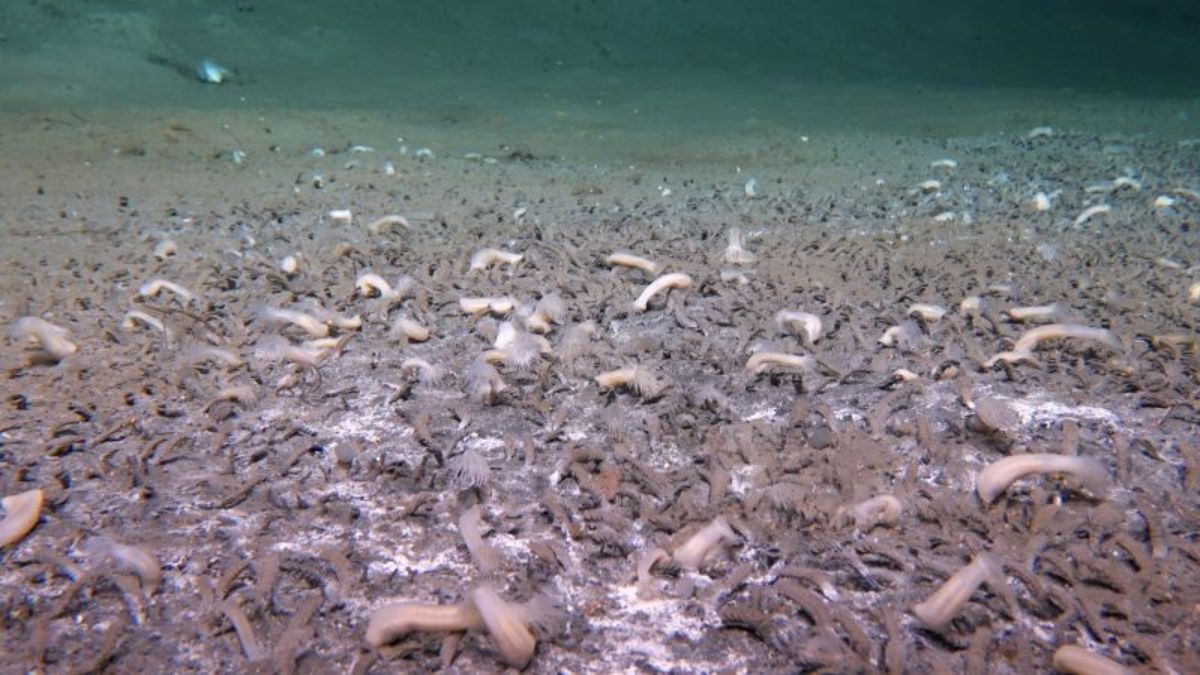
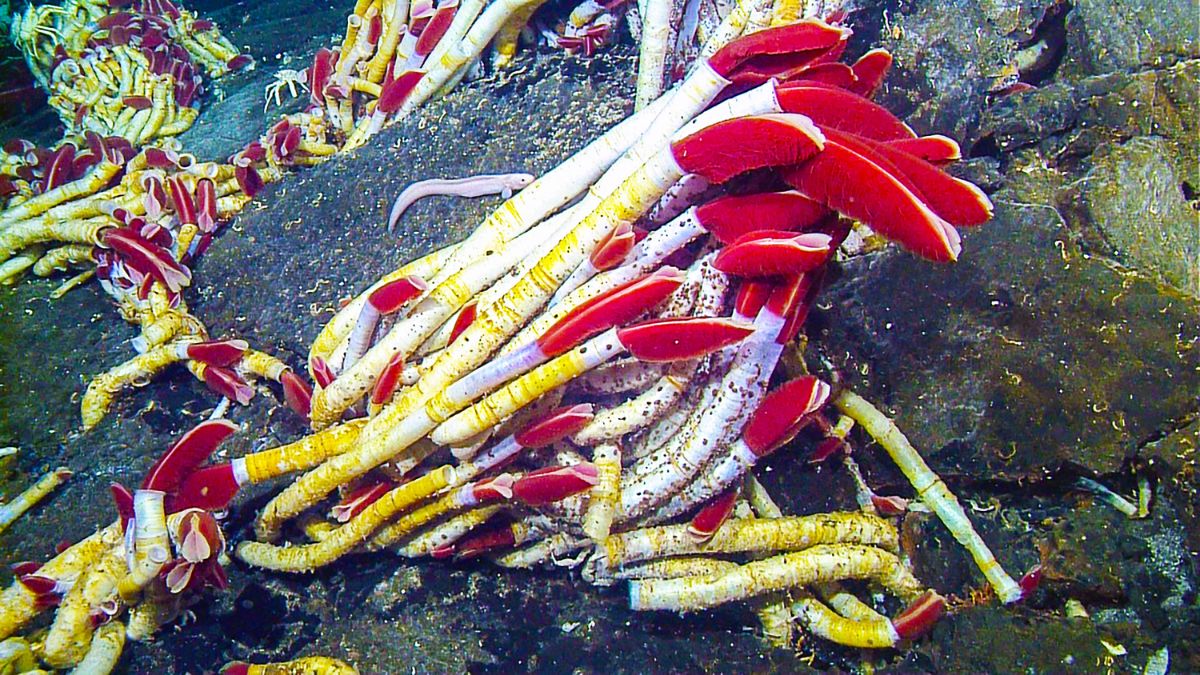
Tube worms, known scientifically as Riftia pachyptila, look more like alien plants than animals. They live in long white tubes attached to rocks or cave walls. Some of them grow to an astonishing half a meter. But what really makes them weird isn’t their size—it’s how they eat.
These worms don’t have mouths. Or stomachs. Or digestive systems like we do. Instead, they rely on tiny bacteria that live inside their bodies. These bacteria use a process called chemosynthesis to turn chemicals like hydrogen sulfide (yes, the stuff that smells like rotten eggs) into energy. That’s their entire food chain.
Symbiosis
This relationship between the worm and the bacteria is pure teamwork. The worm provides shelter and access to chemicals, and the bacteria do the hard work of converting it into energy. It’s a win-win. In fact, without this microbial partner, the worm wouldn’t survive at all.

While most ecosystems rely on energy from the sun, this one is powered by Earth’s inner chemistry. It’s like plugging directly into the planet instead of the sky.
Stability
Another big surprise? The temperature. Unlike the rest of the deep ocean, where temperatures can be just above freezing, these caves hold steady at a cozy 24°C. That’s warmer than some people keep their homes.
Why is this important? Well, temperature changes can be brutal for sea life. A steady 24°C provides a stable environment where life can take root and evolve without constantly battling for survival. It’s like finding a calm oasis in the middle of a stormy desert.
Mystery
Even though the tube worms were the stars of the show, scientists believe there could be even more living down there. Since these caves were sealed off for ages, they could host entirely new species that evolved in isolation. Imagine an underground zoo full of creatures that have never seen light, let alone human eyes.
We’ve only just scratched the surface.
Significance
Why does this matter? Because it proves that life can exist in the most unlikely places. It doesn’t need sunlight. It doesn’t need plants. It just needs the right ingredients and time. This could reshape how we think about where life might exist—not just on Earth, but on other planets too.
If giant worms can thrive in hot, pitch-black chemical soup miles below the surface, who’s to say we won’t find something similar on Europa or Enceladus—icy moons with oceans under their crust?
Insight
This discovery forces us to rethink the limits of life. Most of us imagine Earth’s biodiversity as being mostly on land or in sunny coral reefs. But the real action could be happening far below our feet, in silent, hidden corners of the world.
Every cut into the deep sea is like opening a new chapter in a book we never knew existed.
FAQs
What do tube worms eat?
They rely on bacteria that convert chemicals into energy.
How big are these giant tube worms?
They can grow up to 50 centimeters long.
Do tube worms need sunlight?
No, they survive entirely without sunlight.
Where were the worms found?
In underwater caves deep in the Pacific Ocean.
Are there more creatures in the caves?
Possibly, scientists think new species could be hiding there.