If you’ve never heard of atmospheric rivers, you’re not alone. But these massive “rivers in the sky” are now changing course—and scientists say it’s already reshaping the climate across the Americas, Europe, and Asia. In fact, what was once considered rare is becoming a regular pattern, with extreme storms and severe droughts flipping the script on our weather expectations.
New research shows that these vapor highways are no longer following their usual paths. That means entire regions are now facing water shortages, surprise floods, and unpredictable weather cycles. So what exactly are atmospheric rivers, and why is their shift such a big deal?
Table of Contents
Rivers

Atmospheric rivers are long, narrow bands of moisture in the sky. They travel thousands of meters above ground and can carry more water than the Amazon River—except it’s all in vapor form. When they hit land, they slow down and dump all that moisture as rain or snow.
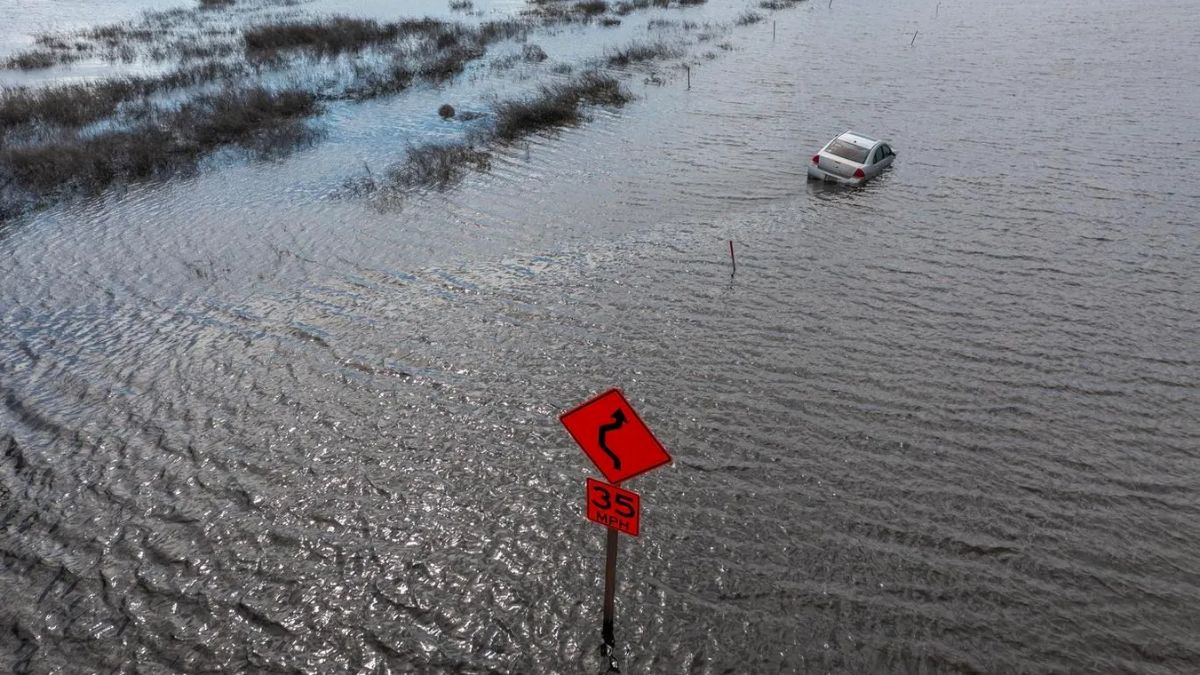
Sometimes they’re gentle, providing much-needed water during dry seasons. But other times, they arrive with full force, flooding towns, collapsing roads, and burying mountains under several meters of snow.
Shift
A study led by scientists Zhe Li and Qinghua Ding from the University of California, Santa Barbara, found that over the last 40 years, these rivers have shifted several degrees toward the poles. Imagine Los Angeles getting the weather of San Francisco—that’s the scale of movement we’re talking about.

This shift wasn’t predicted by earlier climate models. And surprisingly, global warming isn’t the only reason. The Pacific Ocean appears to play a key role, influencing the position of these vapor rivers through complex atmospheric patterns.
Data
To uncover this shift, scientists used a powerful dataset called ERA5 from the European Centre for Medium-Range Weather Forecasts. It includes global weather data going back to 1979. After analyzing 40 years of records, they found clear evidence of atmospheric rivers moving poleward—dramatically changing where rain and snow now fall.
Impact
This shift isn’t just a scientific curiosity—it’s already causing problems on the ground. Many regions rely on three to four major atmospheric rivers every winter to fill reservoirs and store snow for dry seasons. But if these rivers change course, those areas are left high and dry.
At the same time, places that rarely experienced strong storms are now seeing severe flooding, overwhelmed drainage systems, and weather maps that no longer match reality.
Regions
So, who’s most affected?
- Areas that once got snow now see more rain, increasing the risk of flash floods.
- Without snowpack, natural water storage for the summer months disappears.
- Farms in regions like California’s Central Valley, parts of Southern Europe, and agricultural zones in Asia may face harsher droughts.
- Coastal cities unprepared for intense rainfall could suffer frequent urban flooding.
Here’s a quick look:
| Region Type | New Challenge |
|---|---|
| Snow-heavy mountains | Less snow, more flood-prone rain |
| Drought-prone farmland | Even drier, reduced crop yields |
| Coastal cities | Stronger storms, overwhelmed drainage |
| Reservoir-dependent regions | Missed rainfall, shrinking water supply |
Ready?
Infrastructure and planning systems are built around past weather patterns—but those patterns are now changing fast. A dam built to handle January rainfall may fail if the storm comes in February—or misses the region entirely.
Experts are urging governments and cities to:
- Update water management systems
- Improve flood response infrastructure
- Modernize weather forecasting tools
- Prepare communities for both drought and flood scenarios
In short, the climate systems we once thought were stable are shifting right before our eyes.
Future
Atmospheric rivers haven’t disappeared—they’re just hitting different places. That shift is already impacting ecosystems, agriculture, and everyday life. If we don’t adjust fast, the consequences could include crop failures, food price spikes, water shortages, and billions in damage from unexpected storms.
This isn’t just a weather issue—it’s a wake-up call. What used to be considered rare and extreme is becoming the new normal. And while we can’t control the skies, we can prepare for what’s coming.
Because as the climate continues to evolve, so must we.
FAQs
What are atmospheric rivers?
They are narrow bands of vapor that deliver intense rain or snow.
Why are atmospheric rivers shifting?
Scientists link the shift to the Pacific Ocean’s changing patterns.
Which areas are most affected?
Regions that relied on snow or rain are now facing floods or droughts.
How fast are changes happening?
The shift has occurred steadily over the past 40 years.
Can we prepare for future shifts?
Yes, by updating water systems and improving flood defenses.