Imagine a space rock sneaking past Earth, flying closer than some satellites, and no one even noticed it until it was long gone. That’s exactly what happened on October 1, 2025, when a tiny asteroid named 2025 TF zipped over Antarctica just 428 kilometers above our planet — that’s nearly the same altitude as the International Space Station. It was the second closest asteroid flyby ever recorded, and we didn’t see it coming. Let’s break it down.
Table of Contents
Approach
The asteroid passed Earth at precisely 00:47:26 UTC on October 1. And when we say it came close, we mean really close. At just 428 kilometers (or 266 miles), it cruised through a region of space typically reserved for astronauts aboard the ISS, which orbits between 370 and 460 kilometers above Earth. That’s basically brushing past us in cosmic terms.
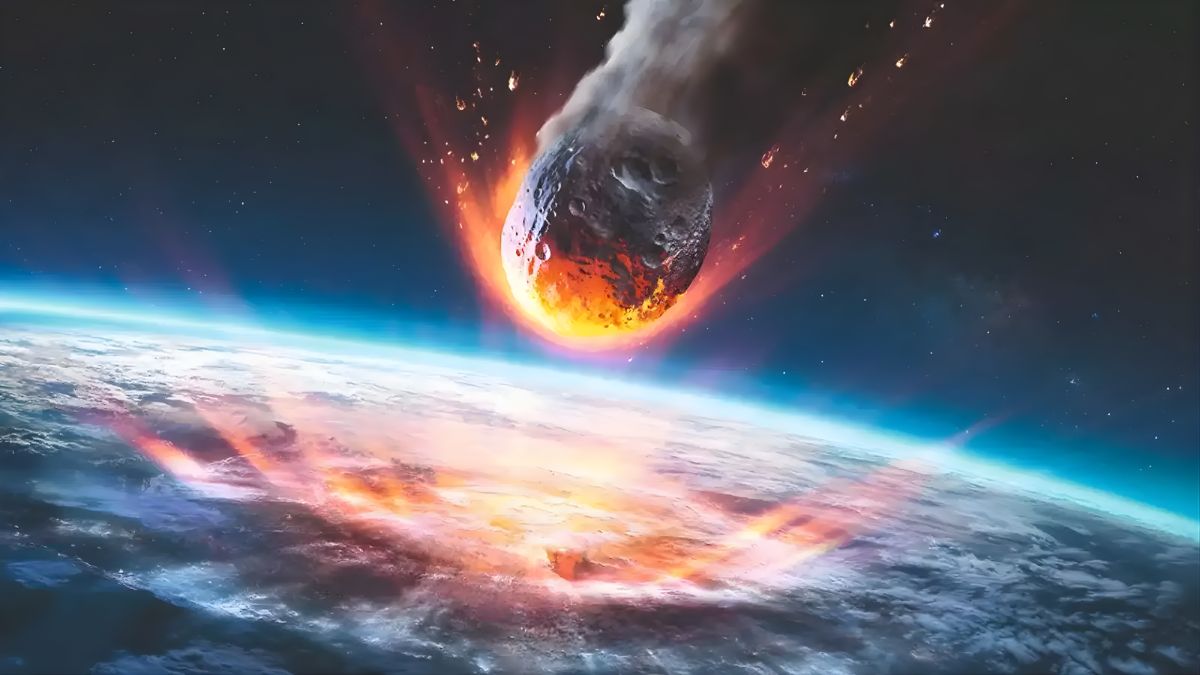
Now, this wasn’t some apocalyptic space rock capable of wiping out life. In fact, it was pretty harmless — somewhere between 1 to 3 meters in diameter, roughly the size of a compact car. If it had entered the atmosphere, it would’ve burned up, leaving behind a bright meteor trail. The most damage it could’ve caused? Maybe a charred pebble landing in Antarctica’s snow.
Surprise
Here’s where things get interesting — no one saw it coming. The asteroid went unnoticed until six hours after its closest approach. The Kitt Peak-Bok Observatory in Arizona finally spotted it at 06:36 UTC. Then, astronomers later found that the Catalina Sky Survey had also captured it about two hours after its near pass — but at the time, no one realized what it was.
Why so late? These small asteroids are incredibly hard to track. They’re dark, tiny, and fly incredibly fast. Telescopes just don’t catch them in time unless everything lines up perfectly. It’s like trying to spot a fast-moving mosquito in the middle of a dark forest.
Future

The little traveler didn’t stick around. After its flyby, asteroid 2025 TF continued on its journey through space. But it’s not gone for good. NASA’s Jet Propulsion Laboratory says we’ll see it again — in April 2087. And next time, it won’t be nearly as close.
Its future approach is expected to be a safe 8 million kilometers away. For perspective, that’s about 21 times the distance from Earth to the Moon. In space terms, that’s practically waving from across the street.
Reminder
Even though this asteroid posed no threat, its stealthy visit was a wake-up call. Earth is constantly being buzzed by space objects, most of which are small and harmless. But this flyby highlights just how tricky it can be to detect them in time.

Astronomers rely on surveys and observatories around the globe to scan the skies for potential threats. Each close encounter, even harmless ones like 2025 TF, helps refine detection methods and improve our understanding of how these objects behave.
Perspective
Asteroids like this make us pause and think. While we go about our lives — going to work, scrolling our phones, sipping coffee — a tiny space rock just cruised by at satellite-level height. And we didn’t even know it until later.
It’s a humbling reminder that space is a dynamic, ever-changing environment. Our planet is part of a much larger cosmic neighborhood, full of surprises and stories waiting to unfold.
The more we learn about these small visitors, the better prepared we’ll be if a larger, more dangerous one ever appears. And who knows? Maybe the next unexpected guest will make headlines for entirely different reasons.
FAQs
How close did 2025 TF get to Earth?
It came within 428 km, around ISS altitude.
Was 2025 TF dangerous?
No, it would have burned up if it entered Earth’s atmosphere.
When was 2025 TF detected?
About six hours after it passed Earth.
Will 2025 TF return?
Yes, it’s expected back in April 2087.
Why wasn’t the asteroid spotted earlier?
It was too small, dark, and fast to detect in time.