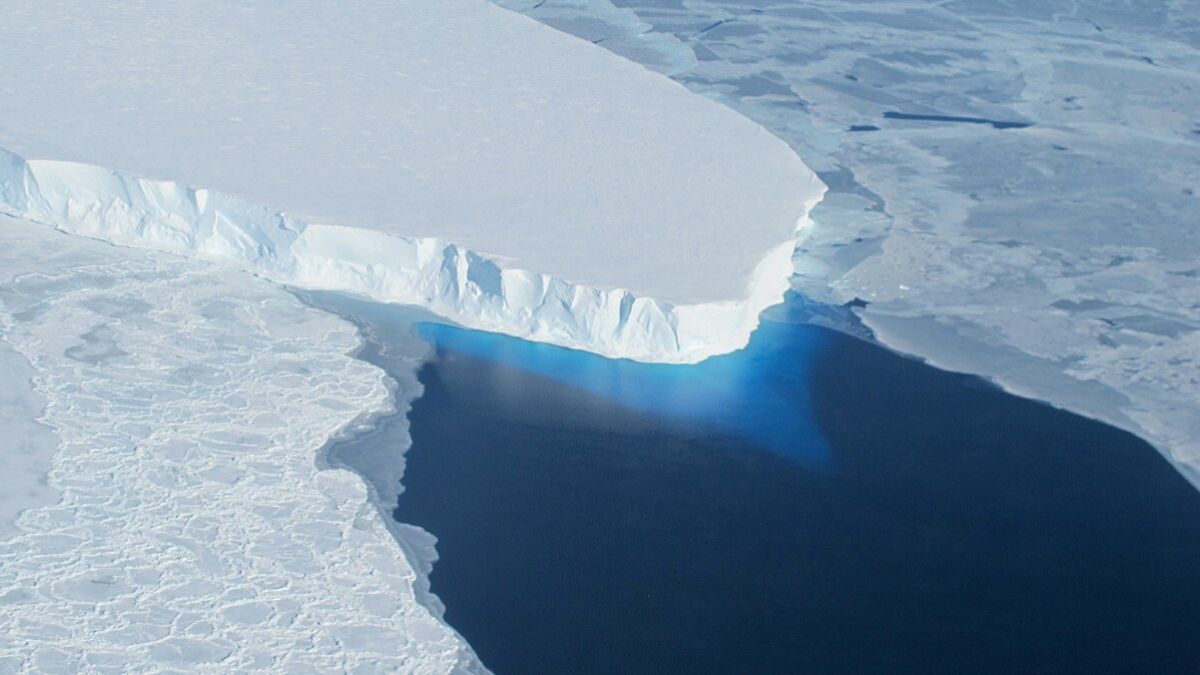
Imagine flying over the icy surface of Antarctica, expecting nothing more than a quiet, frozen landscape—when suddenly, your radar picks up something shocking. No, not a fossil, not a volcano, not even ancient ruins.
It’s a river system. A massive, ancient, untouched river landscape buried under three kilometers of ice. And here’s the twist: it’s been helping us all along by slowing down the continent’s melting.
Table of Contents
Discovery

This incredible find was made by a team of British researchers from the British Antarctic Survey. Using an airborne radar system mounted on a Twin Otter plane, they scanned the thick Antarctic ice. What looked like a normal research flight ended up revealing one of the most significant geological discoveries in recent memory.
What they found hidden beneath the frozen surface was a full river landscape—valleys, channels, and basins—completely preserved, sealed off from the world for over 30 million years. And even though the rivers no longer flow, this ancient terrain is still very much alive in the role it plays today.
Frozen
The river system itself stretches roughly 3,500 kilometers—longer than the Nile. Once, these rivers would have carried water across the land just like any other on Earth. But when Antarctica broke away from Australia and the global climate cooled, ice began to form. Eventually, everything got buried under layers of snow and ice, turning into the frozen continent we know today.

But here’s the fascinating part—the ice didn’t crush the river system. It didn’t erode it or smooth it out. Instead, the cold preserved it like a snapshot of Earth’s past, stored in the planet’s most powerful freezer. It’s been untouched ever since.
Impact
You might be thinking, “Why should I care about a frozen riverbed?” Because it’s not just ancient history—it’s actively slowing the movement of the ice sheet above it.
This buried landscape is rough and uneven, which creates friction underneath the glaciers. That friction acts like a brake, slowing down how fast the ice flows toward the ocean. In short, it’s silently helping delay Antarctica’s collapse.
And here’s the real danger: if the East Antarctic Ice Sheet were to melt, sea levels could rise over 50 meters. That’s not just a few beach towns gone—it would completely redraw coastlines around the world.
Radar
Seeing through three kilometers of ice isn’t easy. It takes more than just good luck. In this case, researchers used a technique called ice-penetrating radar. A signal is sent into the ice and the return echoes create an image of what’s below. This allows scientists to “see” deep into the Earth without digging a single hole.
What the radar found wasn’t just a mountain or ridge—it was an entire landscape. Preserved perfectly. Still influencing how the modern ice sheet behaves.
Shift
For years, climate studies in Antarctica have mainly focused on what’s happening on top of the ice—how fast it melts, how much snow falls, how warm the air gets. But this discovery changes the game. It reminds us that what lies underneath is just as important.
Glacier flow isn’t only about temperature or sunlight. It’s about what the ice is sliding over. And if that base changes—if the hidden landscape warms up, smooths out, or shifts—it could remove the resistance and make the ice move much faster.
Message
This discovery is more than just a scientific win—it’s a wake-up call. It reminds us that the Earth has its own natural defense systems, quietly helping hold things together. These systems don’t announce themselves. They don’t ask for attention. But they matter.
Like Hodor from Game of Thrones, this ancient landscape has been holding the door—slowing the flood, resisting the collapse. And now that we know it’s there, we have a choice. Learn from it. Respect it. Protect it. Or risk losing a crucial line of defense in the fight against climate change.
FAQs
What did scientists find under Antarctica?
An ancient river landscape beneath 3km of ice.
How old is the buried river system?
It’s over 30 million years old.
How was the landscape discovered?
Using radar on a plane by British researchers.
Why is this landscape important?
It slows the movement of Antarctic ice.
What happens if the ice melts?
Sea levels could rise more than 50 meters.