Forget rockets and astronauts for a moment. Across Africa, a new wave of entrepreneurs is proving that space isn’t only about distant galaxies or billionaires chasing Mars—it’s about solving everyday problems on Earth. From the farmer in Kenya checking rainfall forecasts to a logistics company in Lagos mapping traffic-free delivery routes, the space economy is quietly weaving itself into Africa’s development story.
Table of Contents
From Satellites to Startups
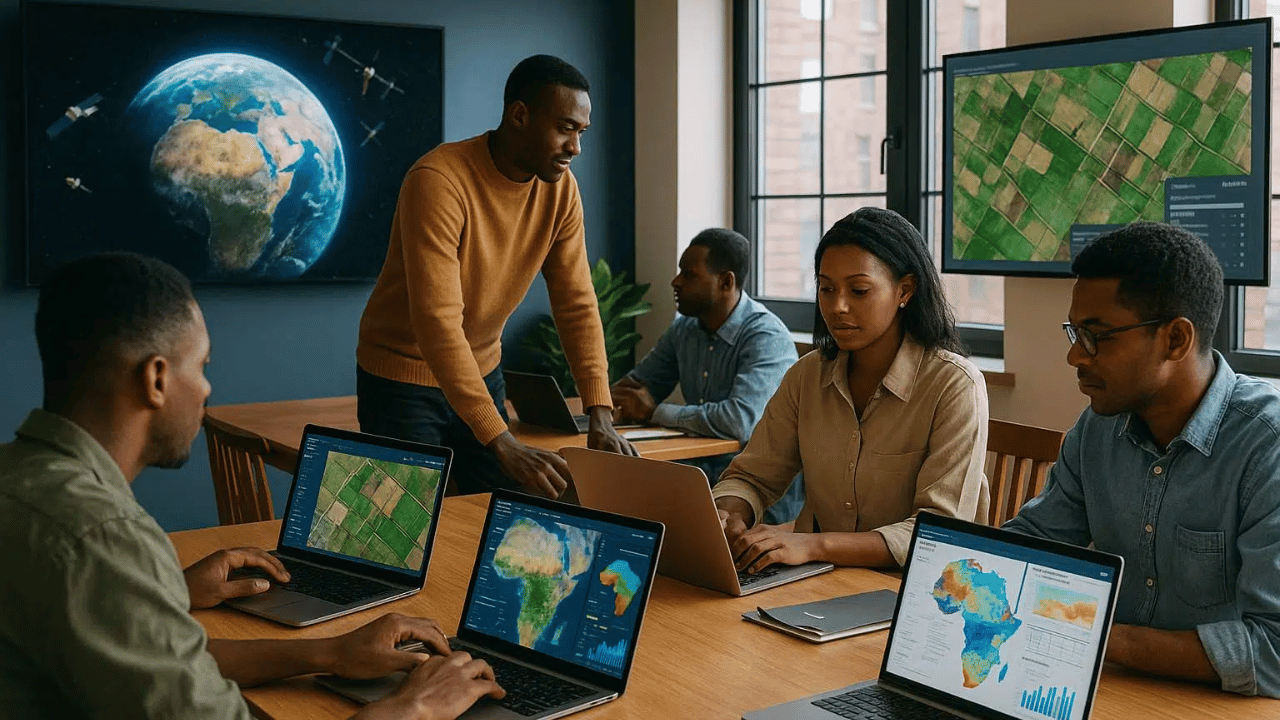
In just the past decade, African nations have launched dozens of satellites, set up national space agencies, and built regional partnerships. While much of that infrastructure serves research or government priorities, the real disruption is happening downstream—where startups are transforming satellite data into ground-level solutions.

Armed with Earth observation tools, GPS data, and open-source imagery, local innovators are reimagining agriculture, transport, climate resilience, and even financial inclusion. It’s not about owning rockets; it’s about owning the data and using it smartly.
Feeding a Continent with Data
Agriculture, the backbone of most African economies, is vulnerable to pests, unpredictable rains, and poor access to markets. Startups are stepping in with satellite-based crop monitoring, giving farmers insights straight to their phones:
- Vegetation indices flagging crops in need of irrigation
- Weather data predicting the best planting windows
- Drought alerts to help minimize losses
Even better, satellite-verified data opens doors to financial services. Insurers can design parametric policies that pay automatically if rainfall falls below a threshold. Banks, meanwhile, gain confidence to lend, since they can verify a farmer’s crop health from orbit.
Logistics and the Urban Maze

African cities are exploding with growth, and so are the challenges of moving goods and people. In megacities like Nairobi or Johannesburg, GPS-powered platforms are helping delivery drivers beat traffic, while mapping tools uncover usable roads in rural areas where infrastructure maps don’t exist.
For businesses, it’s a lifeline—fewer delays, lower costs, and better customer reach. For customers, it means more reliable access to goods and services, whether that’s fresh produce or e-commerce deliveries.
Satellites in the Climate Fight
Climate change is already hammering the continent with floods, droughts, and extreme weather. Startups are putting space assets to work:
- Flood forecasting and early-warning systems
- Deforestation monitoring to help governments enforce protection
- Post-disaster assessments that speed up recovery aid

As UNEP highlights, climate resilience is not optional for Africa—it’s survival. Satellite-driven startups give governments, NGOs, and communities the tools to act faster and smarter.
Cities in Transition
Africa’s cities are among the fastest-growing in the world. Planners often struggle to keep up, but startups using Earth observation data are mapping land use, illegal construction, and heat islands. They’re helping design greener, more livable neighborhoods while keeping tabs on pollution. It’s urban planning from space—faster and cheaper than on-the-ground surveys.
The Fintech Link
One of the most surprising frontiers is fintech. By feeding satellite weather and geolocation data into credit models, startups allow banks to assess clients who have no formal credit history. Insurance firms are rolling out micro-products for farmers and traders, making protection affordable and scalable. It’s a fusion of space and finance that pushes financial inclusion deeper into rural areas.
Power and Connectivity
Energy and internet access remain major hurdles in rural Africa. Startups are using satellite maps to pinpoint the best spots for solar mini-grids, while satellite internet providers connect schools, clinics, and villages left off the fiber map. It’s a foundation for education, healthcare, and entrepreneurship—basic rights powered by orbital data.
Barriers to Scale
Of course, it’s not all smooth orbit. Startups face steep costs for high-resolution imagery, limited access to talent, and hesitant investors wary of “space” as too risky. Governments don’t always make data freely available, further raising barriers.
That’s why ecosystems matter. Accelerators, local partnerships, and collaboration with groups like the African Space Agency can lower entry costs and build investor confidence. International initiatives that subsidize data access or provide technical mentorship are already changing the landscape.
The Road Ahead
The next decade could be a turning point. With falling launch costs, expanding open-data initiatives, and Africa’s youthful tech talent, the potential is staggering. Properly supported, startups could generate billions in value and thousands of skilled jobs, while positioning Africa as a global hub for space-driven innovation.
The message is clear: for Africa, space isn’t a distant dream—it’s a practical tool. And the entrepreneurs leading the charge aren’t just building companies. They’re proving that satellites can power food security, climate action, and financial resilience for millions. If the momentum holds, Africa may not just catch up in the space race—it could redefine what winning it looks like.
FAQs
What is Africa’s “space economy”?
It refers to industries using space technologies—like satellites, GPS, and Earth observation data—to deliver practical services on the ground, from farming to finance.
How are African startups using satellite data for farming?
They monitor crop health, predict rainfall, and connect farmers to insurers and banks using verified crop data.
Which African countries have space programs?
More than a dozen, including Nigeria, South Africa, Kenya, Ghana, and Ethiopia, have launched satellites or created national space agencies.
What challenges do space startups face in Africa?
High costs of satellite data, lack of open government policies, technical expertise shortages, and limited investment.
Why is this important for Africa’s future?
Because space data supports food security, climate adaptation, financial inclusion, and urban planning—key challenges for Africa’s fast-growing population.