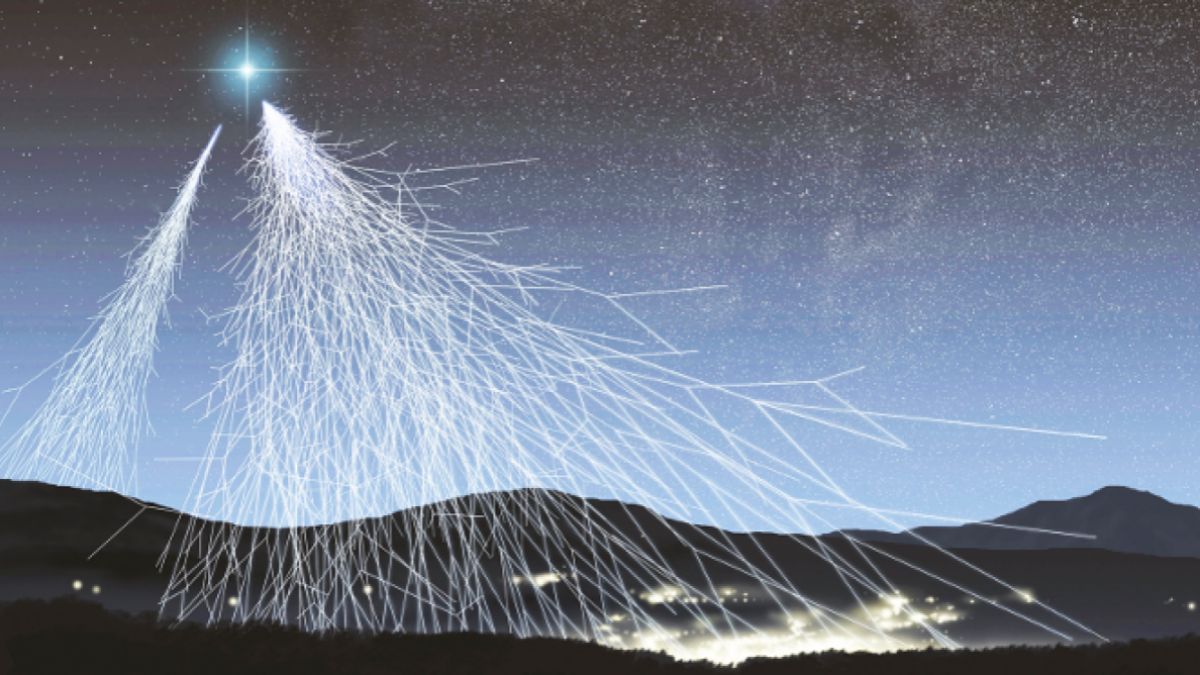
When you hear the word “radiation,” chances are you think of harmful stuff—DNA damage, cancer, or dangerous fallout. Fair enough, because that’s what we’ve always been told. But what if I told you that radiation, the same one we fear, might actually help life exist on some of the most extreme and hostile worlds in our solar system?
Sounds bizarre, right? Well, according to new research, this cosmic twist could completely change how we look for life in the universe.
Table of Contents
Twist
Here’s the strange part: on Earth, we’re protected from most radiation thanks to our atmosphere and magnetic field. They act like a giant invisible shield, blocking out harmful cosmic rays. That’s one reason why life on our planet can thrive.
But out there in space, on planets and moons with no atmosphere, radiation isn’t filtered out—it’s hitting the surface all the time. Until now, that was seen as a deal-breaker for life. But this new study flips that idea on its head.
Radiolysis
Now let’s talk science—but don’t worry, we’ll keep it simple. The key process here is called radiolysis. It happens when high-energy particles (cosmic rays) slam into water or ice hidden under the surface of a planet or moon.
This crash creates a chemical reaction, releasing energy. That energy could then become “food” for microbes—tiny, microscopic organisms—just like how we need calories to survive.
So while we were out there searching for warm, sunny planets that look like Earth, the real potential for life may have been hiding in frozen, dark places bombarded by cosmic radiation.
Hotspots
Using computer simulations, scientists ran the numbers. They looked at how much energy radiolysis could produce on different planets and moons in our solar system. And surprise, some of the best candidates for radiation-powered life are not Earth-like at all.
Here are the top contenders:
| Celestial Body | Why It’s Promising |
|---|---|
| Enceladus (Saturn’s moon) | Thick ice layer with liquid water underneath. Constant exposure to cosmic rays. |
| Europa (Jupiter’s moon) | Ice-covered surface with likely oceans below. Also hit by radiation. |
| Mars | Cold and dry, but shows signs of underground water. Radiation reaches the surface easily. |
None of these worlds have much atmosphere. They’re cold, dark, and extreme. But they have one thing in common: subsurface water + radiation = a possible recipe for life.
Shift
This discovery is a huge deal for space science. Until now, scientists were mainly focused on finding planets similar to Earth—those in the so-called “habitable zone” where it’s not too hot or cold and sunlight is available.
But now, that thinking is changing. As astrobiologist Dimitra Atri puts it, “This discovery changes the way we think about where life could exist.” Instead of just sunny, warm planets, we now know that cold and radiation-rich places might also host life—at least microbial life.
That’s a big shift. It means we’ve been ignoring a whole category of planets and moons that could be teeming with microscopic life, simply because they didn’t look like Earth.
Surprise
It still sounds weird, doesn’t it? Radiation, which usually kills, might actually help life survive in space. It’s like discovering fire can cook food after thinking it only destroys things.
This doesn’t mean we’ll find aliens tomorrow, but it does open doors. Space agencies can now target new places when searching for life. Places like Enceladus or Europa, once seen as lifeless, could actually be thriving under the surface.
It’s almost poetic—the very thing that seems destructive might actually bring life where nothing else could. The universe keeps challenging everything we thought we knew.
FAQs
What is radiolysis?
It’s a reaction where cosmic rays hit water or ice, creating energy.
Can life exist without sunlight?
Yes, microbes can use energy from cosmic radiation instead.
Which moons could support life?
Enceladus and Europa are top candidates for radiation-powered life.
Why is radiation helpful here?
It creates energy underground that microbes could use to survive.
Does Mars also qualify?
Yes, due to possible water and exposure to cosmic radiation.