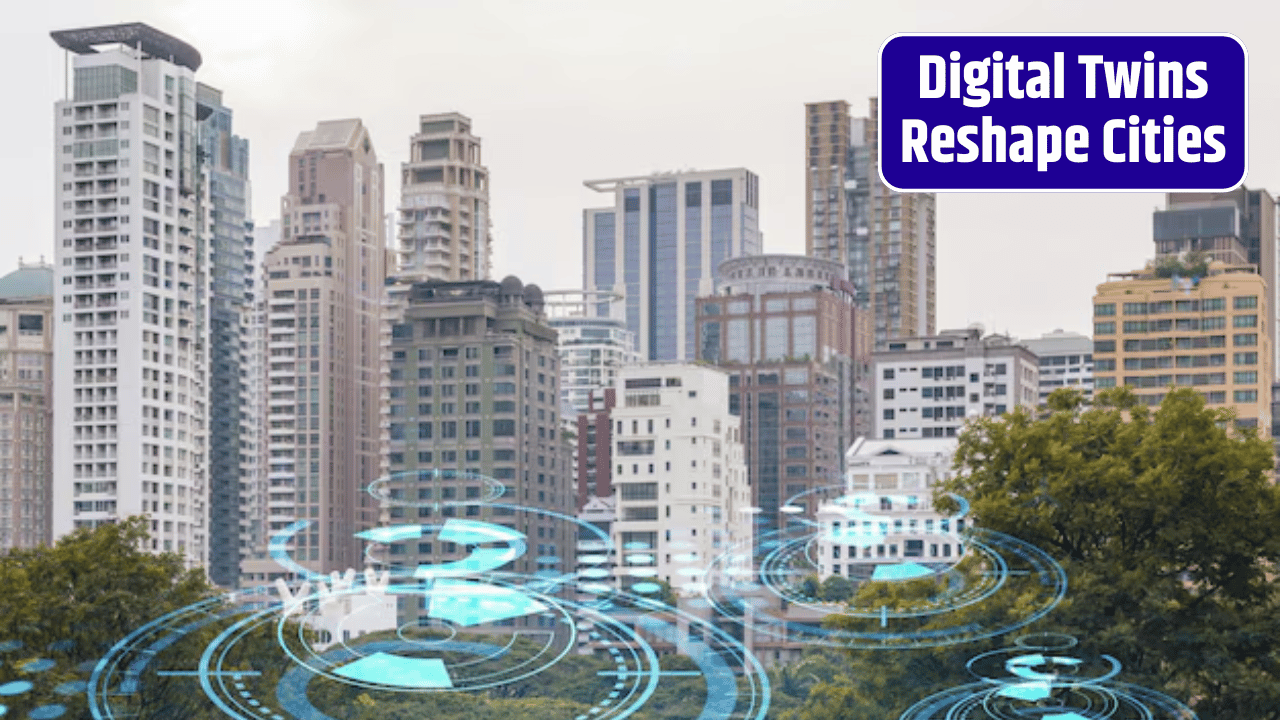
It sounds like science fiction, but it’s not. A growing number of cities are now turning to digital twin technology—virtual replicas of urban environments—to test, tweak, and perfect infrastructure projects before they ever break ground. Imagine being able to simulate how a new bridge would handle traffic, how a storm surge might overwhelm drainage, or how a new light rail system would affect housing demand—all in a digital sandbox. That’s exactly what’s happening in city halls across the country.
Officials are calling it a “game-changer” for planning, with the potential to save billions by catching mistakes early and modeling long-term impacts. But like any tech leap, it raises big questions about cost, data security, and whether algorithms can really capture the messy realities of human life.
Table of Contents
How Digital Twins Work
| Use Case | Digital Twin Application | Benefit |
|---|---|---|
| Transportation | Simulating traffic with new road or rail lines | Cuts congestion, reduces planning errors |
| Utilities & Energy | Virtual grid modeling for demand and outages | Improves resilience, lowers costs |
| Climate Resilience | Flood and heatwave scenario testing | Guides smarter infrastructure design |
| Housing & Zoning | Modeling population shifts and land use | Prevents over/under-building |
| Emergency Response | Virtual drills for disasters | Saves lives, boosts preparedness |

Unlike traditional computer models, digital twins constantly update with real-time data—from sensors, satellites, and city records—making them living, evolving replicas.
Why Cities Are Jumping In
The U.S. Department of Transportation and National Institute of Standards and Technology have both backed pilot projects, seeing digital twins as key tools for smarter infrastructure. With trillions in investment flowing from the Bipartisan Infrastructure Law, local leaders are eager to avoid past mistakes of cost overruns and underperforming projects.
For example, one Midwest city is using a digital twin to model stormwater management before spending $300 million on new drainage systems. A coastal community is simulating how rising seas could reshape entire neighborhoods by 2050.
Local Reactions

Tech-savvy planners are ecstatic—this is the kind of precision they’ve dreamed of. Construction firms like it too, since virtual testing reduces risk. But residents have mixed feelings. Some worry that decisions will be made “in the computer” without enough real-world input. Others question whether the upfront tech costs, often in the tens of millions, could be better spent on immediate fixes.
The Global Context
Digital twins are already standard in manufacturing and aviation. Cities like Singapore and Helsinki have built full-scale urban twins to guide everything from transit routes to energy grids. U.S. cities are now catching up, though often on a project-by-project basis rather than citywide.
Some online posts claim digital twin technology will “replace public hearings.” That’s false. The tools are designed to inform planning, not to bypass the democratic process. Community input and legal approvals remain central.
FAQs
What is digital twin technology?

It’s a dynamic, real-time digital model of physical infrastructure or cities, used to test scenarios before construction.
How expensive is it?
Costs vary widely—from a few million for project-specific twins to hundreds of millions for full city-scale models.
Who owns the data?
Typically the city or regional authority, though private contractors often manage the platforms.
How accurate are the simulations?
Accuracy depends on the quality of data inputs. The closer the data, the more reliable the model.