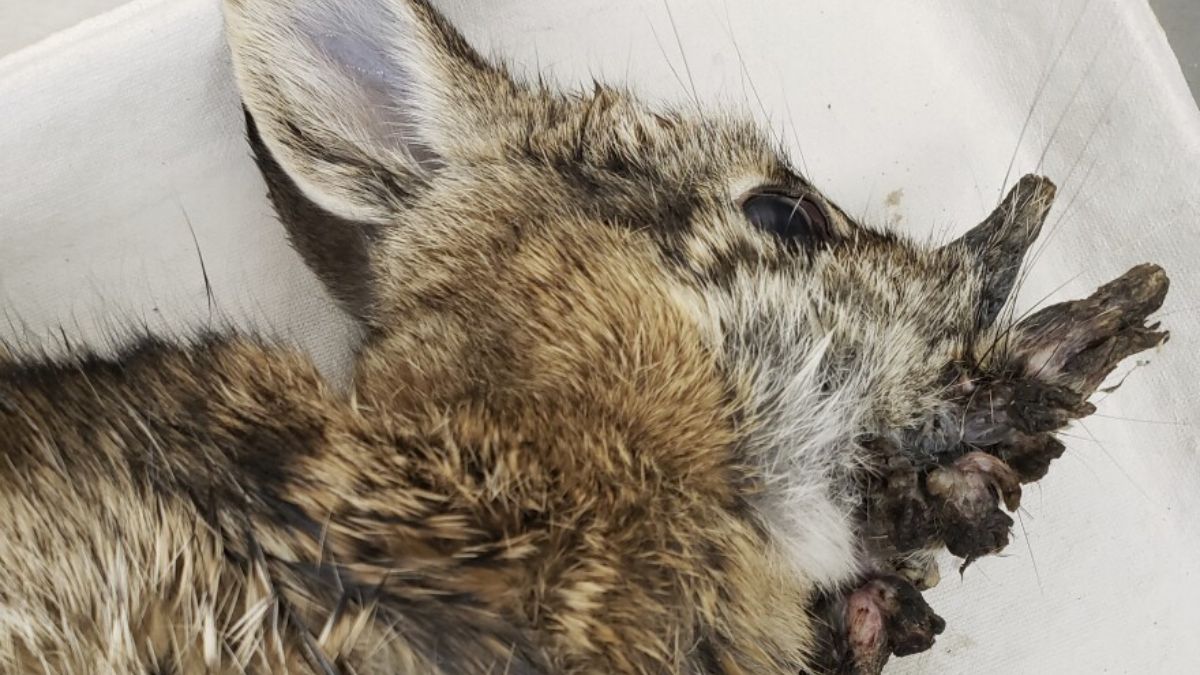
It’s not a joke, and it’s definitely not a Photoshop trick. In Colorado, something unusual and unsettling is catching the attention of locals and wildlife experts alike—rabbits with what appear to be horns or tentacle-like growths coming out of their heads. Nicknamed “Frankenstein rabbits,” these poor creatures are victims of a real and rather terrifying virus that’s turning normal wildlife into something out of a horror movie.
So, what’s going on here? And should you be worried?
Table of Contents
Outbreak

The strange rabbit sightings started popping up across Colorado, with residents sharing images of bunnies sporting twisted, blackish growths on their heads, necks, and even mouths. These deformities aren’t part of some science experiment or internet hoax. They’re caused by the cottontail rabbit papillomavirus (CRPV), also known as Shope papilloma virus.
It’s not new to science, but this outbreak is one of the more visible ones, and it’s creeping people out for good reason.
Virus
CRPV is a virus that mainly affects wild rabbits, especially cottontails. It’s spread by insect bites—mostly ticks, mosquitoes, and fleas. Once infected, rabbits start growing these dark, horn-like tumors, typically around their head and face. In some cases, the growths get so big and heavy that the rabbits can’t eat or see, eventually dying of starvation.

It’s one of nature’s crueler tricks, and it’s devastating for the animals affected.
Symptoms
The growths can vary in size and shape. Some look like horns, others like little black sticks or tentacles. In a few dramatic cases, people have described them as looking like fake Halloween props. But for the rabbits, it’s far from funny.
If you’ve seen pictures online, you’ll notice that the deformities are often around the mouth or jaw—right where rabbits need to eat. That’s what makes this virus particularly deadly.
Pets

If you own a domestic rabbit, you might be wondering—can my bunny catch this? The short answer is: possibly, yes.
Domestic rabbits that come into contact with infected wild rabbits or flea-infested areas could be at risk. What’s worse, in pet rabbits, CRPV infections can turn into squamous cell carcinoma, a dangerous form of skin cancer.
So if you love your rabbit, keep it indoors or in a secure, bug-free enclosure. Don’t let it roam in areas where wild rabbits hang out.
Spread
While the current cases are mostly in Colorado, similar outbreaks have been reported in other parts of the Midwest. There was even a viral video back in 2013 from Minnesota that showed a rabbit with massive growths—leading to comparisons with the legendary Jackalope, a mythical rabbit-antelope hybrid.
In Fort Collins, a resident saw the same infected rabbit twice over the course of a year. The second time, its growths were even bigger. It’s a brutal reminder of how long and painful this condition can be.
Treatment
Here’s the tough part: there’s no real cure for CRPV. For pet rabbits, a vet might surgically remove the tumors to prevent them from becoming cancerous, but that’s only a temporary fix. For wild rabbits, there’s not much that can be done.
The best course of action is prevention. That means controlling insect exposure and keeping wild and domestic animals apart. If you spot a wild rabbit with strange growths, don’t try to help it. Report it to your local wildlife authority instead.
Risk
Despite how disturbing they look, these rabbits don’t pose any danger to humans or other animals. CRPV is specific to rabbits, and there’s no evidence it can jump species.
So while they may look like something out of a horror film, you’re not at risk from walking near one or seeing it in your yard.
Reactions
Understandably, the visual nature of these deformities has caused a strong public response. People are shocked, disturbed, and confused. Social media has exploded with photos and speculation, some of it accurate, some not.
But behind all the buzz is a very real issue—how local wildlife diseases can spread and affect the animals we share our environment with. It’s also a reminder of how changes in insect populations, possibly due to climate or habitat shifts, can trigger outbreaks like this.
The Frankenstein rabbit might be strange to look at, but the science behind it is important—and sadly, it’s not science fiction.
FAQs
What causes the horn-like growths?
The cottontail rabbit papillomavirus (CRPV) causes these tumors.
Can humans catch this virus?
No, CRPV doesn’t affect humans or other animal species.
Are domestic rabbits at risk?
Yes, especially if exposed to infected wild rabbits or insects.
Is there a cure for infected rabbits?
No cure exists, but vets can surgically remove the growths.
Where is this outbreak happening?
Mostly in Colorado, but past cases appeared in the Midwest too.