In the hills of Atapuerca, Spain—now a world-famous archaeological site—a disturbing truth has emerged from deep within the earth. More than 800,000 years ago, early humans living in the area not only practiced cannibalism, but they also ate children. This isn’t theory or speculation—it’s backed by direct physical evidence.
Paleontologists working in a part of Atapuerca known as Gran Dolina have found undeniable proof that infant cannibalism was part of life for Homo antecessor, one of our early ancestors. And as shocking as it may sound, it wasn’t a one-time event.

Let’s take a closer look at this chilling discovery.
Table of Contents
Evidence
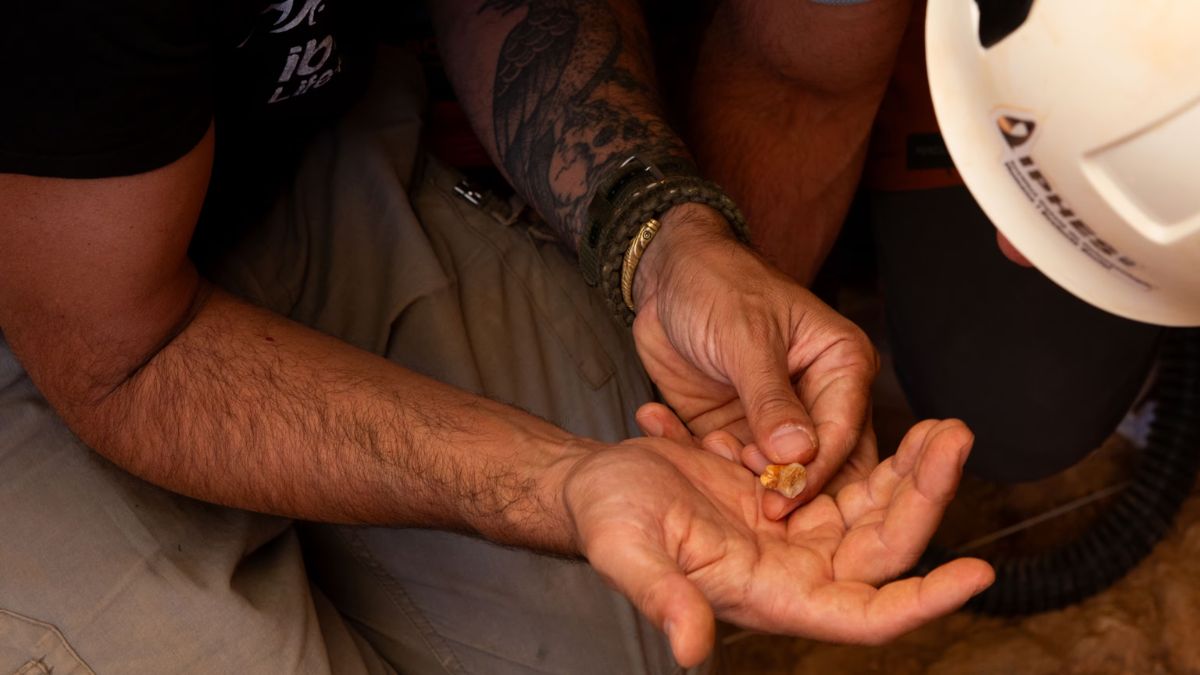
The most recent and significant find was made in 2025—a small vertebra from a child estimated to be between 2 and 5 years old. What makes this tiny bone so important are the marks on it. These are no ordinary scratches—they’re clean, precise cuts made by stone tools. These markings show that the child’s head had been separated from the body with intention.
This vertebra was found at the TD6 level of Gran Dolina, where human bones had been uncovered as far back as 1994. Those earlier bones came from at least 11 individuals, mostly children and adolescents. Just like the new discovery, those remains had clear signs of butchery, including skinning, defleshing, and bone-breaking—evidence of humans being treated like food.
Repeated

This wasn’t a desperate act of starvation or a rare incident. The bones reveal at least two separate cannibalism events in TD6, separated by hundreds of years. That’s enough time to prove this was not about survival in an emergency. It was a repeated, cultural behavior—something these people did more than once and over generations.
The treatment of the bones was systematic. They were stripped for meat, cracked open for marrow, and even showed human bite marks. They were then discarded along with animal bones—no graves, no ceremony, just part of the meal.
Victims
Who were these people being eaten? Mostly children and teenagers. Their small size, weaker condition, or higher vulnerability may have made them easier targets.
There are two main theories. One is that these were victims of tribal conflict—captured enemies. The other is that they were from within the group, and cannibalism was purely for food.
There’s no evidence of ritual or sacred treatment. These weren’t burials or offerings. These were meals. And the bones show a catastrophic mortality pattern, meaning multiple children likely died in a single tragic episode rather than over long periods.
Comparison
Atapuerca isn’t alone in revealing ancient cannibalism. Other sites across Europe show similar behaviors:
| Site | Location | Cannibalism Evidence |
|---|---|---|
| Gran Dolina | Spain | Multiple events, mostly children |
| Moula-Guercy | France | Six Neanderthals, including two children |
| El Sidrón | Spain | Neanderthals during possible famine |
What sets Atapuerca apart is the age—over 800,000 years—and the regularity of the behavior. It wasn’t rare. It was likely part of their cultural and survival system.
Impact
Why does this matter? For paleontologists, this kind of discovery changes the way we understand early human behavior. It proves that cannibalism wasn’t always about starvation—it was part of the survival strategy for some groups.
The cut marks, tool use, and treatment of bodies were identical to how animal prey was handled. That gives scientists a clearer picture of how early humans lived, hunted, and interacted with both friends and enemies.
The discovery also strengthens the case for the Homo antecessor species—a crucial figure in human evolution—while raising ethical and emotional questions about how far back in time our darker instincts go.
Insight
This child’s vertebra, just a few centimeters long, has opened a window into one of the oldest and most unsettling human behaviors. It shows that even the youngest were not spared in a brutal and unforgiving world.
Paleontology isn’t just about bones—it’s about stories. And the story Gran Dolina tells is one of survival, conflict, and the raw struggle for existence more than 800,000 years ago.
Every bone uncovered here helps scientists piece together a life once lived—a community that hunted, fought, ate, and maybe even feared one another. The past can be dark, but it brings light to the truth of where we come from.
FAQs
Where was the infant skeleton found?
In the Gran Dolina site at Atapuerca, Spain.
How old is the evidence of cannibalism?
It’s over 800,000 years old.
Was it only one incident?
No, evidence shows at least two separate events.
Who were the victims?
Mostly children and teenagers.
Why did they practice cannibalism?
Likely for nutrition or due to tribal conflicts.