The James Webb Space Telescope just made headlines again, and this time, it wasn’t even trying. While observing a distant galaxy, astronomers stumbled upon what could be one of the largest black holes ever discovered. It’s so massive, so powerful, and so unexpected that it’s shaking up what scientists thought they knew about the universe.
The discovery? A gigantic, invisible monster hidden inside something called the Cosmic Horseshoe.
Table of Contents
Monster
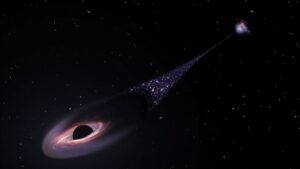
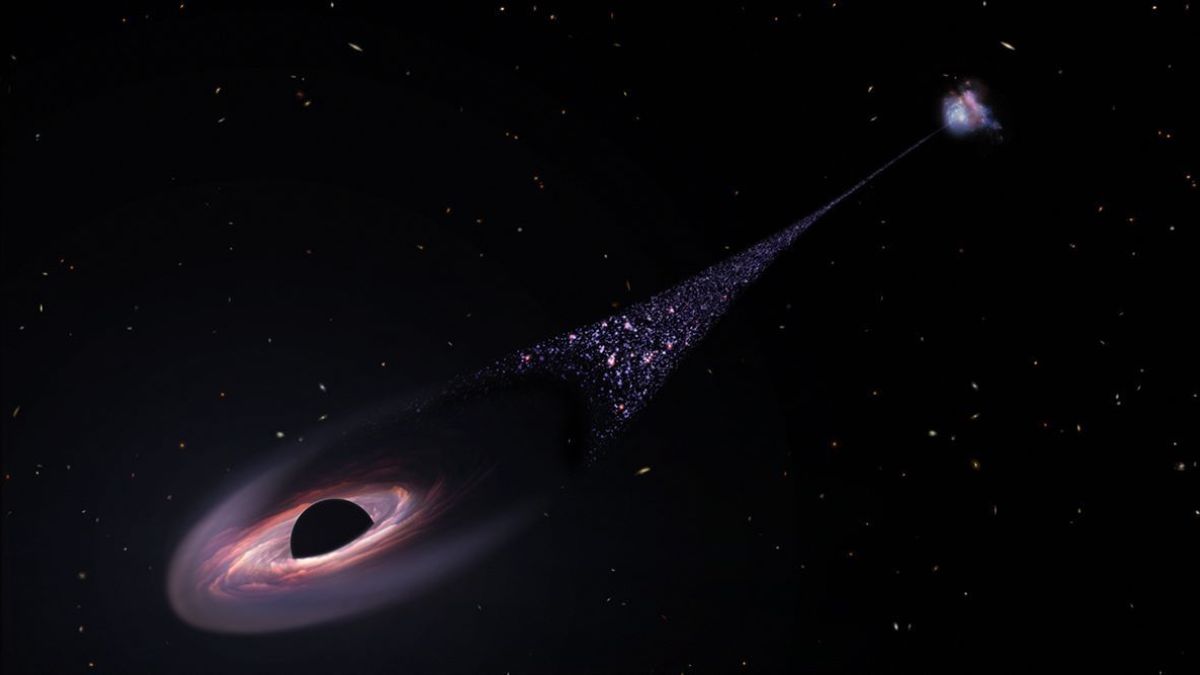
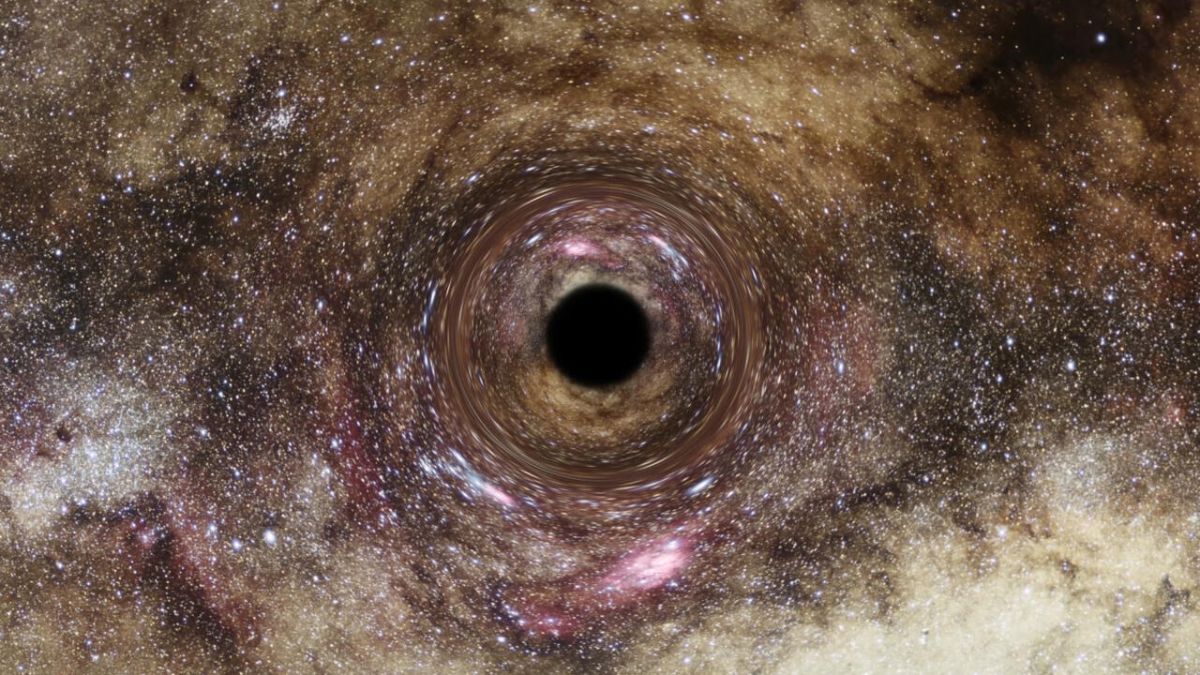
This is no ordinary black hole. We’re talking about a gravitational beast so massive that it can literally bend the light from entire galaxies around it. That’s not a poetic description—it’s physics. The black hole is so heavy, its gravity distorts space-time itself.
How heavy is it? Try 36 billion times the mass of our Sun. That’s 36,000 million solar masses. It’s almost impossible to imagine, but this puts it in the running for the largest black hole ever recorded. If confirmed, it could even be the biggest of all time.
Horseshoe
The monster was found inside a galaxy nicknamed the Cosmic Horseshoe. This strange name comes from the way light from more distant galaxies bends around it, forming a nearly perfect horseshoe shape. This bending of light is known as gravitational lensing—a clue that something huge and heavy is hiding there.

Astronomers weren’t even looking for a black hole at the time. They were studying something else entirely when the shape of the light gave away the presence of something massive. That’s when the real investigation began.
Hidden
Finding this black hole wasn’t easy. Black holes don’t emit light, so they can’t be seen directly. But scientists used two key techniques:
- Gravitational lensing: Observing how the black hole’s gravity bends light from background galaxies.
- Stellar kinematics: Measuring the motion of stars around the object to estimate its mass.
These methods revealed the incredible size of the black hole, and its ability to distort light confirmed its extreme gravitational pull.
And get this—it’s located about 5 billion light years from Earth, yet it still manages to affect the light we see today. That’s the level of power we’re talking about.
Colossal
According to Professor Thomas Collet from the University of Portsmouth, this could be the most massive black hole ever found. It likely formed from the merger of several smaller supermassive black holes—basically a black hole version of a mega fusion.
It’s like the Dragon Ball Z fusion dance, but with black holes instead of Saiyans.
This isn’t just another space oddity. It may belong to a whole new category of ultramassive black holes, far beyond what scientists had previously imagined.
Let’s put that in perspective:
| Category | Mass Range (Solar Masses) |
|---|---|
| Stellar Black Hole | 5 – 100 |
| Intermediate Black Hole | 100 – 100,000 |
| Supermassive Black Hole | 100,000 – 10 billion |
| Ultramassive Black Hole | 10 billion – 50 billion+ |
This new discovery clearly falls in the last category, and that’s what makes it so rare.
Questions
So, what does this mean?
Well, scientists used to believe that even the biggest galaxies had black holes in the 10 billion solar mass range. But this one smashes right through that ceiling.
This raises big questions:
- How do black holes grow this large?
- Do all large galaxies have ultramassive black holes?
- What role do these monsters play in shaping galaxies?
There are no clear answers yet. But what’s certain is that this discovery is going to change the conversation around black hole formation and galactic evolution.
Telescope
Let’s not forget the tech behind this discovery—the James Webb Space Telescope. Launched in 2021, it’s the most powerful space observatory ever built. With its infrared sensors, it can see deeper into space and further back in time than anything before it.
Its ability to spot faint objects from billions of years ago is exactly what made this accidental find possible. And the best part? This is likely just the beginning. The more we explore, the more strange and fascinating things we’ll find.
Who knows—maybe the universe is full of “monsters” we just haven’t discovered yet.
FAQs
How massive is the black hole found?
It’s about 36 billion times the mass of the Sun.
Where was the black hole discovered?
Inside a galaxy nicknamed the Cosmic Horseshoe.
How was the black hole detected?
Through gravitational lensing and stellar motion studies.
What is an ultramassive black hole?
A black hole with over 10 billion solar masses.
Did James Webb help in the discovery?
Yes, its infrared view made this unexpected find possible.