
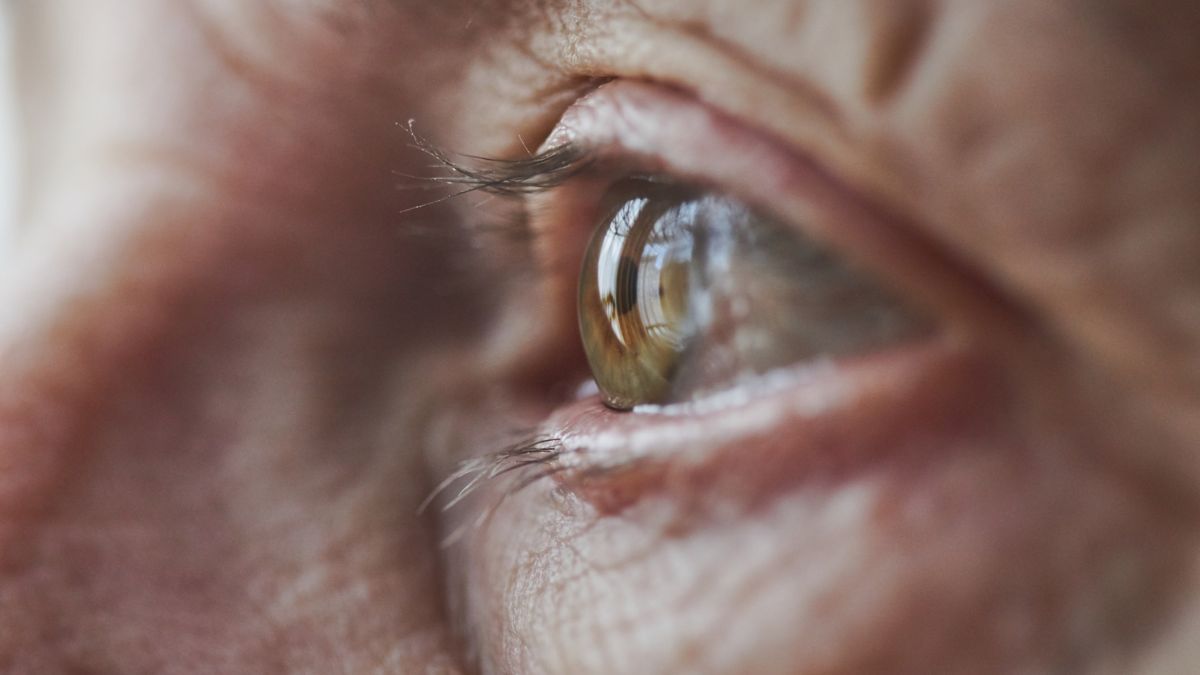
We all know our eyes help us see the world—colors, faces, words on a screen. But what if they could do more than that? What if your eyes could tell you something about the future of your memory? According to a new study, they actually can. Researchers have discovered that your vision may show early signs of dementia, including Alzheimer’s, more than a decade before you notice memory problems.
Sounds wild, right? Let’s break it down.
Table of Contents
Study

This discovery comes from a long-term study in England, where scientists tracked 8,623 people who were healthy at the start. Each person took a simple visual test. Here’s how it worked: they watched a screen with moving dots and had to hit a button as soon as they spotted a triangle pop up.
It might sound like a basic task, but the results were eye-opening. People who later developed dementia were significantly slower to respond. Their slower reaction times showed that something was already changing in the brain—years before their memory began to decline.
Connection
So why would your eyes reflect brain issues like Alzheimer’s? It’s because parts of the brain involved in vision are some of the first to be affected in the disease. In fact, your visual system is deeply tied to how your brain processes information. When Alzheimer’s starts damaging those brain regions, your eyes stop reacting the way they should.

This is why experts often call the eyes “a window to the brain.”
Signs
Here are some early warning signs in vision that may appear before memory loss kicks in:
- Difficulty spotting edges or outlines of objects
- Problems telling similar colors apart, especially blue and green
- Trouble with eye movement, making it hard to focus or ignore distractions
These symptoms can make daily life more difficult. For example, driving can become risky because the brain has a harder time filtering distractions.
Faces

Another subtle but powerful clue is how people look at faces. Most of us scan a face in a specific pattern—eyes, then nose, then mouth. It’s a natural habit that helps the brain recognize and remember people.
People in early stages of dementia often don’t scan faces this way. Their eye movements seem random or unfocused, which makes it harder to “record” a new face into memory. That’s one reason why someone with Alzheimer’s might forget familiar people more quickly.
Even doctors are starting to spot dementia symptoms just by watching how patients use their eyes. If someone seems unsure or “lost” while looking around, it can be a big red flag.
Memory
Here’s something hopeful: eye movements might not just reveal memory loss—they could also improve it.
Studies have found that certain eye movements help boost memory, especially for personal memories. For example:
- Reading and watching shows—where your eyes stay active—can stimulate the brain
- Moving your eyes quickly from left to right may strengthen your recall
- Interestingly, this benefit seems to work better for right-handed people than left-handed ones, though no one knows why
This suggests that something as simple as eye movement could play a small role in keeping your memory strong.
Tech
So, if the eyes can say so much, why aren’t doctors using eye tests for Alzheimer’s diagnosis?
The main issue is technology. Eye-tracking tools are still expensive and require trained professionals to use them properly. But scientists are hopeful that, in the near future, these tests will become cheaper and more common in clinics.
Once that happens, eye exams might become a normal part of brain health checkups—like how blood pressure is checked for heart health.
Future
This new research could change how we detect Alzheimer’s. Instead of waiting for memory loss to appear, we might be able to catch early signs just by looking at how someone sees the world.
That’s powerful. It gives people a head start—maybe even 10 to 12 years—before symptoms become severe. And with earlier detection comes earlier treatment, more planning, and a better shot at preserving brain health.
So, next time you blink, just remember: your eyes aren’t just windows to the world. They might also be mirrors of your brain.
FAQs
Can eye tests detect Alzheimer’s early?
Yes, eye response can predict it 10–12 years in advance.
What’s the early eye symptom of dementia?
Slower response to visual cues like shapes or patterns.
Do vision issues happen before memory loss?
Yes, vision changes often appear earlier than memory decline.
Can eye movement improve memory?
Yes, rapid eye movement can boost recall abilities.
Why don’t doctors use eye tests yet?
Eye-tracking tools are still costly and not widely available.