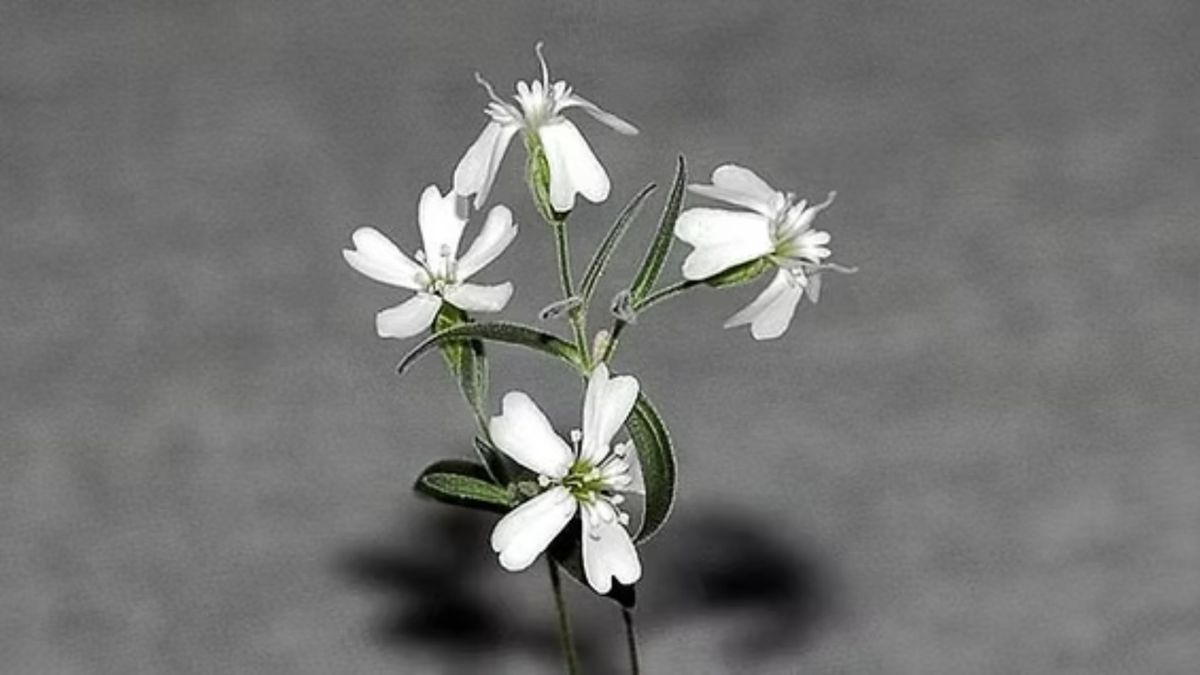
Can you imagine bringing a plant back to life after 32,000 years? It sounds like something straight out of a sci-fi movie, but it’s now a scientific reality. In an incredible breakthrough, scientists in Russia have revived an extinct plant from the Ice Age using seeds that were frozen in Siberian permafrost. This discovery isn’t just fascinating—it’s also changing what we thought was possible in the world of biology and genetics.
Let’s look into how this ancient plant came back to life and what it could mean for science.
Table of Contents
Discovery
It all started back in 2007, when a team of Russian researchers made a surprising discovery near the Kolyma River in Siberia. Deep beneath the frozen ground—38 meters to be exact—they found a stash of seeds preserved in an Arctic squirrel’s burrow. The soil there is permafrost, meaning it’s been frozen for thousands of years. These seeds had been trapped in the ice for nearly 31,800 years, perfectly sealed by nature’s own freezer.
Radiocarbon dating confirmed the age of the seeds, making them the oldest viable plant material ever found.
Challenges
Naturally, scientists first tried to plant the seeds in soil to see if they’d grow. But after thousands of years, the seeds were too damaged to germinate. Rather than give up, the team tried a different approach.

They extracted placental tissue from inside the immature fruits and used in vitro methods—basically growing the plant in a lab dish instead of soil. And it worked. The tissue responded, and eventually, they were able to clone 36 healthy plants.
These weren’t random sprouts either—they belonged to a species called Silene stenophylla, which had gone extinct long ago.
Revival
The revived plants grew strong, bloomed with delicate white flowers, and even produced seeds of their own. Here’s the incredible part—every single seed germinated, meaning the plants were not just revived, they were fully functional and fertile.
Scientists compared the ancient plants to modern-day versions of Silene stenophylla and found clear differences. The older version had longer and wider petals, which suggests it was better adapted to the harsh, cold conditions of the Ice Age.
Meaning
This isn’t just a cool experiment—it’s a breakthrough that shows how powerful nature and science can be when combined. Here’s why it matters:
- Life can survive millennia: The permafrost acted like a time capsule, perfectly preserving life for over 30,000 years.
- Window into ancient ecosystems: By reviving ancient plants, we can learn how ecosystems worked during the Ice Age.
- Scientific potential: This opens the door to new research on genetics, climate adaptation, and even the idea of bringing back other extinct species.
Possibility
Naturally, this discovery makes people wonder: could we bring back other extinct life forms, like animals? The short answer is—not so fast. Plants are much easier to revive than animals. Seeds and plant tissues can survive extreme conditions for long periods. Animals, on the other hand, have much more complex systems, like organs and DNA that degrade over time.
Still, this discovery is a hopeful sign. It proves that science continues to evolve, pushing the limits of what we once thought was impossible.
We may not be resurrecting mammoths or saber-toothed tigers tomorrow, but this tiny flower shows that the past is never entirely lost. Thanks to science, something that lived during the Ice Age is now blooming in a lab—and who knows what will bloom next?
FAQs
Where were the seeds found?
In Siberian permafrost near the Kolyma River.
How old were the seeds?
About 31,800 years old, from the Ice Age.
Which plant was revived?
Silene stenophylla, an extinct Ice Age species.
How did they grow the plant?
Using in vitro lab techniques from placental tissue.
Can extinct animals be revived?
It’s much harder due to complex preservation issues.