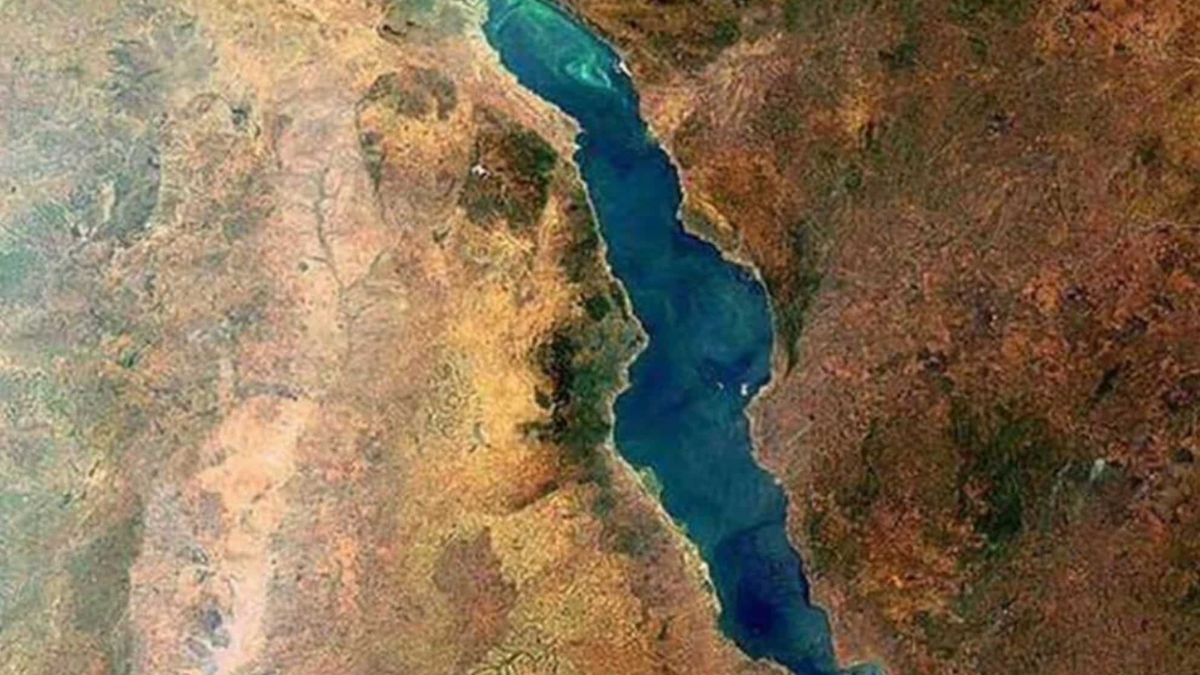
Africa is literally tearing apart. It might sound like science fiction, but it’s real—our planet is cracking open, and it could eventually lead to the creation of a brand-new ocean. It won’t happen tomorrow or even in a thousand years, but geologists believe that millions of years from now, the African continent will split, and water will rush in to fill the gap.
Welcome to the Great Rift Valley—one of the most dramatic places on Earth where the planet’s crust is slowly pulling itself apart.
Table of Contents
Rift

In 2018, the world got a dramatic reminder of what’s happening underground when a massive crack suddenly appeared in Kenya, tearing across the Nairobi-Narok highway. It wasn’t just a surface-level fracture—it revealed a deep and growing rift caused by powerful tectonic forces.
The crack is part of the East African Rift System, a 3,000-kilometer-long geological zone that stretches from the Gulf of Aden down to Zimbabwe. It’s one of the most active tectonic regions on the planet.
Movement
You probably wouldn’t notice it if you walked across it, but the African continent is splitting apart at a steady pace. The plates are drifting away from each other at about half a centimeter per year. That may sound tiny, but in the world of geology, it’s like watching a time-lapse of Earth evolving.

It’s the same process that once split Africa from South America and led to the formation of the Atlantic Ocean. That puts this event in some serious historical company.
Future
So, what happens next? Well, we won’t be around to see the final result, but here’s what scientists predict:
- A new ocean will eventually form in the rift.
- Countries like Somalia and Ethiopia will break away and become part of a new island landmass.
- Water from the Red Sea and Indian Ocean will flood in to fill the widening rift.
This slow transformation will reshape ecosystems, rewrite geography books, and force plants, animals, and humans to adapt to shifting land and climate conditions. Cities and roads will need to be rebuilt—maybe even relocated—much like how people in earthquake zones today live with the unpredictability of the ground beneath them.
Positives
It might sound scary, but not everything about this geological shift is bad news.
In fact, it opens doors to new opportunities:
- Landlocked countries like Uganda and Zambia could eventually gain direct access to the sea.
- New trade routes may emerge as coastlines shift.
- Fisheries and marine ecosystems could thrive along the new shores, creating new opportunities for tourism, food production, and even agriculture.
With proper planning and sustainable development, this natural change could boost the region’s economic potential. It’s not just a threat—it’s also a gift from nature.
History
This kind of massive change has happened before. Around 180 million years ago, the Atlantic Ocean began forming as Africa and South America drifted apart, just like what’s happening now in Eastern Africa.
A similar situation is unfolding in Baja California, Mexico, where the peninsula is slowly moving away from the mainland due to the motion of the San Andreas Fault. In the distant future, these shifts could completely redraw the map of the world.
Reminder
This entire process is a humbling reminder that Earth is alive. The continents we stand on are not fixed—they move, drift, and break apart. While these changes are too slow for us to notice day to day, they’re constantly shaping the planet’s future.
Watching Africa split open is like witnessing geology in real time. For geologists, it’s like seeing history unfold one crack at a time. For the rest of us, it’s a lesson in how small and temporary our place is in the grand story of Earth.
Who knows? Maybe in a few hundred million years, someone will be sailing across an ocean that once was part of Kenya or Ethiopia—and they’ll be studying the fossilized remains of our civilization the way we study dinosaurs today.
FAQs
Is Africa really splitting apart?
Yes, due to tectonic plate movement in the Rift Valley.
How fast is the rift growing?
About half a centimeter per year.
Will a new ocean really form?
Yes, over millions of years, water will fill the rift.
What countries could become an island?
Somalia, Ethiopia, and others in the Horn of Africa.
Has this happened before?
Yes, like the Atlantic forming 180 million years ago.