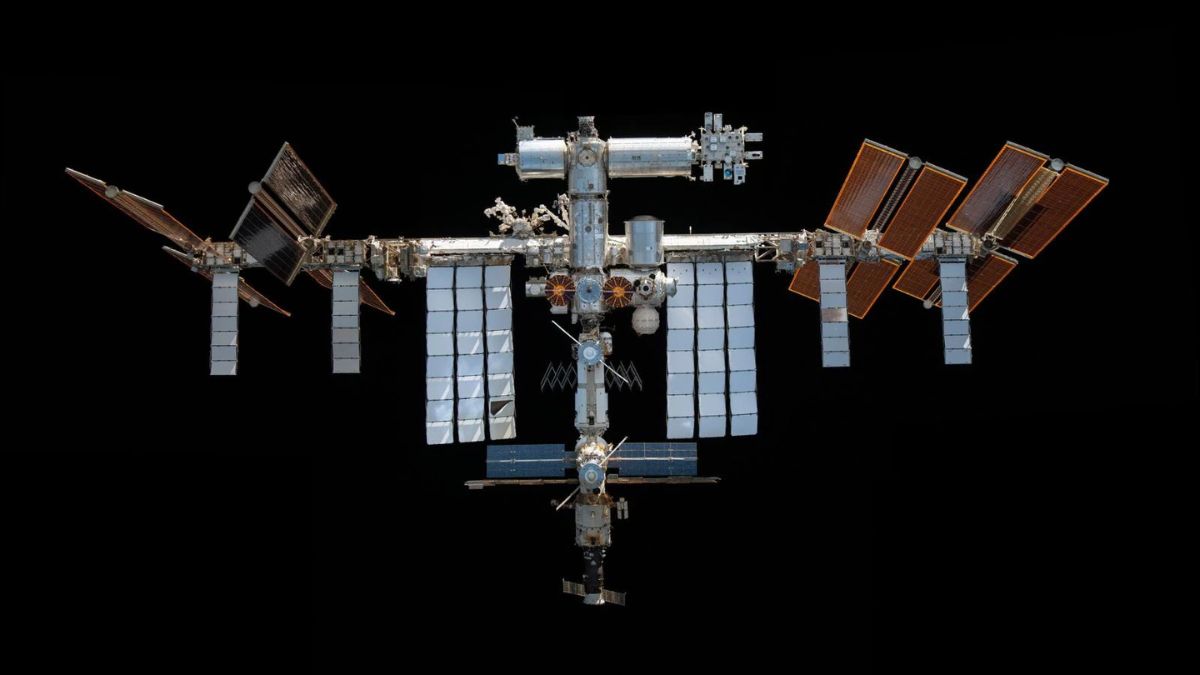
After nearly 30 years orbiting Earth, the International Space Station (ISS) is nearing its final chapter. NASA recently confirmed that the ISS will be deorbited in 2030, with its remains expected to fall into the Pacific Ocean.
But beyond the splash, what does this mean for the future of space exploration? What comes after one of humanity’s greatest joint scientific efforts?
Table of Contents
Legacy
The ISS wasn’t just a cluster of modules in space. Since its first launch in 1998, it became a second home for astronauts, a laboratory like no other, and an experiment in global cooperation. Over 25 years, more than 4,000 scientific studies were carried out aboard the station—from growing lettuce in zero gravity to probing dark matter and understanding the effects of microgravity on the human body.
But perhaps the biggest discovery wasn’t scientific at all. It was learning how to work together—countries, cultures, and space agencies—through conflict, competition, and cosmic curiosity. As sociologist Paola Castaño noted, “The great achievement of the station was not only the science, but learning how to do it in such an adverse and cooperative environment.”
Cost
Here’s a number that might make your jaw drop: $150 billion. That’s the estimated cost of building and maintaining the ISS. And each year, NASA has been spending around $3 billion just to keep it operational.
Many hoped this investment would yield dramatic breakthroughs—miracle cures, alien discoveries, or warp drives. But the reality was different. The ISS served as a prototype. Every cable installed, every leak fixed, every meal eaten in microgravity was a test run for what comes next—like future lunar bases or Mars colonies.
Let’s break it down:
| ISS Investment Summary | Cost |
|---|---|
| Total Construction & Maintenance | $150 billion |
| Annual NASA Operations | $3 billion |
| Years in Service | ~30 years |
| Total Experiments Conducted | 4,000+ |
The return wasn’t in cash or headlines—but in experience, cooperation, and the infrastructure for future missions beyond Earth.
Transition

So, what’s next? NASA won’t be building a new station. Instead, it’s handing the baton to private companies. Through its Commercial Low Earth Orbit Destinations (CLD) initiative, NASA plans to support companies like Axiom Space, Blue Origin, and Starlab to develop and operate private space stations.
These future stations aren’t just for science—they’re eyeing space tourism, manufacturing, and logistics. That sounds exciting, right? But it also brings up some big questions.
Doubts
Here’s where the optimism meets uncertainty. The ISS operated on a model of open data and international collaboration. Scientists around the world could access its research and contribute to new discoveries.
But private space stations may not play by the same rules. What if data becomes pay-to-play? What if science takes a back seat to profit? Without regulation, the open culture that defined the ISS could be replaced by corporate competition. Researchers might turn into clients, and access to space could become limited to the highest bidder.
And that shift? It could slow down science rather than accelerate it.
Goodbye
NASA has already outlined how the ISS will go out. In 2030, a special deorbit vehicle will gently steer the station into Earth’s atmosphere. The final destination? “Point Nemo”—a remote stretch of the Pacific Ocean that’s thousands of miles from the nearest land.
There, the ISS will burn up, with a few unrecognizable fragments sinking to the bottom of the ocean. No ceremony, no crowd—just a quiet, controlled descent to the sea. A fittingly humbling end for a structure that lived so far above us for so long.
Symbol
The ISS is more than metal and modules—it’s a symbol of what humanity can achieve when we aim high and work together. Its fall isn’t just the end of a structure; it’s the close of a chapter in our shared space journey.
But endings often come with beginnings. The real question now is: will we continue the spirit of cooperation, or will space become just another marketplace?
As the ISS makes its final descent, we’re left with a choice. Will we carry forward its legacy, or let it sink beneath the waves—along with the ideals it represented?
FAQs
Why is the ISS being deorbited?
The ISS is aging and costly to maintain, so NASA plans a safe reentry.
When will the ISS fall into the sea?
NASA says the ISS will be deorbited in 2030, landing in the Pacific.
Who will replace the ISS?
Private companies like Axiom and Blue Origin may launch new stations.
Will science continue in space?
Yes, but it may shift to commercial platforms with limited access.
Where will the ISS fall exactly?
The ISS will fall into Point Nemo, a remote Pacific Ocean location.