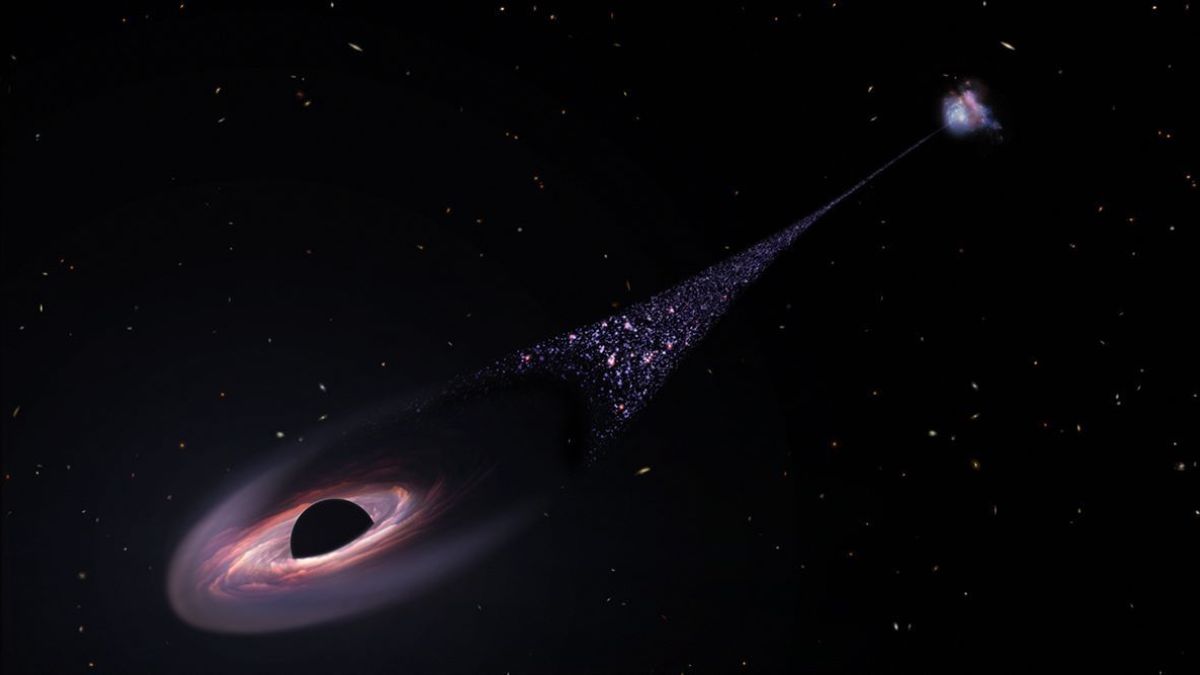

NASA has confirmed something truly rare: a strange object from beyond our solar system has entered and is flying through space at a mind-blowing speed of 245,000 km/h. Its name? A11pl3Z. It’s not a comet. It’s not an asteroid. It’s not even something we fully know yet. What we do know is that it’s interstellar—and it’s unlike anything astronomers have ever seen before.
Let’s unpack what makes A11pl3Z so unique and why the scientific world is so excited.
Table of Contents
Object
A11pl3Z isn’t small. It’s estimated to be between 10 and 20 kilometers wide—making it one of the largest interstellar objects ever detected near us. Despite its size and speed, there’s no danger to Earth. Its path is safe and won’t come anywhere near a collision course. That’s good news for all of us—but great news for science.
Interstellar
Why are scientists calling it “interstellar”? Because of its trajectory. Most objects that orbit the Sun do so in closed elliptical paths. But A11pl3Z is on a hyperbolic orbit—an open-ended path. That means it came from outside our solar system and will leave again, untouched by the Sun’s gravity.
It’s like a visitor just passing through—a cosmic tourist from another star system. These types of objects are extremely rare, and every one we’ve seen has had its own personality.
Oddity

A11pl3Z is confusing scientists for a good reason—it doesn’t behave like anything we’ve studied.
It doesn’t shine like a comet with a glowing coma of gas and ice. It also doesn’t reflect light like a rocky asteroid or a metallic body. So what is it?
Possibilities include:
- An extinct comet that has lost its ice
- A dark asteroid covered in organic material
- A crusted object that’s holding in gases

The truth is, we don’t know. And that’s what makes it fascinating.
Safety
Let’s be clear—there is zero risk to Earth. A11pl3Z will stay far away from our planet throughout its journey. NASA and astronomers everywhere are focused on studying, not defending. It’s a rare chance to learn more about how other solar systems form and evolve.
And here’s the cool part—it will be visible (with the right tools) from both the Northern and Southern Hemispheres during its October pass.
Tracking
An international observation campaign is already in motion. Huge ground-based telescopes with wide apertures will be tracking A11pl3Z. Space observatories, especially in the infrared range, will also monitor it closely.
Here’s what scientists hope to learn:
- Light curve: to understand its shape and spin
- Brightness: to refine size and reflectivity
- Gas detection: like CO or CO₂, if a coma appears
Every little detail gives clues about what A11pl3Z is made of and where it might have come from.
History
This isn’t the first time we’ve seen a visitor from deep space. In 2017, we discovered ʻOumuamua—a strange, cigar-shaped object that didn’t have a tail. Then in 2019, 2I/Borisov entered our system, behaving more like a typical comet but still with its own quirks.
Now, A11pl3Z joins the list of interstellar guests—another chance to study what lies beyond.
Chemistry
Do these visitors carry the ingredients of life? That’s the big question. While no one expects A11pl3Z to deliver living organisms, scientists are hoping it contains organic compounds—the building blocks of life.
These molecules could help us understand how life might form elsewhere in the universe, especially on planets orbiting other stars.
Study
The way astronomers study objects like A11pl3Z is both simple and complex.
First, they track its brightness over time to determine how it spins and what shape it might have. Then, they break its light into a spectrum to search for signs of specific chemicals—water, carbon dioxide, methane, or even organics.
If a gas coma develops, that will tell us even more. If not, the focus shifts to analyzing reflectivity and surface composition.
Meaning
So, what does all this mean for us?
It’s not a danger. It’s a door—an open window into another solar system. A11pl3Z is a time capsule that might hold answers about what’s out there, how planets form, and whether life beyond Earth is even possible.
And the best part? The data will be shared. In the coming months, NASA and other agencies will publish ephemerides, spectra, and photometric data. Some will be open to citizen science, so even amateur astronomers might get a chance to contribute.
A11pl3Z is more than just a rock flying through space—it’s a messenger from another world.
FAQs
What is A11pl3Z?
An interstellar object speeding through our solar system.
How fast is A11pl3Z moving?
Around 245,000 km/h—extremely fast for any space object.
Is A11pl3Z dangerous to Earth?
No, its trajectory keeps it at a safe distance.
What makes A11pl3Z interstellar?
Its hyperbolic orbit shows it comes from outside our system.
How will scientists study it?
Using telescopes, light curves, and chemical spectra.