After decades of silence, the Sun is showing signs of renewed activity—and NASA has confirmed it. For years, scientists believed our star was settling into an extended period of calm. But new data reveals the opposite: the Sun is waking up, and it’s starting to stir with more energy than we’ve seen in over 20 years. What does this mean for Earth? Quite a lot, actually.
Let’s cut into what’s happening and why it matters to all of us.
Table of Contents
Cycles
The Sun doesn’t just burn steadily—it pulses with activity in cycles. About every 11 years, solar activity rises and falls. These ups and downs can be observed by counting sunspots, which are dark patches on the Sun’s surface caused by intense magnetic activity.
Beyond the 11-year rhythm, the Sun also goes through longer patterns that span decades. Between the 1980s and 2008, solar activity gradually dropped, leading many scientists to believe we were entering a new grand minimum—a period of extreme calm.
But that calm has ended.
Shift
Instead of continuing its sleepy trend, the Sun flipped the script. According to a study in The Astrophysical Journal Letters, things have started to heat up—literally. Since 2008, activity in the form of solar wind, radiation bursts, and magnetic field strength has been climbing.
Jamie Jasinski, lead author of the study and a scientist at NASA’s Jet Propulsion Laboratory, admitted the shift was unexpected. He said all signs were pointing to a deep, quiet phase—but the Sun had other plans.
Impact
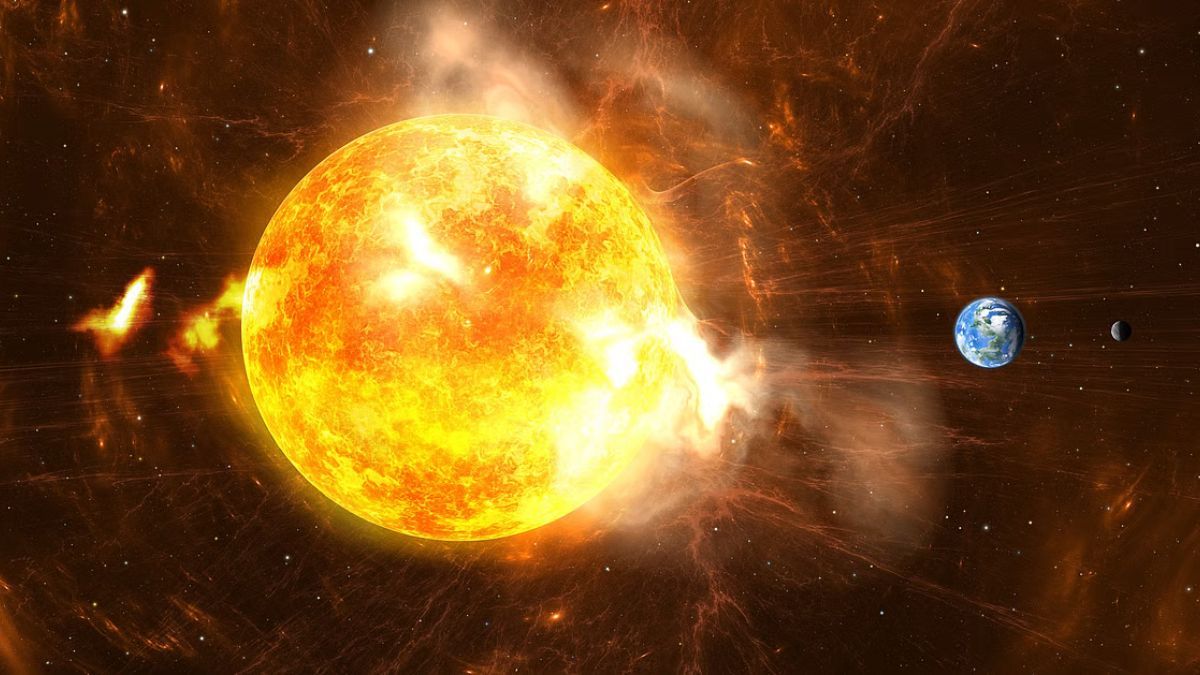
When the Sun gets active, it sends out bursts of energy and particles known as space weather. These can take several forms:
- Solar flares: sudden flashes of radiation
- Coronal mass ejections: massive bubbles of charged gas
- Solar storms: streams of energetic particles hitting Earth
These solar events aren’t just dramatic—they’re dangerous. They can disrupt satellites, mess with GPS systems, cause radio blackouts, damage power grids, and even endanger astronauts.
That’s why NASA keeps a close watch on solar activity. A strong solar storm could mean real trouble for our modern, tech-dependent world.
History
We’ve been watching the Sun for a long time. Ever since the 1600s, astronomers have recorded sunspots and solar behavior. The quietest stretch we’ve seen was between 1645 and 1715, known as the Maunder Minimum, followed by another long dip between 1790 and 1830.
From around 1983 to 2008, activity slowly declined again, leading experts to predict another grand minimum. But that prediction didn’t hold up. Instead, the Sun picked up its pace—and now, it’s acting more energetic by the day.
Monitoring
To understand the Sun better, scientists use data from missions like ACE (Advanced Composition Explorer) and Wind. These spacecraft have been orbiting since the 1990s, collecting information about solar particles, magnetic fields, and plasma.
NASA gathers this data on a platform called OMNIWeb Plus, which helps track the Sun’s behavior using multiple sources. This makes it easier to spot trends and prepare for possible impacts on Earth.
Future
Why does this matter? Because the Sun doesn’t just light up our sky—it affects life and technology on Earth. When solar activity increases, it can squeeze our planet’s magnetosphere, the protective bubble that shields us from harmful space radiation.
To prepare for this, NASA is planning new missions. IMAP (Interstellar Mapping and Acceleration Probe) and the Carruthers Geocorona Observatory are two upcoming projects designed to improve our understanding of solar storms and how they affect us.
So while the Sun may seem far away, its every pulse can shake our world. And as it enters a new phase of high activity, it’s more important than ever to stay informed about what’s happening 93 million miles away.
FAQs
Is the Sun becoming more active?
Yes, NASA confirms the Sun is now more active after years of calm.
What is a solar storm?
A burst of solar particles that can affect Earth’s systems.
Why do solar cycles matter?
They affect satellites, power grids, and astronaut safety.
How does NASA track the Sun?
With missions like ACE, Wind, and data from OMNIWeb Plus.
What’s IMAP?
A NASA mission to study solar particles and space weather.