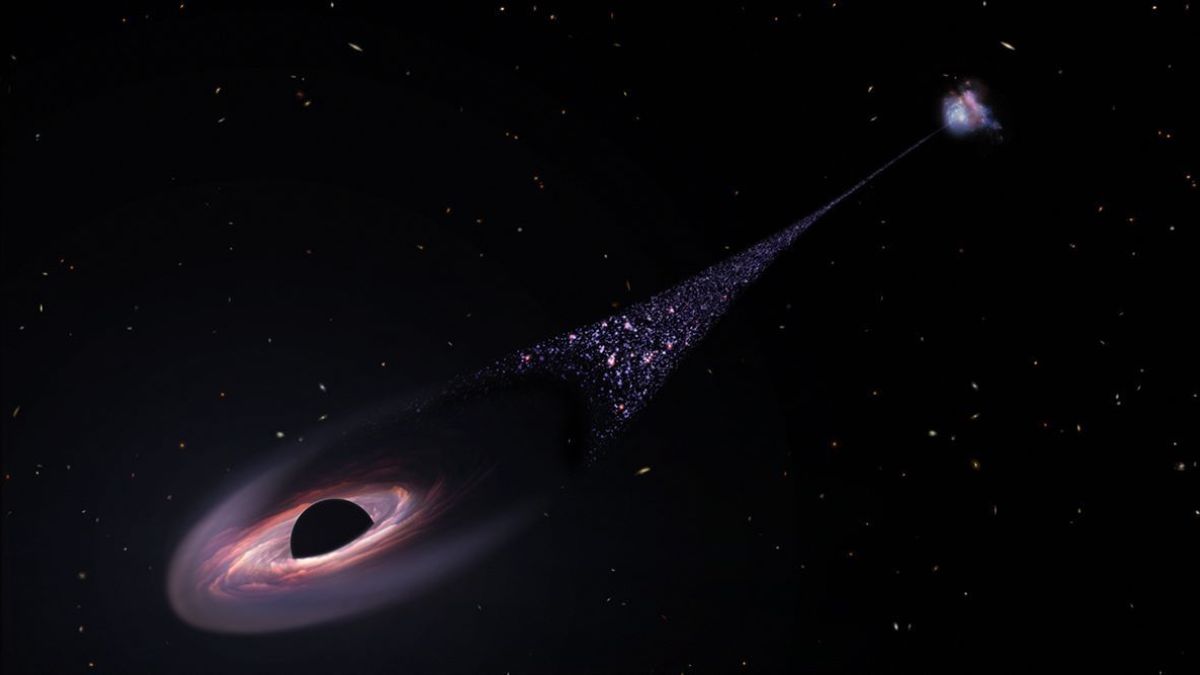

Fifty years ago, Stephen Hawking made a bold claim: black holes might not be completely black. Instead, he suggested they could emit a faint glow—now famously called Hawking radiation. For decades, this theory remained just that—a theory. But now, a team of physicists from the University of Amsterdam has taken a step toward confirming it, not in space, but in a laboratory.
By simulating the event horizon of a black hole using a chain of atoms, the researchers witnessed a strange glow that closely resembles the mysterious radiation Hawking described. Let’s take a closer look at this mind-blowing breakthrough and what it could mean for the future of physics.
Table of Contents
Blackholes
Black holes are the most extreme objects in the universe. Formed when massive stars collapse, they pack a mountain of matter into an incredibly tiny space. Their gravity is so strong that not even light can escape—which is why they’re invisible.
The point of no return in a black hole is called the event horizon. Once anything crosses that line, it’s gone for good. Or at least, that’s what we thought—until Stephen Hawking shook things up in 1974.
Using principles of quantum mechanics, Hawking proposed that black holes might emit tiny amounts of radiation due to particles popping in and out of existence near the event horizon. This strange, ghost-like energy was named Hawking radiation. But here’s the catch: we’ve never actually seen it—until now, sort of.
Simulation

Studying a real black hole up close isn’t really an option, so researchers had to get creative.
In 2022, a team led by physicist Lotte Mertens from the University of Amsterdam used a simple chain of atoms—basically, a one-dimensional model where electrons could jump between atoms. By tweaking how easily the electrons could move, they created an artificial version of an event horizon.
This setup mimicked what would happen near a black hole. And here’s where it gets wild: the system started to emit a faint thermal glow—just as Hawking’s theory predicted.
Radiation
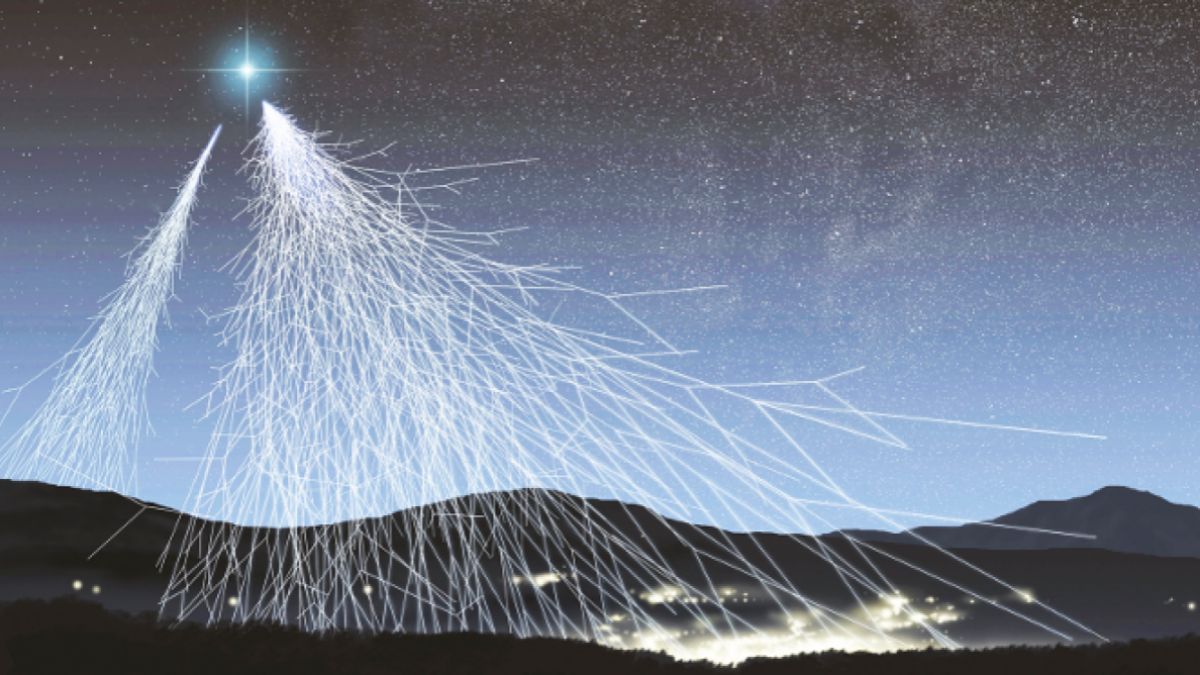
The radiation observed in the lab didn’t appear under all conditions. It only showed up when part of the atomic system expanded past the simulated event horizon. In simple terms, the system had to stretch in a certain way to trigger the effect.
This is a big deal. It suggests that Hawking radiation may not be constant, but rather appear only when space-time changes—like during black hole growth or mergers. That aligns with the idea that quantum entanglement, the bizarre connection between particles even across distances, might be involved in producing the radiation.
So while this wasn’t a real black hole, it gave scientists a chance to see Hawking’s concept in action—just in a much smaller, controlled environment.
Impact
Why does this matter? Because black holes are where the biggest questions in physics meet.
Einstein’s theory of gravity explains how big things move in space. Quantum mechanics explains how tiny particles behave. But they don’t play well together—yet. Black holes are the one place where both theories collide, and understanding them could help us unlock a unified theory of the universe.
Studying Hawking radiation in a lab brings us closer to connecting those two worlds. It might even help us understand what happens inside black holes, or how the universe began.
Future
This experiment doesn’t prove Hawking radiation exists in space—but it gives the strongest experimental support so far. The next step is to test this setup further and refine our knowing of how space, time, and particles interact.
As we inch closer to understanding black holes, we also get closer to answering the biggest question in science: how does everything really work?
Stephen Hawking may not be here to witness it, but his ideas continue to push science toward the future. And now, fiction turns into fact—one lab experiment at a time.
FAQs
What is Hawking radiation?
It’s energy black holes emit due to quantum effects near the event horizon.
Was Hawking radiation seen in space?
No, it was seen in a lab-made black hole simulation.
How was it simulated?
With a chain of atoms mimicking a black hole’s event horizon.
Why is this important?
It supports Hawking’s theory and may help unify physics.
Who led the experiment?
A team from the University of Amsterdam led by Lotte Mertens.