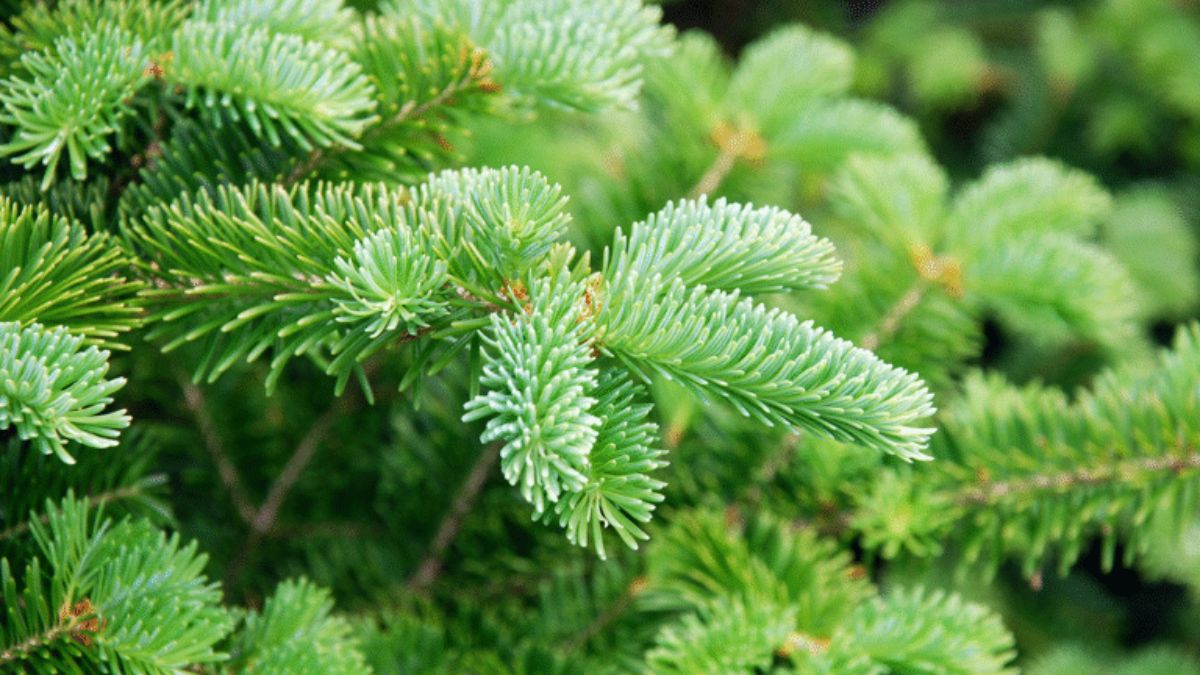
It might sound like a fairy tale whispered through a Nordic forest, but it’s real—some red spruces in Finland contain tiny particles of gold in their needles. No, you won’t find golden coins hanging from branches, but inside those deep green leaves lie gold nanoparticles, formed by the incredible work of microbes.
This discovery, led by the University of Oulu and the Geological Survey of Finland (GTK), could open the door to an entirely new way of looking for minerals—one that’s eco-friendly and full of wonder.

Let’s take a walk through the forest and uncover how science and nature are teaming up like never before.
Table of Contents
Discovery
The story begins at the Tiira gold deposit in northern Finland. Researchers collected 138 needle samples from 23 red spruces growing around the area. In four of those trees, something unexpected was found—actual gold, hidden inside the leaves.
And no, it wasn’t dust or surface contamination. The gold was truly part of the tree’s internal structure. Even more fascinating, the gold particles were surrounded by bacteria. These microbes seem to be the real stars of the show, turning dissolved gold in the soil into solid nanoparticles—like tiny natural laboratories operating inside the tree.
Microbes

The bacteria discovered include species like Cutibacterium, Corynebacterium, and a lesser-known group called P3OB-42. These organisms live peacefully inside the trees as endophytes and perform the mind-blowing trick of transforming soil minerals into something solid and shiny.
In essence, the trees are not mining the gold themselves—the microbes are doing it from within. This changes everything we thought we knew about how plants and underground elements interact.
And while each tree may only contain gold worth around 0.02 euro cents, the scientific impact of this discovery is priceless.
Process
Here’s how it works:
- Gold dissolved in underground water is absorbed by the tree.
- Inside the tree, specific bacteria convert that dissolved gold into solid nanoparticles.
- These particles get embedded into the needles as part of the plant’s living structure.
The process doesn’t harm the tree. In fact, it may even play a role in its normal function. Scientists believe this transformation is part of a complex interaction between plant biology, soil chemistry, and microbiology.
Mining
Enter the concept of “green mining.” Traditional mining methods often involve blasting rock, drilling deep into the earth, and disrupting ecosystems. But what if we could detect mineral deposits simply by analyzing tree leaves?
That’s the idea behind this discovery—using trees as natural indicators of what lies beneath the surface. It’s fast, non-invasive, and sustainable. Just imagine walking through a forest and, instead of digging holes, you take samples from leaves to check for hidden gold deposits.
| Method | Traditional Mining | Green Mining with Trees |
|---|---|---|
| Environmental Impact | High (digging, pollution) | Low (non-invasive leaf analysis) |
| Tools Used | Drills, explosives | Microscopy, lab testing |
| Speed | Slow and expensive | Faster and cheaper |
| Ecosystem Disruption | Significant | Minimal |
Potential
While we’re still in the early stages, the implications are huge. If this method proves to work in different regions and soil types, we could see a new age of mineral exploration—where forests guide us to underground resources without ever being harmed.
Researchers are now planning to test this in other climates and tree species to see how widely the method can be applied. The ultimate goal? A map of underground mineral resources built from tree leaves—not drilling rigs.
Symbol
The red spruce, already a symbol of resilience in Nordic culture, now carries another title: nature’s gold guardian. And those microbes? They’re the quiet alchemists, working day and night to turn dissolved metals into treasure. This is not just about mining—it’s about reimagining our relationship with nature.
Science didn’t just find gold—it found a better way to search for it.
FAQs
Do Finnish trees really have gold?
Yes, red spruce needles contain gold nanoparticles.
How does gold get into the trees?
Bacteria inside the trees turn dissolved gold into particles.
Is this gold valuable?
Not financially—each tree holds very little gold.
Could this help mining?
Yes, it could lead to eco-friendly mineral detection.
Is this method in use yet?
It’s still experimental but shows great promise.