Imagine an asteroid flying closer to Earth than the satellites we depend on for weather updates and GPS—without anyone noticing until hours later. That’s exactly what happened with asteroid 2025 TF.
It zoomed past Earth at a dangerously close distance, right within the orbital zone of the International Space Station, and we only realized it after the fact. Scary? A little. Fascinating? Absolutely.
Let’s cut into how this space sneak attack happened and why it matters.
Table of Contents
Flyby
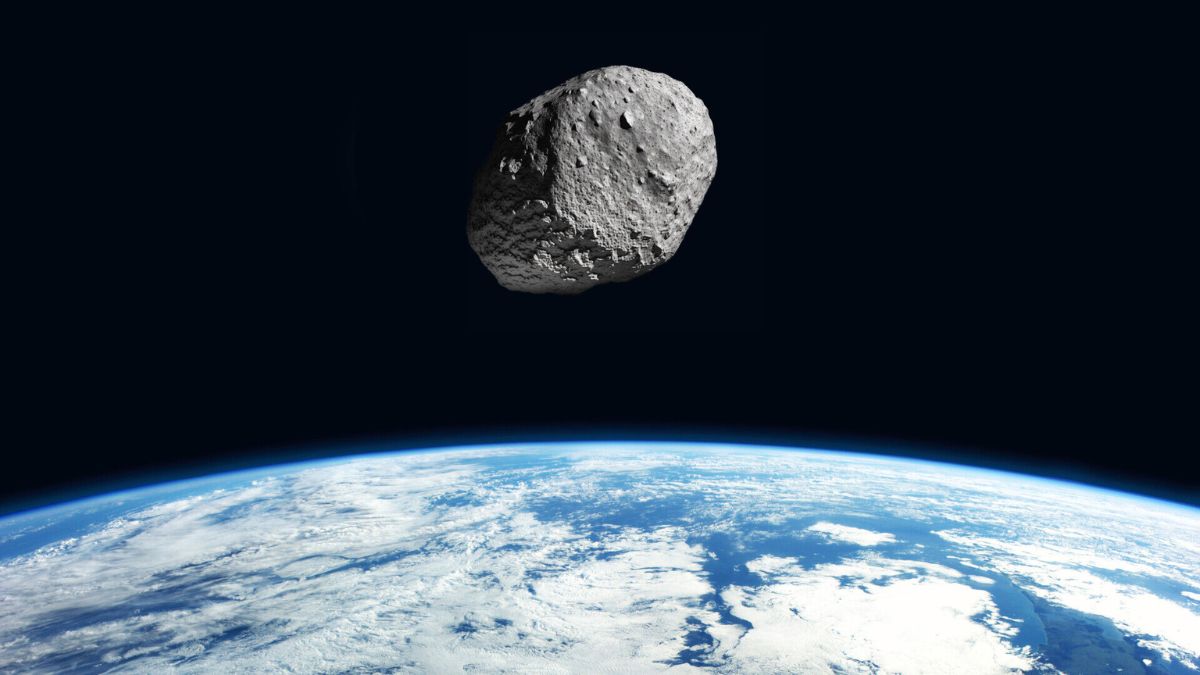
On October 1, 2025, at precisely 00:47:26 UTC, a small asteroid named 2025 TF zipped past Earth. It came just 428 kilometers (or about 266 miles) from our planet’s surface—well within the zone of orbiting satellites and even closer than the path of the International Space Station, which orbits between 370 and 460 kilometers above Earth.
That’s shockingly close in space terms. Think of it like someone throwing a baseball right past your ear without you noticing. It wasn’t detected until hours after it passed by. That’s what makes this one of the closest asteroid flybys ever recorded.
Size

Now before you panic—2025 TF was tiny. Somewhere between 1 and 3 meters in diameter, this asteroid was roughly the size of a car or small van. Even if it had plunged into Earth’s atmosphere, it would have burned up almost completely, producing a bright streak in the sky. The worst that could have happened? Maybe a small rock landing in the snow of Antarctica.
In short, it was harmless. But it was also a wake-up call.
Detection
Here’s the part that made astronomers sit up straight. The asteroid wasn’t discovered before it arrived. The first recorded observation happened six hours after it had already zoomed past Earth.

The Kitt Peak-Bok Observatory in Arizona was the first to spot it at 06:36 UTC. By then, it was already heading back into deep space. Later, astronomers realized that the Catalina Sky Survey had also picked it up, but they only caught it about two hours after its closest approach—and no one noticed at the time.
Why are these small asteroids so hard to detect? Simple: they’re tiny, dark, and fast. Telescopes often miss them unless the conditions are just right. It’s like trying to spot a fruit fly flying across a football stadium—at night.
Orbit
So, where is 2025 TF now? It’s long gone. After buzzing past Earth, the asteroid continued its journey into space. But it’s not gone forever. NASA’s Jet Propulsion Laboratory says it will be back in April 2087.
Thankfully, next time it won’t get so close. It’s predicted to pass at a distance of 8 million kilometers—about 21 times the distance between Earth and the Moon. In other words, nothing to worry about.
Meaning
So why are scientists so interested in an asteroid that posed no threat?
Because it proves just how much we still don’t know about space. These near-Earth objects can come from anywhere and sneak right past us. Most of them burn up in the atmosphere, but what if one day, one doesn’t?
Each flyby—especially one this close—helps astronomers improve their detection systems. Better tools, smarter algorithms, and more telescopes pointed at the sky can help us prepare for the future. We can’t stop what we don’t see, and 2025 TF was a perfect example of how even tiny asteroids can slip past our radar.
Reminder
Events like this are humbling. While we go about our daily lives, space never stops moving. We’re floating through a vast, unpredictable universe full of surprises. And sometimes, those surprises pass just a few hundred kilometers above our heads without us knowing.
It’s a gentle reminder that even though the sky looks calm and peaceful, it’s a highway of flying rocks, comets, and objects we’re only just beginning to know. Staying curious, watching the skies, and investing in space research isn’t just cool—it’s necessary.
FAQs
How close did 2025 TF get to Earth?
It passed just 428 km above Earth’s surface.
When was the asteroid detected?
It was first seen about 6 hours after passing Earth.
Could 2025 TF have caused damage?
No, it was too small and would’ve burned up in the atmosphere.
Will the asteroid return?
Yes, in April 2087, but at a much safer distance.
Why wasn’t it spotted earlier?
It was tiny, dark, and moving too fast to detect in time.