
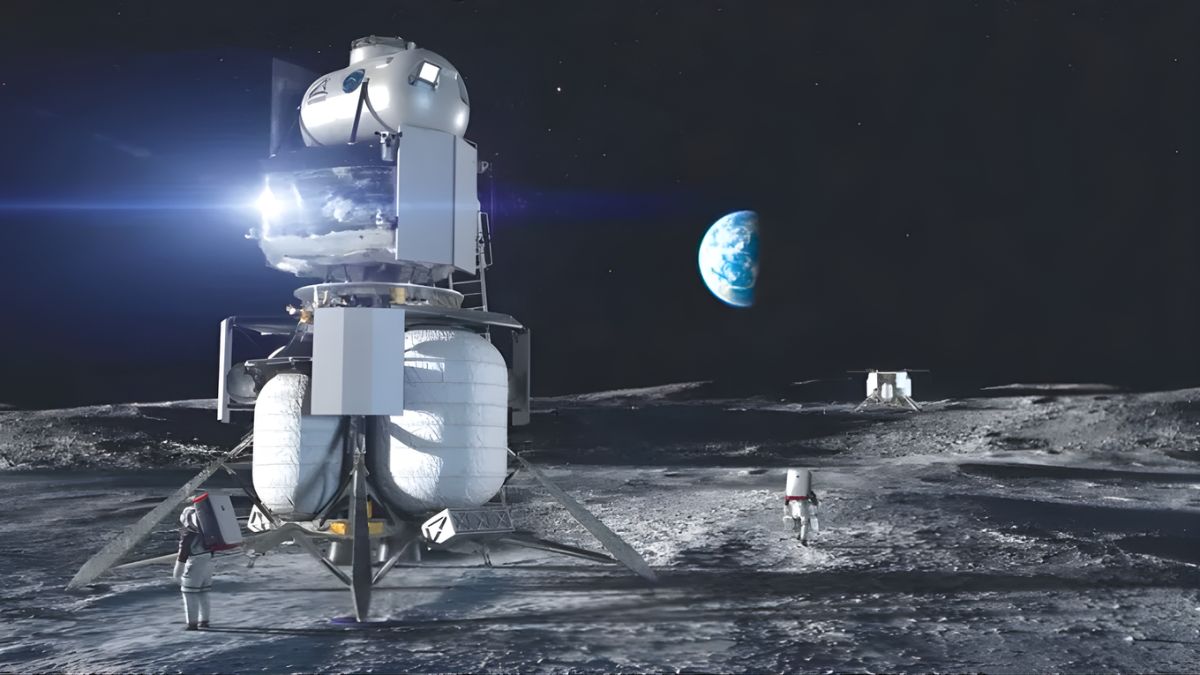
NASA is growing impatient. SpaceX, led by Elon Musk, was once the crown jewel of American space innovation. But now, its delays with the Starship project have the space agency rethinking its lunar plans. Specifically, NASA is threatening to replace SpaceX in the Artemis III mission—the program aimed at returning humans to the Moon for the first time in over 50 years.
And the biggest twist? Jeff Bezos, Musk’s long-time rival, could be the one to take over.
Table of Contents
Delays

Starship was supposed to be the game-changer—a massive, reusable rocket capable of taking astronauts to the Moon and eventually to Mars. NASA even signed a $2.9 billion contract with SpaceX for it to serve as the lunar lander for Artemis III.
But here’s the problem: it’s just not ready.
According to NASA’s acting director Sean Duffy, the progress on Starship isn’t matching the urgency of the mission. Launch tests keep getting delayed. Technical issues keep stacking up. And meanwhile, the clock is ticking. Artemis III is scheduled to launch in 2027, and that’s starting to look more and more like wishful thinking.
Pressure

This isn’t just about timelines. China is moving fast and aggressively toward its own lunar ambitions. If they beat the U.S. back to the Moon, it would be a massive hit to America’s leadership in space.
As Duffy put it, “We are in a race, and we can’t afford delays.”
So what does NASA do when its top player starts to stumble? It looks for backup.
Rivalry

Enter Jeff Bezos and Blue Origin.
Bezos’s company, in partnership with Lockheed Martin, is developing the Blue Moon lander. Unlike SpaceX, Blue Origin has been making slow but steady progress, quietly building credibility. While Musk tweets and tests and tweaks, Bezos is focused on delivery.
And now, NASA is watching.
In fact, the agency has already asked both SpaceX and Blue Origin to submit updated development plans by the end of the month. That’s not a good sign for SpaceX. It means NASA is seriously considering its options—and Blue Origin is clearly in the running.
Stakes
Let’s not forget what’s on the line here. A $2.9 billion contract, yes, but also international prestige, political influence, and space dominance.
Whoever gets to the Moon first—and does it safely—won’t just make headlines. They’ll set the stage for the next century of exploration, from lunar bases to Mars colonies.
And NASA knows that.
So far, SpaceX has been the golden child, impressing the world with its rapid development and daring missions. But now, with pressure mounting and deadlines looming, it may lose its seat at the table.
Artemis
Artemis III isn’t just any mission. It will carry the first woman and the first Black astronaut to the surface of the Moon. It’s meant to be a milestone, not just for science, but for representation, diversity, and global leadership.
But none of that matters if they can’t land.
And right now, the biggest hurdle is having a reliable lander ready in time. That’s something SpaceX hasn’t guaranteed. Meanwhile, Blue Origin’s proposal is looking more and more attractive to NASA.
Politics
Make no mistake—this is about more than engineering. It’s about politics and power.
China’s space program is pushing hard, and they don’t play by the same rules. If they land astronauts on the Moon before the U.S. returns, it will signal a shift in global space leadership. That’s something NASA, and Washington, definitely want to avoid.
So while technology plays a role, decisions here are also about perception, influence, and who controls the next space frontier.
Ultimatum
NASA has made it clear: time is running out. If SpaceX can’t get Starship ready soon, the agency won’t hesitate to move on. Blue Origin is in a strong position to take over—and others may join the race as well.
The next few months are critical. A shift in the lunar mission would be a huge blow to Musk’s legacy in space, and a massive win for Bezos, whose space ambitions have long been overshadowed.
So who will return humanity to the Moon? Right now, it’s anyone’s game.
FAQs
Why is NASA unhappy with SpaceX?
Because of ongoing delays with the Starship project.
Who might replace SpaceX for Artemis III?
Blue Origin, led by Jeff Bezos, is the top alternative.
When is Artemis III supposed to launch?
NASA plans the mission for 2027, but it’s at risk of delay.
What is Blue Moon?
Blue Origin’s lunar lander, developed with Lockheed Martin.
Why is speed important in this race?
Because China also plans to send astronauts to the Moon soon.