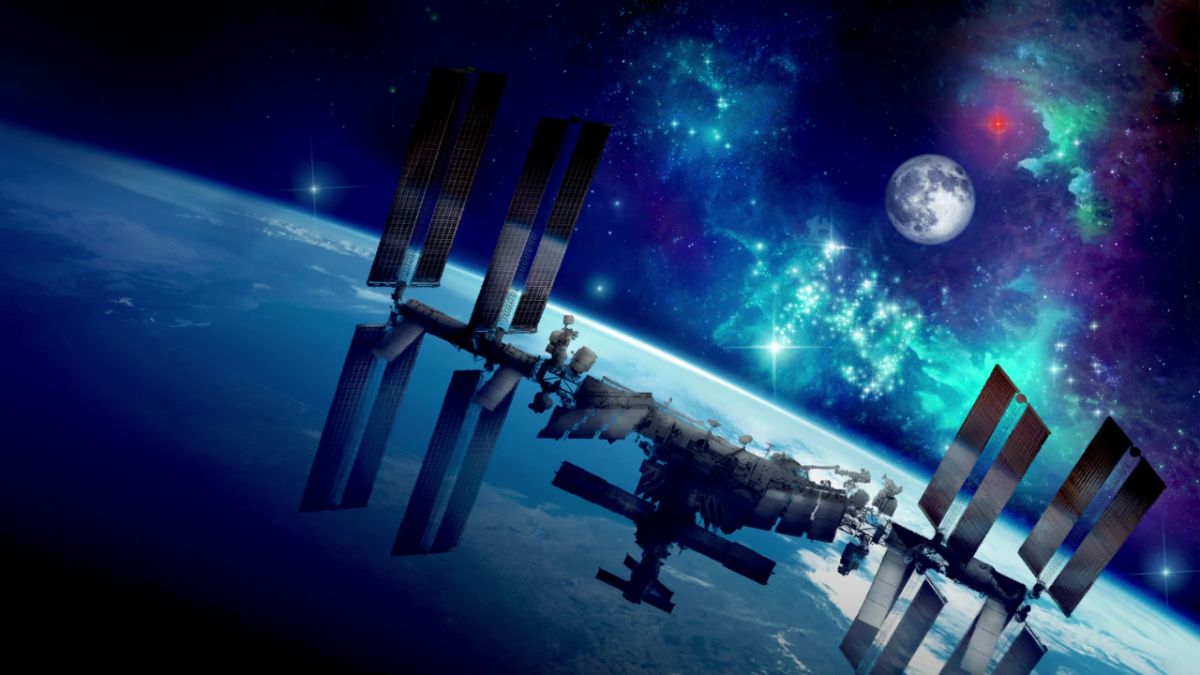
The International Space Station (ISS) has been silently orbiting above us for nearly 30 years, acting as humanity’s most distant outpost. But that chapter is coming to a close. NASA recently confirmed that by 2030, the ISS will be decommissioned and directed to fall into the Pacific Ocean. It’s not crashing, though—this will be a controlled reentry, targeting the most remote place on Earth: Point Nemo.
But with its descent into the sea, the world’s most significant space collaboration will vanish, and we’re left asking: what’s next?
Table of Contents
Legacy
Launched in 1998, the ISS isn’t just a collection of metal modules stuck together in low-Earth orbit. It’s been a laboratory, a home, and a stage for international cooperation. Scientists and astronauts from around the world have called it home—conducting over 4,000 experiments, from studying human biology in space to growing food like space lettuce, and even analyzing dark matter.
More than the experiments, the real lesson was teamwork. Scientists and engineers from countries often at odds politically worked hand in hand. The ISS showed what humanity could do when it set aside its differences and looked to the stars.
Cost
Of course, all that science didn’t come cheap. The total bill? Around $150 billion. NASA alone spends about $3 billion each year to keep it running.
Some critics question whether it was worth the price. The ISS didn’t deliver miracle cures or instant breakthroughs. Instead, it provided a foundation for understanding how humans can live and work off Earth. Think of it like the training wheels for future moon bases or Mars colonies. It was never about instant results—it was about preparation.
Here’s a breakdown of the estimated costs:
| Expense Type | Estimated Cost (USD) |
|---|---|
| Construction | $100 billion |
| Maintenance & Operations | $50 billion |
| NASA’s Annual Funding | $3 billion/year |
| Lifespan | 1998–2030 (32 years) |
Shift
NASA has made it clear: it won’t replace the ISS with another government-run space lab. Instead, the future of low-Earth orbit belongs to private companies.
Welcome to CLD—Commercial Low Earth Orbit Destinations. Under this plan, private players like Axiom Space, Blue Origin, and Starlab are set to launch their own space stations. These will be used for everything from scientific research to space tourism and even logistics hubs.
Sound exciting? It is. But also, it’s a bit of a gamble.
Risks
While private space stations might seem like the next logical step, there’s one big concern: science might take a back seat. The ISS was public and open. Data from experiments was shared with scientists globally, building a giant network of knowledge.
But with companies in charge, things could change. They might start charging for access to space or limit who gets to see research results. The focus could shift from global collaboration to profit margins.
In short, will the next space lab be a place for discovery—or just another business?
Symbol
The actual goodbye will be as quiet and controlled as its long orbit: a special spacecraft will guide the ISS into the Pacific Ocean. Its final resting place will be Point Nemo, a remote patch of ocean where satellites and spacecraft are regularly dumped—far away from human populations.
Only a few pieces will survive the fiery descent and sink to the ocean floor. And with that, a giant will disappear, both literally and symbolically.
Future
NASA’s exit from the space station game doesn’t mean the end of space exploration—it just marks a new phase. As the public sector hands over the reins, the private sector is expected to innovate, scale, and monetize the cosmos.
But the big question remains: can they do it while preserving the spirit of collaboration and open science the ISS stood for? Or will the sky become just another frontier for corporate competition?
The ISS taught us that space isn’t just a destination—it’s a shared journey. And now, as we say goodbye, we must decide what kind of journey we want the future to be.
FAQs
Why is NASA deorbiting the ISS?
The ISS is aging and becoming expensive to maintain.
When will the ISS fall into the ocean?
NASA plans to deorbit it in 2030.
Who will replace the ISS?
Private companies like Axiom or Blue Origin may take over.
Will science continue in space?
Yes, but under private space stations, not NASA.
Where will the ISS land?
In the Pacific Ocean near Point Nemo.