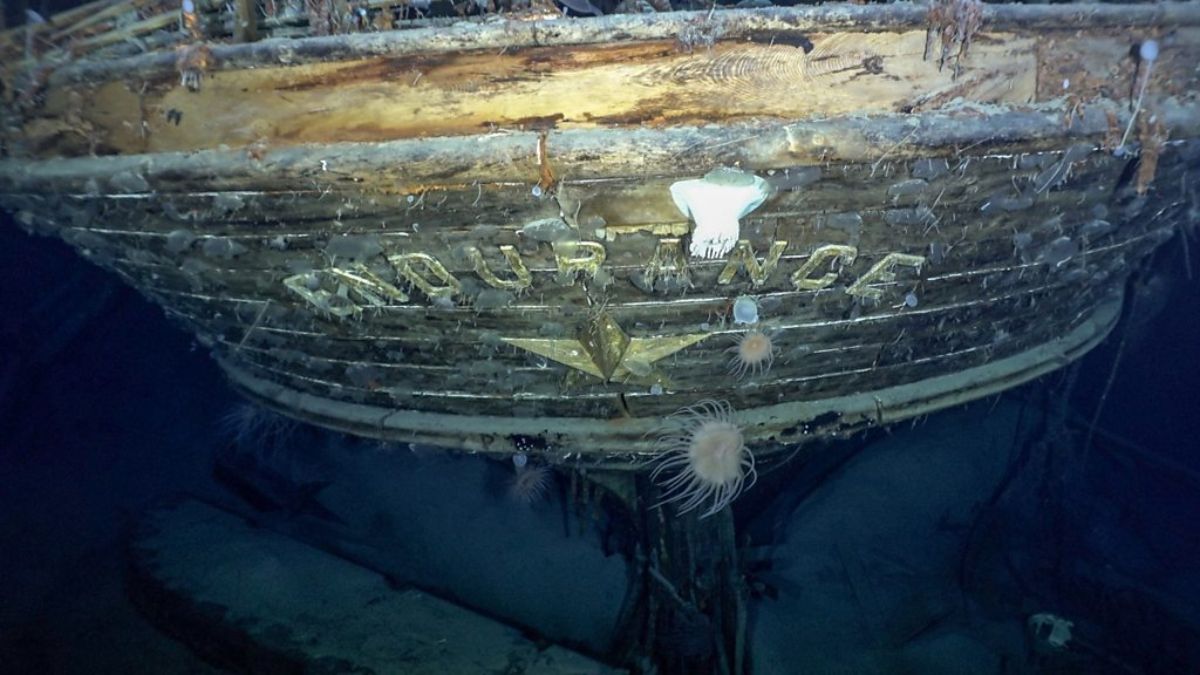
Imagine setting out to find a legendary lost ship and stumbling across the largest fish breeding colony on Earth. That’s exactly what happened to a team of scientists exploring Antarctica’s Weddell Sea. They weren’t expecting to find a biological marvel—thousands of perfectly aligned fish nests, hidden for centuries beneath the ice.
This wasn’t just an exciting discovery. It changed the way scientists know marine life, cooperation in the animal kingdom, and the effects of climate change on deep-sea ecosystems.
Table of Contents
Chance
The expedition had one main goal: locate the wreck of the Endurance, Sir Ernest Shackleton’s ship that sank in 1915 during his famous Antarctic mission. The team included researchers from the University of Exeter, Ocean Census, the Nekton Foundation, and the National Oceanography Centre.
They were scanning areas newly exposed by the breakup of the A68 iceberg—a massive chunk of ice that broke off the Antarctic Peninsula in 2017—when their sonar began to pick up odd shapes on the ocean floor.
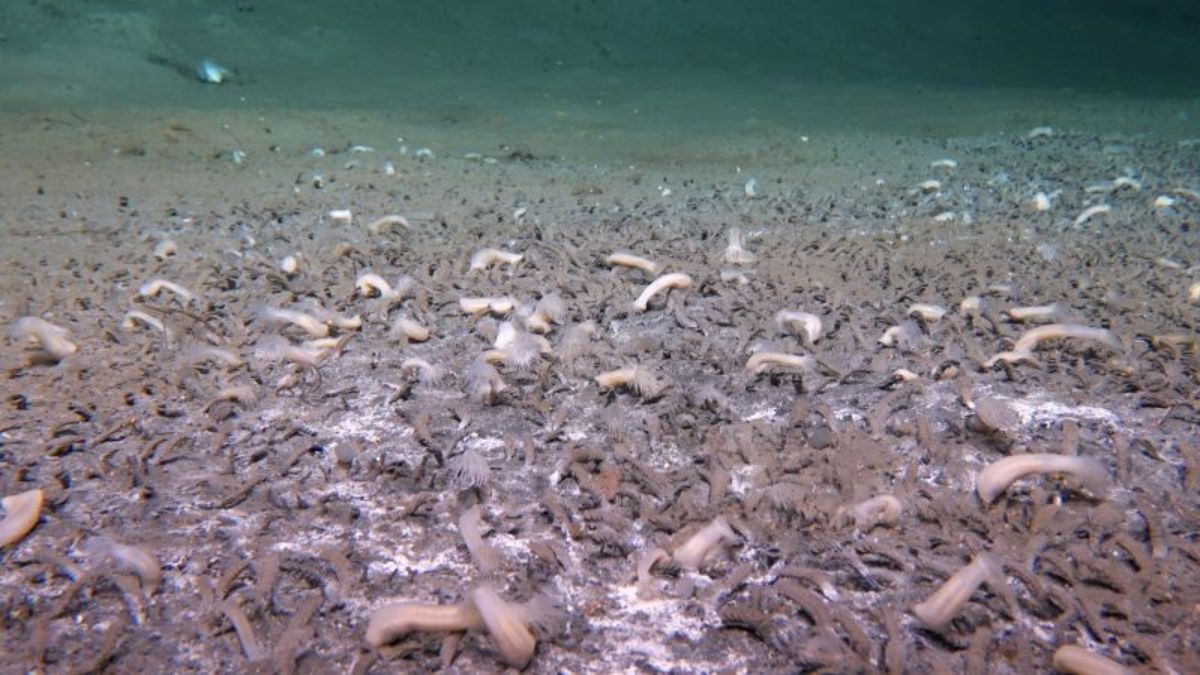
Curious, they sent down underwater cameras. What they saw was jaw-dropping: thousands of circular structures spread over kilometers. Not shipwreck debris—but fish nests, each neatly occupied by a fish guarding a cluster of eggs.
Nests

These weren’t random holes in the ground. Each nest measured about 75 centimeters wide and contained eggs being closely guarded by an adult fish. The nests were organized in neat rows and clusters, like little underwater suburbs.
The fish responsible? Antarctic icefish of the Neopagetopsis genus. They were believed to be solitary—until now. This discovery showed the opposite. They form enormous, organized, and cooperative breeding colonies.
The sheer scale of the discovery was unprecedented. The scientists had documented over a thousand nests during their mission, but estimates suggest the entire colony could include tens of thousands, making it the largest known fish nursery on the planet.
Ice

Why hadn’t anyone seen this before? Simple—the whole area was sealed under solid ice for centuries.
Only after the A68 iceberg broke off did scientists get the rare opportunity to explore what was hidden below. Without that event, the entire colony would have remained a secret of the deep.
This highlights one key point: climate change is not just melting ice—it’s uncovering previously unreachable ecosystems. What’s revealed could rewrite everything we know about ocean life and biodiversity.
Behavior
You might be wondering—why do fish even build nests?
Most fish don’t. But certain species like cichlids or gobies do build and guard nests to protect their eggs from predators. What’s special here is how structured and social the Neopagetopsis fish seem to be.
Each fish has a designated nest, cleans it, protects the eggs, and keeps their distance from others—yet they work together, forming a kind of “fish village.” It’s almost like they’ve created their own underwater neighborhood, where everyone has a job.
This is a rare case of collective fish behavior that seems more intentional than instinctual. It could change how scientists understand the evolution of cooperation in marine animals.
Future
The team plans to return in 2026, this time with advanced 3D mapping technology. They want to study how the colony grows, whether this kind of behavior is seasonal, and if more colonies exist in unexplored areas of the Weddell Sea.
The discovery is already leading to calls for new protections. Scientists are urging for the area to be declared a marine sanctuary to keep fishing and other human activity far away from this untouched ecosystem.
Impact
This isn’t just about fish. It’s about what else lies beneath the melting ice—and how little we actually know about our oceans. According to the researchers, the ocean still holds countless secrets. We’ve explored less than 10% of the ocean floor. Every time the ice recedes, there’s a chance we might find something completely unexpected.
In this case, a trip to find a century-old ship revealed an entire society of fish living in harmony, out of sight and completely undisturbed. If that’s not a reminder of nature’s hidden wonders, what is?
FAQs
What did scientists find in Antarctica?
They found thousands of fish nests under the ice in Weddell Sea.
Which fish species built the nests?
Neopagetopsis icefish, once thought to be solitary.
How big is each nest?
Each nest is about 75 centimeters wide and contains eggs.
Why was this colony hidden?
It was beneath thick Antarctic ice for centuries.
Will the area be protected?
Scientists want it declared a marine sanctuary.